Support Tall Growth
Secure the trunk with a sturdy stake and soft ties to prevent wobbling, which can disturb roots in top-heavy plants.

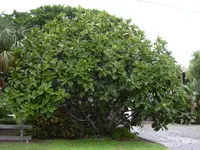
It is a tropical evergreen tree with large, violin-shaped leaves and bold architectural form, which can be grown at home. Native to the rainforests of West Africa, it can reach 30-39 feet (9-12 m) in a wild environment. Indoors, you can care for a fiddle leaf fig pretty easily, as the plant is moderately demanding. Banjo fig, as it is also called, prefers indirect light, moisture, and well-draining soil to maintain steady growth up to 6-9 feet (2-3 m) and healthy foliage. Fiddle leaf fig usually grows upright with a single trunk or branching stems.

Care Difficulty
Moderate Care

Light Preference
Bright Indirect Light

Water Requirements
Moderate Water

Temperature Preference
Tropical / Frost Sensitive

Hardiness Zone
10–12

Soil Texture
Loamy, Organic-rich

Soil pH
Acidic (5.5–6.5), Slightly acidic (6.5–7.0)

Soil Drainage
Moist but well-drained

Fertilization
Light (every 4–6 weeks)
Scan your plant to receive care tips personalized for your specific plant
Available on iOS and Android
Place indoors in not direct light or part shade with protection from the afternoon sun. Provide 2-6 hours of indirect light daily, ideally near an east- or south-facing window with filtered sun.
Note: In low-light conditions, growth slows, and leaves drop, especially during winter.
Balanced moisture is very important for Ficus lyrata, as it is sensitive to both overwatering and drought. Water when the top 3-5 cm of soil feels dry. If the leaves become yellow, it is a signal that the plant receives too much water. At the same time, dry edges or leaf drop indicate that it’s staying too dry.
This tropical tree likes stable, warm temperatures that support steady growth and prevent stress.
A medium relative humidity supports healthy leaf development and ensures well-being. Keep 40-60% humidity to prevent brown leaf edges and dryness. If this indicator falls below 30%, you may see fiddle leaf fig leaf drop or crisping.
Lifehack: Place the plant on a shallow tray with stones and water to raise humidity, and use a small hygrometer nearby.
A loose, airy soil mix helps support fiddle leaf fig health and steady growth.
Note: The plant is sensitive to excess salt buildup in the soil from fertilizers, tap water, or porous containers. Once a month, rinse the soil until water drains freely from the bottom.
Use a heavy, wide-based pot about 10-14 inches (25-35 cm) in diameter for medium-sized plants. Mature specimens require pots around 14-20 inches (35-50 cm) wide to provide enough stability and root space.
Tip: Look for pots with special holes to let excess water exit quickly after watering.
Regular feeding supports steady leaf growth for the fiddle leaf fig.
You can prune dead and damaged leaves of Ficus lyrata at any time, but the best season to prune for shape is in the spring. Trim the top of the main stem to stimulate branching and make a balanced form.
Note: Long, weak growth with spaced leaves usually indicates insufficient light exposure. Cut them and put the pot in a more light place.
Repot a fiddle leaf fig every spring or early summer.
Propagation for fiddle leaf fig is most commonly done using stem cuttings, but there are also other methods like division, air layering, or stem cuttings.
Cold weather, snow, and other such factors can stress this tropical tree, so winter care for the fiddle leaf fig focuses on maintaining warm indoor conditions. Just keep temperatures above 50°F (10°C) to prevent cold damage and place it so that drafts and cold air currents do not reach it.

Plant Health Check
Not sure what's wrong with your plant? Check your plant's health inside the app.
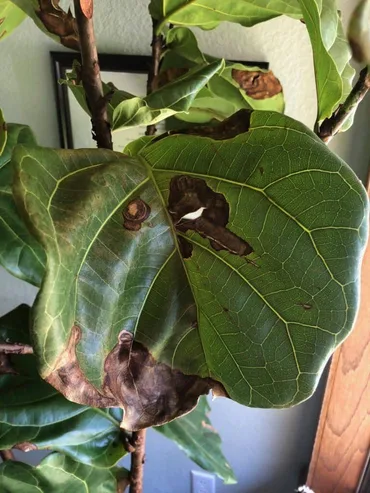
This bacterial issue appears as dark brown or black spots with yellow halos. It often spreads when leaves stay wet or when airflow is poor.
Solution
Prune affected leaves, place other species away from this one, and avoid splashing water on foliage.
Use copper compounds or combinations of copper and mancozeb to treat Ficus lyrata, plus provide good air circulation.
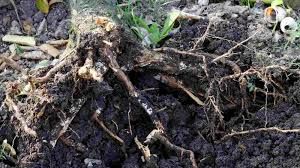
This problem is common in many species and develops when roots sit in overly wet soil, causing blackened, mushy roots and symptoms such as curling leaves and sudden leaf drop.
Solution
Remove Ficus lyrata from the soil, trim off damaged roots, and replant in a fresh, well-draining mix.
Adjust watering so the top few centimeters of soil dry before the next watering.
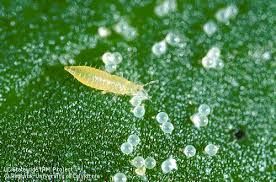
These very small, slender insects feed on leaf tissue. They cause silvery streaks, fine scarring, and distorted new growth. Often, you can see small black specks (waste) on the surface.
Solution
Rinse Ficus lyrata to remove insects, especially along leaf undersides and new growth.
Repeat the procedure every 2-3 days. Finally, remove damaged leaves and isolate the plant.
The genus contains over 800 species, many valued for their ornamental foliage.
Among indoor varieties, the plant stands out for having the largest leaves.
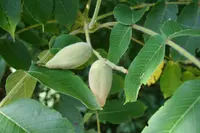
Ficus lyrata produces round fruits around 1.0-1.2 inches (2.5-3 cm) that are green and turn brown as they mature.
They are not edible for people and are almost never seen on indoor plants.
The genus name comes from Latin and refers to the common fig.
The species name lyrata describes the leaf shape, which resembles a lyre or violin.
Avoid overwatering, frequent moving, drafts, and low light. Also, avoid dusty leaves and oversized pots, which can be a reason for root problems.
Keep your plants happy and healthy with plant identification, disease detection, and easy care guidance.