Moss Pole
Provide a moss pole or trellis to encourage larger Monstera adansonii leaves and more natural vertical growth. This mimics a climbing habit used in its native forest habitat.

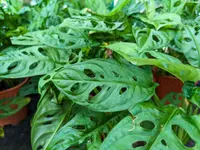
Monstera adansonii is one of the most popular tropical houseplants for beginners and enthusiasts alike. This complete care guide covers everything you need to know, from light and watering to propagation and common pests. It develops a vining or trailing growth habit, which makes it popular for hanging baskets or supports.
Also known as the monkey mask, it grows in the humid rainforests of Central and South America. The plant looks similar to its “sister,” Monstera deliciosa, and, like this one, it can grow to 3-5 feet (0.9-2 m) indoors.
As it grows, note that it can be sensitive to low humidity and irregular watering. Read the article below to learn how to care for Adanson's monstera at home.

Care Difficulty
Easy Care

Light Preference
Partial Shade

Water Requirements
Moderate Water

Temperature Preference
Tropical / Frost Sensitive

Hardiness Zone
10–12

Soil Texture
Loamy, Organic-rich

Soil pH
Acidic (5.5–6.5), Slightly acidic (6.5–7.0)

Soil Drainage
Moist but well-drained

Fertilization
Moderate (every 2–4 weeks)
Scan your plant to receive care tips personalized for your specific plant
Available on iOS and Android
Daily bright, indirect light provides the ideal conditions for this species.
Monstera adansonii requires moist but not waterlogged soil, with moderate watering adjusted to seasonal growth cycles. Water when the top 2-3 cm of soil has dried out, typically every 5-7 days during spring through summer. In fall and winter, water every 10-14 days.
Warm conditions suit this tropical climber best, reflecting its origins in the humid rainforests of Central and South America.
High ambient moisture is a crucial requirement for Monstera adansonii. An ideal humidity range of 60-80% supports proper leaf development. The plant tolerates 40-50% humidity but may show slower growth or crisp leaf tips in dry air.
Tip: Increase the level of humidity with misting, pebble trays, grouping plants, or a humidifier.
A loose, airy substrate that retains some moisture while draining well suits the Swiss cheese vine best.
An adaptable climber, Monstera adansonii grows well in containers if they support root development and vertical structure. Choose a pot at least 10-12 inches (25-30 cm) deep with drainage holes, and empty saucers promptly after watering. Install a moss pole or trellis at potting time, as the stems become top-heavy and require support.
Tip: Choose terracotta pots, as they reduce the risk of overwatering by releasing moisture through their walls.
Fertilization supports steady growth, but shouldn't be intensive for Monstera adansonii.
Pruning your Swiss cheese vine helps control its size and shape and is usually done during active growth in spring or summer. Remove yellowing and damaged stems to improve airflow, and trim long vines above a node to encourage branching.
Monstera adansonii needs repotting when roots outgrow the pot, typically every 1-2 years.
Stem cuttings are the most reliable and widely used method for propagating Swiss cheese vine. Do this in spring or early summer.
Swiss cheese vine is frost-sensitive and cold-intolerant. It requires active management in winter to prevent cold damage, so keep temperatures above 55°F (13°C) and place the pots in the warmest available spot as far away from drafts and windows as possible.

Plant Health Check
Not sure what's wrong with your plant? Check your plant's health inside the app.
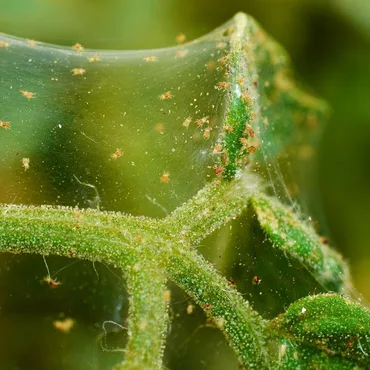
These small arachnids prefer warm conditions and colonize the undersides of leaves. They produce fine webbing and cause pale stippling or bronzing across the Monstera adansonii leaf surface.
Solution
Increase humidity to deter infestations, then wash affected leaves thoroughly with a strong jet of water.
Persistent cases respond well to repeated applications of neem oil or insecticidal soap on Monstera adansonii every 5-7 days.
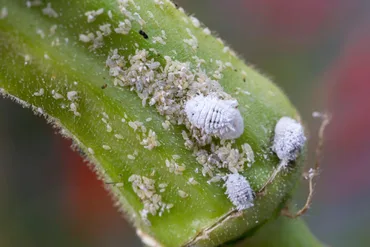
These soft-bodied insects cluster in leaf axils and along stems. They secrete a white, waxy coating while feeding on plant sap, which causes yellowing, distorted growth, and sticky honeydew residue.
Solution
Remove visible colonies manually with a cotton swab dipped in 70% isopropyl alcohol. Then, treat Monstera adansonii with neem oil or insecticidal soap.
Repeat the procedure weekly for 3-4 weeks.
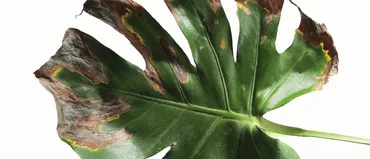
There’s too much bright, direct sun for your plant. In nature, the Swiss cheese vine prefers the filtered light beneath the tree canopy.
Solution
Move the plant out of direct sun. Existing scorch marks won’t recover, but new growth should appear healthy.
Remove severely damaged leaves if needed.
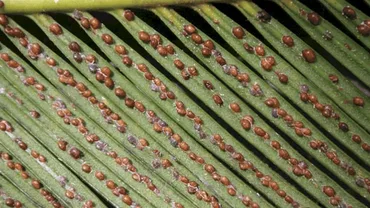
These immobile, shell-covered insects attach to stems and leaf undersides. They extract sap and cause yellowing, stunted growth, and a sticky residue that can promote sooty mould development.
Solution
Scrape off visible scale with a soft brush or fingernail, then apply horticultural oil or insecticidal soap to all stem surfaces.
Repeat every 7-10 days until no live insects remain.
The genus was established in 1763 by the French botanist Michel Adanson, and Monstera adansonii was later formally described by Heinrich Wilhelm Schott in 1830. Commonly known as Adanson’s monstera, the species was named in honor of Adanson.
The genus name comes from Latin, meaning “monstrous” or “unusual,” referring to the striking fenestrations characteristic of these plants.
Young Monstera adansonii species produce entire, unfenestrated leaves. That's a developmental shift known as heteroblasty.
The growth-variance benefit of fenestration becomes advantageous only once the plant is large and fast-growing enough that missing a sunfleck incurs a meaningful cost.
Fenestrated leaves actually attract more herbivory than intact leaves.
However, the primary confirmed function of the holes is to enhance water delivery to the roots via stemflow channeling, not to provide wind resistance or deter herbivores.
Yes, it can grow outdoors in suitable climates. Swiss cheese vine thrives outside in warm, humid regions within USDA zones 10-12, where temperatures stay above 55°F (13°C). In cooler areas, it can be placed outdoors during warm months but should be moved inside before temperatures drop.
Keep your plants happy and healthy with plant identification, disease detection, and easy care guidance.