Organize a Bath Day
Occasionally, flush the soil with a thorough watering from a hose or tap to remove accumulated salts, excess fertilizer, and buildup that can affect soil quality.

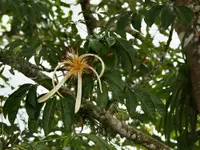
Pachira aquatica is from tropical wetlands in Central and South America. It belongs to the mallow family (Malvaceae) and is often grown as a decorative indoor plant. In nature, it can reach up to 15-23 meters (49-75 feet) and has large, showy flowers and edible seeds. However, indoors, if the care for the money tree is proper, the plant usually stays under 2 meters (6.5 feet) and rarely flowers.
Natural adaptation to humid environments makes the Mexican fortune tree tolerant of inconsistent watering, but sensitive to prolonged soggy soil, so it can be a confusing plant. As a tropical wetland species, it thrives when its need for higher humidity and adequate light is properly maintained.

Care Difficulty
Easy Care

Light Preference
Bright Indirect Light

Water Requirements
Moderate Water

Temperature Preference
Tropical / Frost Sensitive

Hardiness Zone
10–12

Soil Texture
Loamy, Organic-rich

Soil pH
Acidic (5.5–6.5), Slightly acidic (6.5–7.0)

Soil Drainage
Moist but well-drained

Fertilization
Light (every 4–6 weeks)
Scan your plant to receive care tips personalized for your specific plant
Available on iOS and Android
Pachira aquatica thrives in bright, indirect light. This plant also does well under fluorescent lamps or dedicated grow lights.
Note: If you want to move your money tree outdoors, place it in filtered light, such as tree cover or on a shaded patio. Introduce the plant to outdoor conditions gradually to avoid stress.
Water thoroughly, as it likes water but tolerates short dry periods (up to 2 weeks) between watering.
Place species away from drafts, air conditioning, or hot air from heaters. Note that sudden temperature changes can stress the plant and lead to leaf drop.
Because of its tropical nature, Pachira aquatica thrives in warm, humid conditions and adapts well to spaces like kitchens or bathrooms. It does best at around 50% humidity but can tolerate typical indoor air if it is not too dry. Place the plant on a tray of damp pebbles, mist occasionally, or use a humidifier to maintain moisture, especially when humidity drops below 30%.
Money Tree grows best in loose, moisture-retentive soil that still allows excess water to drain efficiently.
Tip: If you don’t want to prepare your own blend, use a houseplant potting mix that emphasizes fast drainage. Formulas for cacti or succulents are also a good choice, as they reduce the risk of overly wet roots.
This species adapts well to container growing when set up correctly: use a pot at least 8-12 inches (20-30 cm) deep with drainage holes. Smaller plants can start in 4-6 inch (10-15 cm) containers. Note that a heavier pot (ceramic or clay) helps stabilize the plant and prevents tipping as the canopy develops.
Fertilization supports steady growth for the money tree.
Note: Use a nitrogen-rich mix in spring, switch to a balanced formulation in summer, and choose a lower-nitrogen option in autumn as growth slows.
Prune Pachira aquatica in spring during active growth, especially if you want to maintain its shape as a yearly routine. Use sharp tools to make precise cuts, remove dead or weak stems, and shorten overly long shoots.
Tip: Cut to ½ inch (1-1.5 cm) above a node or leaf. Remove no more than ½ of the length of a stem. Avoid cutting into braided trunks, as this may damage the structure.
As a rule, re-potting is needed every 2-3 years. If roots are coming out of the holes, it's a sign that you should choose a bigger pot.
Note: Don't repot Pachira aquatica in winter, as this can shock the plant. Wait until spring.
Propagation is typically done using stem cuttings or seeds, though cuttings are more common in cultivation.
Cold conditions are not tolerated well, so money tree winter care focuses on maintaining stable, warm conditions.

Plant Health Check
Not sure what's wrong with your plant? Check your plant's health inside the app.
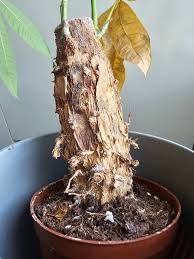
If the stems or trunk begin to feel soft, waterlogged, or collapse easily, this is a clear sign of severe overwatering. It is often accompanied by root rot developing below the soil surface.
Solution
Carefully inspect the Pachira aquatica roots. Remove any that appear dark, soft, or decayed. Gently clear away as much old soil as possible and rinse the remaining healthy roots.
Replant your money tree in fresh, well-draining soil using a clean container to prevent reinfection. But note: If no healthy roots remain, propagation from healthy stem sections is the only way to save the plant.
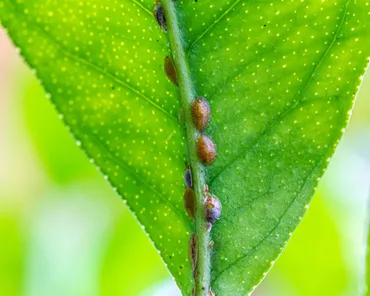
These pests are a common problem. They attach to Pachira aquatica stems and leaves as small, brown bumps, weakening the plant by feeding on sap.
Solution
Rinse the affected parts with a steady stream of water. Focus on leaf undersides and stem joints. Inspect the Money tree regularly and repeat the process as needed to keep the issue under control.
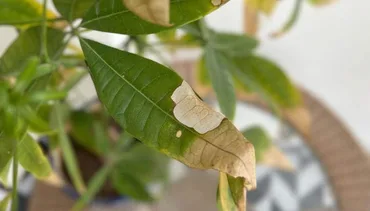
Wrinkled or curling leaves often signal that the plant is too dry and needs water. Similarly, crispy edges or leaf drop can also point to low humidity, insufficient light, or irregular Pachira aquatica watering.
In contrast, yellowing leaves are clear signs of excess moisture.
Solution
Adjust watering based on soil moisture. Let the Pachira aquatica top layer dry before rewatering, and improve humidity if the air is dry. Provide stable lighting and use a container with drainage holes.
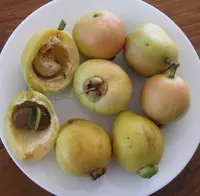
The Pachira aquatica seeds are edible and are consumed in parts of Central and South America, either raw, roasted, or ground into flour.
Money plant has its name for a specific reason: it is widely associated with wealth and good fortune in Asian culture, where it is commonly grown as an indoor decorative plant.
This plant produces large, showy flowers up to 13 inches (32 cm) long that attract different pollinators.
Different parts of Pachira aquatica are used for medicinal purposes, including the fruit, seeds, and bark. These uses have included treatments for digestive issues, pain relief, and general tonics.

Money trees are often sold with 3-5 young plants woven together, so they create a thicker, braided trunk for a fuller appearance.
Yes, it can be grown on a balcony if conditions are suitable. Protect the plant from strong midday sun and wind, and keep the temperatures above 50°F (10°C).
Keep your plants happy and healthy with plant identification, disease detection, and easy care guidance.