


Support trailing stems
Let stems trail over the pot edge or a low shelf rather than hanging them very high, as this reduces mechanical stress on the nodes and keeps the small leaves closer to the light source.

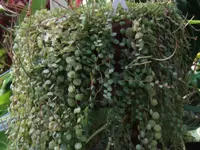
String of turtles (Peperomia prostrata) is a compact trailing houseplant from Brazilian rainforests, where it grows as a creeping groundcover or epiphyte on tree trunks. Its small, round leaves show turtle shell–like patterns in shades of green and silver on thin, cascading stems. This gives it a delicate, ornamental look that suits shelves, hanging planters, and terrariums. Growth is relatively slow, but the plant stays neat and easy to place in small spaces. It prefers bright, indirect light, airy soil, and light but regular moisture. Understanding how to care for String of Turtles is mainly about avoiding overwatering and providing gentle, stable conditions indoors.

Care Difficulty
Moderate Care

Light Preference
Bright Indirect Light

Water Requirements
Moderate Water

Temperature Preference
Tropical / Frost Sensitive

Hardiness Zone
10–12

Soil Texture
Sandy, Loamy, Organic-rich

Soil pH
Acidic (5.5–6.5), Slightly acidic (6.5–7.0)

Soil Drainage
Well-drained

Fertilization
Light (every 4–6 weeks)
Scan your plant to receive care tips personalized for your specific plant
Available on iOS and Android
Peperomia prostrata prefers bright, indirect light that mimics dappled forest conditions.
Watering Peperomia prostrata correctly depends on allowing partial drying between soakings.
This plant likes stable, warm conditions without abrupt temperature swings.
This species prefers moderate household humidity, with slightly elevated levels improving foliage quality.
Peperomia prostrata performs best in a loose, airy, fast-draining mix that still holds some moisture.
This trailing species is very suitable for container growing, including hanging pots and shelves.
Peperomia prostrata benefits from light, controlled feeding during its active growing season.
Pruning Peperomia prostrata helps maintain a compact, dense mat of foliage and removes weak growth.
Peperomia prostrata grows well slightly root-bound and only needs infrequent repotting.
Peperomia prostrata is commonly propagated from stem cuttings taken from healthy, trailing vines.
Peperomia prostrata is frost-sensitive and needs mild indoor conditions during winter in most climates.

Plant Health Check
Not sure what's wrong with your plant? Check your plant's health inside the app.
In its native Brazilian habitat, this species often grows as an epiphyte, rooting into moss and debris on tree branches, and has succulent leaves that store water despite growing in relatively shaded rainforest conditions.
The round leaves show a distinct network of pale veins over a darker background, creating a pattern that closely resembles the carapace of certain turtle species, which is the origin of its common name string of turtles.
Compared with many vining or creeping houseplants, this species grows and spreads slowly, forming relatively compact mats in nature rather than aggressively trailing long distances.

This species is native to high-humidity cloud forest environments in Brazil, where it benefits from frequent mist and stable, mild temperatures, which explains its preference for gentle, sheltered conditions in cultivation and informs many detailed Peperomia prostrata plant care recommendations.
Leggy growth usually comes from insufficient light or from older, unpruned stems. Provide bright, indirect light, rotate the pot regularly, and pinch or trim long vines to stimulate branching and denser growth over time.
Keep your plants happy and healthy with plant identification, disease detection, and easy care guidance.

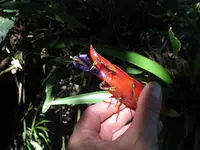
swamp fire
Tillandsia multicaulis
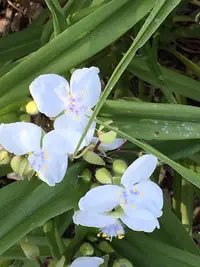
Tradescantia (Andersoniana Group)
Tradescantia 'Little Doll'
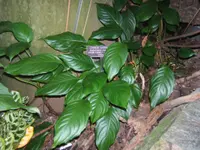
Chinese Evergreen
Aglaonema modestum
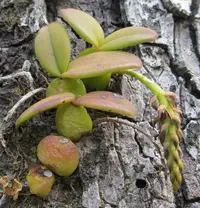
Bulbophyllum elliotii
Bulbophyllum elliotii
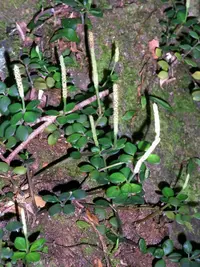
acorn peperomia
Peperomia tetraphylla
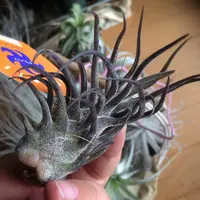
fuzzywuzzy airplant
Tillandsia pruinosa
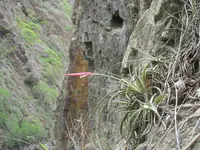
Tillandsia lorentziana
Tillandsia lorentziana
 POPULAR
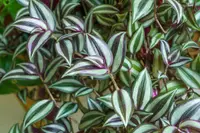
Wandering Jew
Tradescantia zebrina