Sea Milkball Care (Euphorbia flanaganii)

Also known as: Coastal Vingerpol

About Sea Milkball

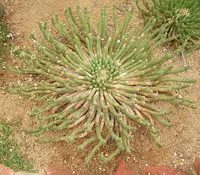
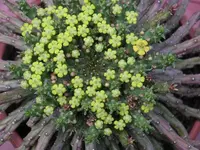
Euphorbia flanaganii, often called the medusa head euphorbia, is a small succulent from arid regions of South Africa. It forms a low, central caudex with many snake-like arms radiating outward.

The plant stays compact and architectural, making it suited to containers and indoor displays. Its growth habit is slow but steady under stable conditions.

This species is drought-tolerant and prefers bright light, fast-draining soil, and careful watering, which makes it relatively straightforward for those learning how to care for Euphorbia flanaganii.

Main Plant Requirements

Care Difficulty

Easy Care

Light Preference

Full Sun

Water Requirements

Low Water

Temperature Preference

Tropical / Frost Sensitive

Hardiness Zone

10–11

Soil Texture

Sandy, Loamy, Rocky

Soil pH

Slightly acidic (6.5–7.0), Neutral (7.0)

Soil Drainage

Well-drained

Fertilization

Minimal (feed rarely)

Get Personalized Care Plan

Scan your plant to receive care tips personalized for your specific plant

Personalized Care in the App

Available on iOS and Android

How to Care for the Sea Milkball

This drought-adapted succulent prefers bright, indirect light with limited harsh midday sun.

  • Provide 4–6 hours of bright, indirect light daily; gentle morning sun with light afternoon shade suits Euphorbia flanaganii well.
  • Outdoors, place in filtered light or dappled shade; indoors, set near an east or bright north window, or a south window with sheer curtain.
  • Too much intense midday sun causes yellowing or scorched stems, while too little light leads to stretched, pale growth, so adjust seasonally as the sun’s angle changes.

This species stores water in its stems and prefers a thorough, infrequent watering approach.

  • Allow the top 3–5 cm of soil to dry completely before watering; in most warm seasons this means waiting until the soil feels dry and the pot feels lighter.
  • Use very free-draining, gritty soil so excess water runs out quickly; remove any standing water from saucers or cachepots after 10–15 minutes.
  • In active growth, expect to water more often, but reduce sharply in cool, low-light months; soft, yellowing, or mushy stems signal overwatering, while wrinkling or limp arms indicate underwatering.

This succulent prefers warm, stable conditions and does not tolerate frost.

  • Aim for 65–80°F (18–27°C) for steady growth, with slightly cooler nights improving resilience as long as conditions stay dry.
  • Protect from temperatures below 40°F (4°C); brief dips may be tolerated if soil is dry, but freezing conditions can kill roots and stems.
  • Tolerates short periods of heat up to 90–95°F (32–35°C) if shaded from intense afternoon sun and given good airflow; avoid sudden temperature swings and cold drafts.

This succulent prefers dry indoor air and rarely needs special humidity management.

  • Target 30–50% humidity, which matches most heated or air-conditioned homes.
  • Dry air is well tolerated; problems come more from excess moisture around the plant than from low humidity.
  • If stems look mushy or mold appears on the soil, lower nearby humidity and improve air movement instead of adding moisture.

Use a very fast-draining, mineral-based mix to prevent root rot in Euphorbia flanaganii.

  • Choose a sandy, gritty structure that stays loose, never compacted, even after repeated watering.
  • Aim for a well-draining, slightly acidic to neutral mix (about pH 6.0–7.2).
  • Combine cactus mix with extra coarse sand, pumice, or perlite in roughly equal parts to increase drainage and aeration.
  • Avoid peat-heavy, dense, or water-retentive mixes that stay wet for more than 1–2 days after watering.

This species is very suitable for container growing at home.

  • Select a wide, shallow pot to accommodate its spreading, medusa-like stems without crowding the crown.
  • Use a container with large, unobstructed drainage holes so water exits quickly during each watering.
  • Prefer unglazed clay if extra evaporation is needed, especially in cooler or lower-light locations where soil stays wet longer.

This succulent needs modest feeding to support compact, healthy growth without overstimulation.

  • Use a balanced liquid fertilizer (around 10-10-10 or 20-20-20) diluted to 25–50% strength for caring for Euphorbia flanaganii.
  • Feed every 4–6 weeks during spring and summer while soil is warm and plant is actively growing.
  • Avoid compost-heavy mixes; use low-organic, well-drained cactus soil plus a synthetic or mineral fertilizer.
  • Stop feeding in fall and winter, or limit to 1 very light application if growth continues indoors.

Pruning is mainly light and corrective, aimed at maintaining shape and removing unhealthy tissue on Euphorbia flanaganii.

  • Best time for pruning is late spring to early summer, when growth is active and recovery is faster.
  • Remove dead, shriveled, or damaged arms and any badly crowded or distorted segments to improve air flow.
  • Use sharp, disinfected scissors or pruning snips; wear gloves to avoid skin contact with the milky sap.
  • Shaping light, overlong arms encourages a denser, more symmetrical rosette over time.

Repotting is infrequent and should be done carefully to avoid damaging the shallow, sensitive roots.

  • Plan to repot every 2–3 years, or when roots circle the pot, emerge from drainage holes, or growth slows despite good care.
  • Choose late spring as the preferred time so Euphorbia flanaganii can re-establish quickly in warm, bright conditions.
  • Select a pot only 2–3 cm wider with excellent drainage and a gritty cactus or succulent mix.
  • Gently loosen the root ball, remove old compacted soil, then keep slightly drier for 7–10 days after repotting to limit root stress.

Propagation is usually done from stem cuttings, which root reliably under warm, bright, and dry-leaning conditions.

  • Take short arm cuttings from healthy Euphorbia flanaganii in late spring or early summer using a clean, sharp blade.
  • Rinse off latex sap, then let cut surfaces callus for 3–7 days in a dry, shaded place to reduce rot risk.
  • Insert callused cuttings into barely moist, very well-drained cactus mix and keep in bright, indirect light.
  • Maintain warmth around 70–80°F and minimal watering until new growth indicates rooting.

This species is frost-sensitive and needs protection from temperatures near or below freezing.

  • Keep Euphorbia flanaganii above 50°F; bring containers indoors before outdoor nights drop below 45°F.
  • Place indoors in the brightest possible spot with cool to moderate temperatures and good airflow.
  • Reduce watering significantly in winter, allowing soil to dry fully between light waterings.
  • Avoid cold drafts and window glass contact, which can chill and scar stems.

Care Tips

Segment-safe handling

Always wear nitrile or latex gloves and avoid touching your face when repotting or trimming, because the milky sap is irritating and can cause skin or eye problems.

Controlled offset division

When the rosette is crowded, detach a few well-rooted offsets with a sterile knife, let the cut surfaces dry for 2–3 days, then pot them in dry, gritty mix to reduce rot risk and maintain the parent plant’s compact form.

Shallow pot selection

Use a wide, shallow pot with large drainage holes to match the plant’s shallow, spreading root system and prevent excess moisture around the crown.

Winter light adjustment

In winter, move the plant to the brightest available indoor spot and rotate the pot every 1–2 weeks so the rays develop evenly and the crown does not lean toward one direction.

Targeted mealybug control

Inspect the crown and base of the rays monthly, and at the first sign of white cottony clusters, dab pests with 70% isopropyl alcohol on a cotton swab and repeat weekly until no new insects appear, which is an important part of caring for Euphorbia flanaganii.

Common Pests and Diseases

Spider mites

This pest is attracted to the plant’s segmented arms in warm, dry indoor air and causes tiny pale speckling and fine webbing between stems.

Solution

Rinse the plant thoroughly under a gentle stream of lukewarm water, then allow it to dry in bright, filtered light; repeat weekly until activity stops. For persistent infestations, apply a ready-to-use insecticidal soap or neem oil to all surfaces of the arms and crown, and slightly raise humidity without keeping the soil wet as part of Euphorbia flanaganii care instructions.

Mealybugs

These insects hide in stem joints and around the central crown, leaving white cottony clumps and sticky honeydew on the plant and nearby surfaces.

Solution

Dab visible insects with cotton swabs dipped in 70% isopropyl alcohol, then rinse the plant to remove residues. Inspect weekly and repeat spot treatments; for larger outbreaks, use insecticidal soap or a systemic insecticide labeled for succulents, and isolate the plant until it is pest free.

Scale insects

This pest appears as small, hard, brown or tan bumps along the arms and near the base, causing gradual yellowing and reduced vigor.

Solution

Gently scrape or pry off individual scales with a fingernail or soft tool, then wipe stems with a cloth lightly moistened with diluted alcohol. Follow with a thorough spray of insecticidal soap, repeated every 7–10 days for several cycles to target newly hatched crawlers, and keep the plant in strong light to support recovery.

Fungal stem rot

This disease develops in overly wet or poorly drained soil and causes soft, dark, collapsing sections on the central crown or lower arms.

Solution

Cut out all affected tissue with a sterile knife, allowing the remaining healthy tissue to dry and callus in a warm, airy spot for several days. Replant only firm, healthy parts in a gritty, fast-draining cactus mix, water sparingly, and avoid letting water sit around the crown area.

Interesting Facts

Medusa-like stem pattern

This species forms a central, thickened caudex from which many narrow, snake-like branches radiate in a spiral, creating a pattern that resembles the mythological Medusa’s head rather than a typical upright succulent stem.

Sunken, miniature leaves

Its true leaves are very small, short-lived, and arranged in tight spirals along the cylindrical branches, often giving the impression that the plant has no leaves and only green, photosynthetic stems.

Latex-based defense

Like many euphorbias, it produces a milky, latex sap that is toxic and irritant, which helps protect the plant from herbivores in its native, open habitats in South Africa and also discourages accidental damage in cultivation.

Botan icon

Did you know?

Euphorbia flanaganii is one of a small group of so-called medusoid euphorbias, a growth form thought to be an adaptation to exposed, arid environments, where a low, sprawling body reduces wind stress and water loss while still capturing strong sunlight near ground level.

FAQs about Sea Milkball

This species adapts well to both, as long as it receives bright light, very sharp drainage, and protection from prolonged cold or excess rain. In many climates, containers allow flexible placement and easier protection from temperature extremes and heavy storms.

Grow Healthy Plants with Botan Care

Keep your plants happy and healthy with plant identification, disease detection, and easy care guidance.


Botan plant care app — identify plants on mobile

Explore More Plants