


Support trailing stems
Use a shallow, wide, and heavy pot and position it high on a shelf or in a rigid hanging basket so long stems can trail freely without being crushed or bent when you move the plant.

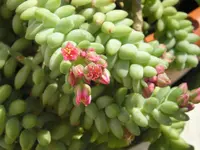
Burro's-tail, Sedum morganianum, is a trailing succulent known for its long, hanging stems densely packed with plump, blue-green leaves. It is often grown in hanging baskets, where the stems can form a cascading curtain of foliage over time.
This species comes from rocky, dry areas of Mexico and Honduras, so it stores water in its leaves and tolerates short periods of neglect. Its slow growth and fragile leaves mean it prefers to be left in one place rather than handled frequently.
Good light, low to moderate watering, and a fast-draining potting mix make it relatively easy to care for Burro's-tail indoors.

Care Difficulty
Easy Care

Light Preference
Partial Sun

Water Requirements
Low Water

Temperature Preference
Tropical / Frost Sensitive

Hardiness Zone
10–11

Soil Texture
Sandy, Loamy, Rocky

Soil pH
Slightly acidic (6.5–7.0), Neutral (7.0)

Soil Drainage
Well-drained

Fertilization
Minimal (feed rarely)
Scan your plant to receive care tips personalized for your specific plant
Available on iOS and Android
Sedum morganianum thrives in bright, indirect light with some gentle direct sun each day.
This succulent prefers thorough but infrequent watering and dries out between waterings.
This species prefers warm, frost-free conditions with stable temperatures.
This succulent tolerates low humidity well, so moisture in the air is rarely a concern.
This succulent needs a sharply draining, mineral-rich mix to prevent root rot.
This trailing succulent is very suitable for container growing, especially hanging baskets.
Sedum morganianum needs only light feeding to maintain healthy, compact growth.
Sedum morganianum benefits from light, targeted pruning to control length and keep stems healthy.
Burro’s tail prefers slightly tight containers and infrequent repotting to avoid root disturbance.
This succulent is most commonly propagated from stem or leaf cuttings rather than seed.
This tender succulent is not frost hardy and needs controlled winter conditions, especially in cold climates.

Plant Health Check
Not sure what's wrong with your plant? Check your plant's health inside the app.
Despite its popularity, this species has no confirmed native wild population and is thought to originate from southern Mexico or Honduras, known only from cultivation and garden escapes.
The trailing stems are highly brittle and segment easily, but the fallen pieces root readily, which is one reason the plant spreads so efficiently in cultivation.
Under strong light or mild stress, the normally blue‑green leaves can develop pink to reddish tones due to increased protective pigments called anthocyanins.

In its mature form, this species can produce cascading stems that exceed 1 m in length, making it one of the longest-trailing decorative succulents commonly grown in hanging baskets.
Yellow, dropping leaves usually come from overwatering, water sitting in the crown, or sudden light changes. Check roots for rot, improve drainage, and allow the soil to dry more between waterings to stabilize the plant.
Keep your plants happy and healthy with plant identification, disease detection, and easy care guidance.

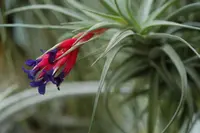
Tillandsia aeranthos
Tillandsia aeranthos
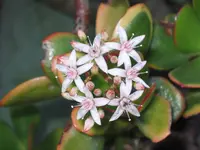
Crassula obovata
Crassula obovata
 POPULAR
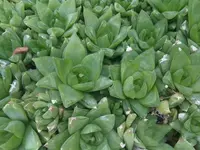
Cathedral Window Haworthia
Haworthia cymbiformis
 POPULAR
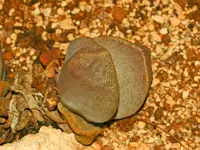
Splitrock Quaggafig
Pleiospilos nelii
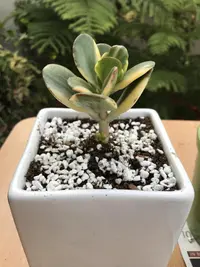
Jade Plant
Crassula ovata 'Variegata'
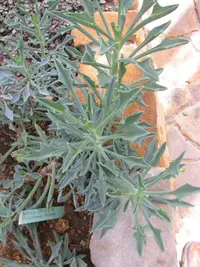
spear head
Senecio kleiniiformis
 POPULAR
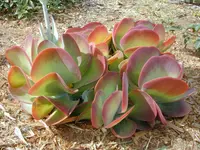
Flapjacks plant
Kalanchoe thyrsiflora
 POPULAR
Asian Taro Plant
Alocasia odora