


Handle sap safely
Always wear disposable gloves when cutting or repotting and immediately rinse any spilled white sap from skin or tools, as the latex can irritate skin and eyes.


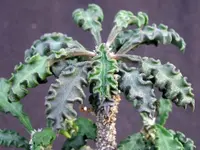
Euphorbia decaryi is a small succulent shrub known for its twisted, creeping stems and tight rosettes of narrow, often wavy leaves. It stays compact, making it suitable for containers and small indoor collections.
This species is native to Madagascar, where it grows in rocky, dry habitats with intense light and very fast-draining soil. Its thickened stems and roots store water, so it tolerates short periods of drought but is sensitive to overwatering.
Compared with many other succulents, it can be slightly more demanding because it dislikes cold, excess moisture, and poor drainage. Understanding these natural conditions helps guide how to care for Euphorbia decaryi in home environments.

Care Difficulty
Moderate Care

Light Preference
Full Sun

Water Requirements
Low Water

Temperature Preference
Tropical / Frost Sensitive

Hardiness Zone
10–11

Soil Texture
Sandy, Loamy, Rocky

Soil pH
Acidic (5.5–6.5), Slightly acidic (6.5–7.0)

Soil Drainage
Well-drained

Fertilization
Minimal (feed rarely)
Scan your plant to receive care tips personalized for your specific plant
Available on iOS and Android
This Madagascan succulent prefers bright, indirect light with some direct sun for compact growth.
This species stores water in its stems and needs infrequent but thorough watering.
This succulent, like the Baseball Plant, prefers warm, stable conditions and is sensitive to cold and frost.
This species handles typical indoor humidity well and rarely needs special adjustment.
Along with the Pine Cone plant, Euphorbia decaryi needs a very fast-draining, mineral-based mix to prevent root and stem rot.
This compact succulent is well suited to container culture.
This slow-growing succulent needs only light, controlled feeding to stay healthy.
This species needs minimal pruning, focused on health and compact form.
Container-grown plants benefit from occasional repotting into fresh, fast-draining mix.
New plants are most often produced from cuttings under warm, bright conditions.
This succulent is not frost hardy and needs controlled, dry conditions in winter.

Plant Health Check
Not sure what's wrong with your plant? Check your plant's health inside the app.
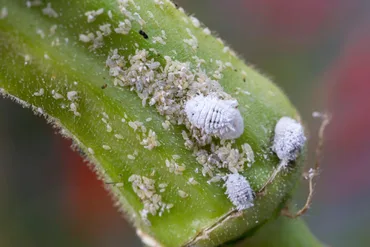
This pest hides in leaf joints and along the ridged stems, sucking sap and causing yellowing, distortion, and sticky honeydew on the plant surface.
Solution
Isolate the plant, then dab visible insects with cotton swabs dipped in 70% isopropyl alcohol and gently wipe along the stem ridges.
Repeat weekly until no new pests appear. Improve light and air movement, and for heavier infestations use a neem oil or insecticidal soap spray, applied to all stem surfaces.
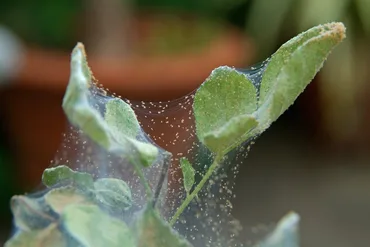
These insects thrive in warm, dry air and can cause fine webbing, stippled or dull leaves, and a generally dusty look on the plant’s textured stems.
Solution
Rinse the plant thoroughly with lukewarm water, focusing on crevices and undersides, then let it dry in bright, indirect light.
Increase ambient humidity slightly around the plant without overwatering the soil, and use a targeted miticide or insecticidal soap sprayed on stems and leaf bases every 5–7 days.
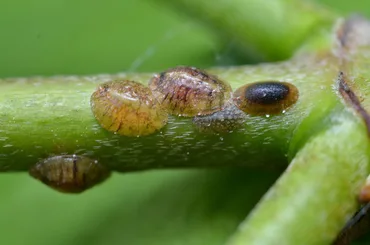
This pest appears as small, brown or tan bumps on stems and leaf bases, feeding on sap and causing slow decline and sooty mold on honeydew deposits.
Solution
Gently scrape off individual scales with a fingernail or soft brush, then wipe stems with a cloth lightly moistened with 70% isopropyl alcohol.
Apply a systemic insecticide suitable for succulents and keep the plant slightly drier to discourage reinfestation while monitoring new growth closely.
This species forms low, twisted, corkscrew-like stems that creep along the soil surface, an adaptation that helps it stay compact and protected in its native rocky habitats of southwestern Madagascar.
It produces small, narrow leaves mainly in the warmer, wetter season and can shed many of them in dry periods, reducing water loss while keeping the stem tissues alive.
Wild populations show notable variation in stem thickness, leaf shape, and branching pattern, which has led to several horticultural forms being selected and traded among collectors.

Euphorbia decaryi is one of the few succulent Euphorbia species that naturally forms a dense, mat-like colony over time, allowing many genetically identical shoots to share limited water and root space on exposed limestone and sandstone outcrops in Madagascar.
This species performs well both indoors and outdoors if protected from frost and excess rain. In cooler or wetter climates, container culture under bright light and good air movement is usually more reliable than planting it in the ground.
Keep your plants happy and healthy with plant identification, disease detection, and easy care guidance.

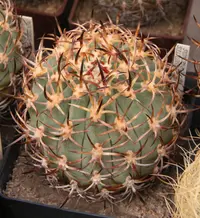
Eriosyce aurata
Eriosyce aurata
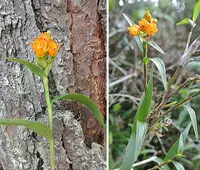
Ellianthus aurautiacus
Elleanthus aurantiacus
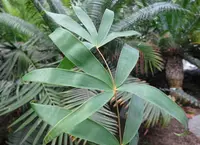
Bamboo Cycad
Ceratozamia hildae
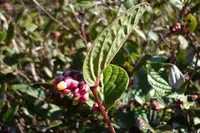
Cavendishia axillaris
Cavendishia axillaris
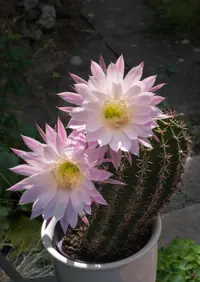
Easter lily cactus
Echinopsis oxygona
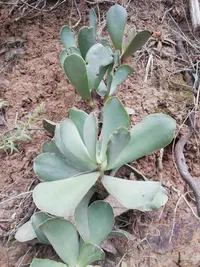
Adromischus sphenophyllus
Adromischus sphenophyllus
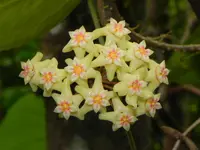
Hoya nicholsoniae
Hoya nicholsoniae
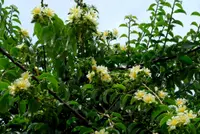
Barbados gooseberry
Pereskia aculeata