Spiny pincushion cactus Care (Mammillaria spinosissima)

About Spiny pincushion cactus

The spiny pincushion cactus, Mammillaria spinosissima, is a compact desert cactus valued for its dense covering of sharp spines and neat, cylindrical stems. Plants often remain small and clump over time, forming tight groups of stems that look like bristling pincushions.

This species is native to arid regions of central Mexico, where it grows in rocky, well-drained soils with strong sun and limited rainfall. It is considered relatively easy to grow indoors or in dry gardens, as long as excess moisture is avoided and the soil drains very well.

Bright light, low to moderate watering, and gritty soil are usually enough to successfully care for Spiny pincushion cactus.

Main Plant Requirements

Care Difficulty

Easy Care

Light Preference

Full Sun

Water Requirements

Low Water

Temperature Preference

Tropical / Frost Sensitive

Hardiness Zone

9–11

Soil Texture

Sandy, Loamy, Rocky

Soil pH

Slightly acidic (6.5–7.0), Neutral (7.0)

Soil Drainage

Well-drained

Fertilization

Minimal (feed rarely)

Get Personalized Care Plan

Scan your plant to receive care tips personalized for your specific plant

Personalized Care in the App

Available on iOS and Android

How to Care for the Spiny pincushion cactus

This cactus prefers bright, direct light but needs gradual acclimation to strong sun.

  • Provide 6–8 hours of direct sun daily, ideally with gentle morning sun and some light afternoon shade in very hot climates.
  • In temperate regions, full sun outdoors is suitable; in bright windows, rotate the Spiny pincushion cactus so all sides receive similar light and avoid sudden moves from shade to full sun.
  • Watch for stretching or pale new growth as a sign of insufficient light and for yellow, scorched patches as a sign of excessive midday sun.

This species prefers thorough but infrequent watering with time to dry between soakings.

  • Allow the top 3–5 cm of soil to dry completely before watering, then water deeply so it drains out of the pot or bed without pooling around the roots.
  • Reduce watering sharply in winter, giving only very light sips every 4–6 weeks if the plant begins to shrivel slightly, to support a cool, dry rest period.
  • Use a fast-draining cactus mix or sandy soil; soft, translucent stems, blackened bases, or a sour smell indicate overwatering, while firm wrinkling signals underwatering.

This cactus prefers warm, dry conditions with a cool but not freezing winter rest.

  • Aim for active growth temperatures of 70–85°F (21–29°C), with good airflow in hot weather to prevent heat stress and fungal issues.
  • Mammillaria spinosissima tolerates short drops to 40–45°F (4–7°C) if kept dry, but long exposure below this, especially with moisture, greatly increases rot risk.
  • Protect from frost, freezing winds, and prolonged heat above 95°F (35°C); provide light shade and extra ventilation during extreme heat, and shelter during cold snaps.

This cactus thrives in dry air and humidity rarely limits Mammillaria spinosissima growth indoors.

  • Aim for 20–40% humidity, similar to typical heated indoor air in arid or temperate regions.
  • Dry household air is usually acceptable; avoid placing the plant in terrariums or near humidifiers.
  • Watch for pale, swollen, or soft tissue if kept in very humid rooms, and increase air flow if this appears.

This species needs a very fast-draining, mineral-rich substrate to prevent root and stem rot.

  • Use a gritty mix such as 50% cactus potting mix with 50% mineral material like pumice, perlite, or coarse sand.
  • Structure should be loose and airy so water runs through in seconds and the pot feels noticeably lighter within a day after watering.
  • Aim for slightly acidic to neutral pH, roughly 6.0–7.0, which most commercial cactus mixes provide by default.
  • Avoid dense peat-heavy or clay-based soil, which compacts, holds water too long, and suffocates fine roots.

This species is well suited to container growing, including small tabletop pots.

  • Choose a pot only slightly wider than the root ball so the mix dries evenly between sparse waterings.
  • Select unglazed terracotta in humid climates to allow faster evaporation and reduce the risk of root rot.
  • Use a low, broad pot if the plant clusters and leans, which reduces tipping when the stems elongate.

This cactus has modest nutrient needs but benefits from light feeding during active growth.

  • Use a balanced liquid cactus fertilizer at half strength or a slow-release cactus formula in spring and early summer.
  • Feed every 4–6 weeks during the growing season, only when the plant is well lit and actively growing.
  • Avoid fertilizing in late fall and winter, when growth slows and roots are more prone to salt buildup.
  • For Spiny pincushion cactus in poor, very sandy mixes, one weak compost tea feeding in spring can support flowering.

Mammillaria spinosissima needs almost no structural pruning, only light sanitary work.

  • Best time is late spring to early summer, when the plant is actively growing and wounds seal more quickly.
  • Remove dead, dried, or blackened stems and any obviously rotting tissue with sterile, sharp scissors or a cactus knife.
  • Cut away badly damaged offsets at the base to improve air flow and reduce disease risk, leaving healthy clusters intact.
  • Allow all cut surfaces to dry and callus in bright, indirect light before any watering resumes.

This species prefers to stay slightly root-bound and does not need frequent repotting.

  • Repot every 3–4 years, or when roots circle the pot, emerge from drainage holes, or growth becomes noticeably slow.
  • Choose late spring as the safest time, using a pot only 1–2 in wider with a fast-draining cactus mix.
  • Wear gloves, gently loosen the root ball, and remove old, compacted soil while keeping main roots intact.
  • Let roots dry 2–3 days after repotting before the first light watering to reduce stress and rot risk.

Mammillaria spinosissima is commonly propagated from offsets and seeds under warm, bright conditions.

  • Detach firm offsets in late spring or early summer, cutting cleanly at the base with a sterile blade.
  • Allow cut offsets to callus for several days, then place on barely moist cactus mix with bright, indirect light.
  • Maintain warmth around 70–80°F and very light moisture until roots form, then water as for mature plants.
  • Sow seeds on the surface of sterile, gritty mix, keep slightly moist, and provide bright, filtered light for germination.

This cactus prefers a cool, very dry winter rest and is only lightly frost tolerant.

  • In-ground plants in mild climates handle brief drops near 25–30°F if soil is sharply drained and stems stay dry.
  • Move containers indoors or under cover before hard frost, giving bright light and cool air around 45–55°F.
  • Keep soil almost completely dry in winter to prevent root and stem rot during dormancy.
  • Avoid overhead watering or high humidity around the plant in cold conditions to protect the epidermis from damage.

Care Tips

Rotate for symmetry

Turn the pot 90° every 2–3 weeks during active growth so the stem receives even light on all sides and develops a straight, symmetrical column rather than leaning toward the window.

Top-dress with grit

Add a 0.5–1 cm layer of coarse horticultural grit or small lava rock on the soil surface to keep the stem base dry, reduce algae and fungus gnat issues, and stabilize the plant in its pot.

Use clay pots

Grow the plant in an unglazed clay pot with a drainage hole to allow faster evaporation from the root zone, which helps prevent rot in this species with dense, fibrous roots.

Dry winter rest

From late fall to early spring, keep the plant almost completely dry and slightly cooler to encourage flower bud formation and prevent soft, etiolated growth.

Inspect spines safely

Use long tweezers or tongs to remove dead flowers and inspect the stem for scale, mealybugs, or rot, which makes caring for Spiny pincushion cactus safer and more precise without injuring fingers.

Common Pests and Diseases

Mealybugs

This pest feeds on cactus stems and in between tubercles, often appearing as small white cottony clusters. Symptoms include slowed growth, yellowing, and sticky honeydew that can lead to sooty mold.

Solution

Isolate the plant, then remove visible insects with a cotton swab dipped in 70% isopropyl alcohol, paying attention to the areoles and spine bases. Improve light and air movement, and repeat alcohol spot-treatments weekly until no new mealybugs appear; for heavier infestations, use a systemic insecticide labeled for cacti following all label directions.

Spider mites

These insects are tiny sap-feeders that thrive in hot, dry indoor air and on sunny windowsills. Symptoms include dull, dusty-looking stem surfaces, fine webbing, and tiny pale speckles where tissue has been sucked dry.

Solution

Rinse the cactus gently under a lukewarm shower or faucet to remove webbing and mites, keeping the soil surface covered to avoid waterlogging. Increase humidity around the plant without wetting the stem constantly, boost light, and if needed apply a miticide or horticultural soap labeled for spider mites, repeating applications as directed to catch new hatchlings.

Scale insects

This pest appears as small, hard, brown or tan bumps tightly attached to the stem, especially along ribs and around areoles. Symptoms include yellowing patches, reduced vigor, and sticky honeydew on the spines or pot surface.

Solution

Scrape or pry individual scales off gently with a toothpick or soft brush, then dab remaining spots with 70% isopropyl alcohol. For persistent problems, use a systemic insecticide suited to cactus use and monitor regularly, since young mobile crawlers are easier to control than adults.

Corky scab (corking from stress)

This disease-like disorder causes rough, brown, corky patches on the lower or sun-exposed sides of the stem, often triggered by sun scorch, drastic watering changes, or mechanical injury. Symptoms include firm, dry, tan to brown areas that do not feel soft or wet but can disfigure the plant surface.

Solution

Adjust light gradually when moving the plant to higher sun and maintain steady watering, allowing soil to dry between waterings but not staying dry for very long periods during active growth. Remove only any loose, dead tissue; the existing corky areas will not disappear but stabilizing conditions prevents further spread and supports healthy new growth above.

Fungal stem rot

This disease usually enters through wounds or water-damaged tissue and progresses rapidly in humid or overly wet conditions. Symptoms include soft, dark, or translucent patches on the stem, sometimes with a foul odor or collapse of affected sections.

Solution

At the first sign of soft tissue, cut out all affected areas with a sterile knife back to firm, healthy tissue, and allow the wound to dry and callus for several days in a warm, bright, dry place. Discard severely rotted plants, replace overly wet or compacted soil with a fast-draining cactus mix, reduce watering, and avoid wetting the stem to reduce future infections while following Mammillaria spinosissima care instructions carefully.

Interesting Facts

Spine density variation

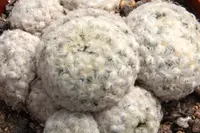
This species naturally occurs in two forms, one with extremely dense white spines and another with more loosely arranged reddish-brown spines, both belonging to the same species rather than separate taxa.

Ringed flowering pattern

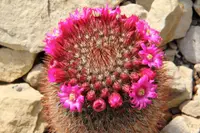
It typically produces rings of small pink to magenta flowers around the stem near the top, creating a crown-like band rather than scattered blooms.

Rocky slope specialist

In its native range in central Mexico, it often grows on steep, rocky volcanic slopes and cliffs, anchoring in shallow crevices with a relatively small root system adapted to very fast drainage.

Botan icon

Did you know?

In some natural populations in Mexico, this cactus can form tight clusters of many stems over time, creating dense cushions that help shade its own roots and reduce water loss from the surrounding soil surface.

FAQs about Spiny pincushion cactus

This species usually needs several years of age, a cool dry winter rest, and strong light to set buds. Avoid high winter watering and fertilizer. Stable conditions and patience are the most effective Mammillaria spinosissima care for flowering.

Grow Healthy Plants with Botan Care

Keep your plants happy and healthy with plant identification, disease detection, and easy care guidance.

Botan plant care app — identify plants on mobile

Explore More Plants