


Rotate For Symmetry
Turn the pot 90° every 2–3 weeks so the long triangular tubercles develop evenly and the plant keeps a balanced, star-shaped form instead of leaning toward the light source.

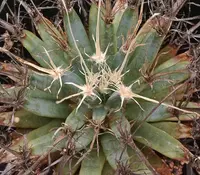
Leuchtenbergia principis, often called agave cactus, is a slow-growing desert cactus with long, triangular tubercles that resemble agave leaves. It forms a solitary, sculptural rosette that stays fairly compact for many years.
In nature it grows on rocky, arid slopes in central Mexico, adapted to intense sun, poor mineral soils, and infrequent rain. This background makes it relatively undemanding if given strong light, excellent drainage, and careful watering.
Its main challenges come from overwatering and low light, which quickly weaken the plant. For those who learn how to care for Agave cactus, it can be a long-lived and distinctive centerpiece in a collection.

Care Difficulty
Moderate Care

Light Preference
Full Sun

Water Requirements
Low Water

Temperature Preference
Warm Climate

Hardiness Zone
9–11

Soil Texture
Sandy, Loamy, Rocky

Soil pH
Slightly acidic (6.5–7.0), Neutral (7.0)

Soil Drainage
Well-drained

Fertilization
Minimal (feed rarely)
Scan your plant to receive care tips personalized for your specific plant
Available on iOS and Android
Leuchtenbergia principis needs strong light that imitates open, arid habitat conditions.
Leuchtenbergia principis prefers infrequent, deep watering with thorough drying in between.
This cactus favors warm, dry air and is sensitive to prolonged cold and frost.
This desert cactus prefers very dry air and rarely suffers from low household humidity.
This species needs a very fast-draining, mineral-rich substrate to prevent root and base rot.
This species is very suitable for container growing due to its slow, compact root system.
Leuchtenbergia principis grows well with modest feeding in a very lean, fast-draining substrate similar to caring for Agave cactus.
Leuchtenbergia principis requires minimal pruning, focused mainly on health and safety rather than shaping.
This cactus prefers to stay slightly root-bound and benefits from infrequent, careful repotting in very gritty soil.
Leuchtenbergia principis is usually propagated from seed, which is slow but reliable under the right conditions.
This species prefers a cool, very dry winter rest and has limited frost tolerance, especially in containers.

Plant Health Check
Not sure what's wrong with your plant? Check your plant's health inside the app.
This species is a true cactus that has evolved long, triangular tubercles that mimic agave leaves, a case of convergent evolution where unrelated plants develop similar shapes in the same dry habitats.
In the wild it usually grows as a single, unbranched stem on limestone outcrops in central Mexico, where its deep taproot anchors it in rocky crevices and helps it access scarce water.
Its large, fragrant yellow flowers typically open in the evening or at night, an adaptation linked to pollination by nocturnal insects such as moths in its native habitat.

This is the only species in its genus, making it a monotypic cactus lineage with no close living relatives, and its distinctive agave-like appearance has made it an important reference plant in studies of cactus evolution and morphology.
This species flowers only when very mature, often after many years, and may never bloom in containers. Lack of strong light, cool nights, and a dry winter rest can also delay or prevent flower production.
Keep your plants happy and healthy with plant identification, disease detection, and easy care guidance.

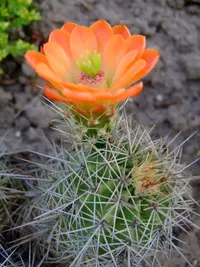
scarlet hedgehog cactus
Echinocereus coccineus

Aporocactus martianus
Aporocactus martianus
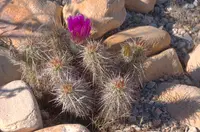
Engelmann's hedgehog cactus
Echinocereus engelmannii
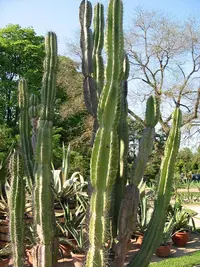
Cuddly cactus
Cereus jamacaru
Opuntia megapotamica
Opuntia megapotamica
climbing cactus
Epiphyllum phyllanthus
pingpong-ball cactus
Epithelantha micromeris

kingcup cactus
Echinocereus triglochidiatus