


Stabilize Loose Segments
Support freshly attached joints with a ring of coarse gravel or small rocks around the base so new segments root and anchor instead of toppling and breaking off.

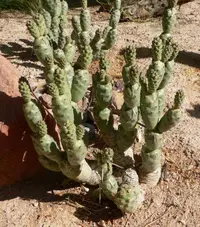
Tephrocactus articulatus, commonly called pine cone cactus, is a small segmented cactus from arid regions of Argentina. It forms stacked, pine-cone-like joints that detach easily. The plant stays compact and sculptural, making it suitable for containers and sunny windowsills. Its joints are covered with short spines or bristles, so handling requires care. This species prefers bright, direct light, very fast-draining soil, and careful watering with long dry periods between soakings. Due to its drought tolerance and slow growth, it is considered low-maintenance once its basic needs are understood, which helps explain how to care for Pine Cone Cactus successfully.

Care Difficulty
Moderate Care

Light Preference
Full Sun

Water Requirements
Low Water

Temperature Preference
Warm Climate

Hardiness Zone
9–11

Soil Texture
Sandy, Loamy, Rocky

Soil pH
Slightly acidic (6.5–7.0), Neutral (7.0)

Soil Drainage
Well-drained

Fertilization
Minimal (feed rarely)
Scan your plant to receive care tips personalized for your specific plant
Available on iOS and Android
This cactus prefers bright, intense light that mimics high desert conditions.
Watering should be sparse and guided by soil dryness rather than a fixed schedule.
This species favors warm, dry conditions with a distinct cool, but not freezing, rest period.
This cactus prefers dry air and does not need extra humidity.
Use a very fast-draining, mineral-based mix to prevent root rot.
This species is very suitable for container growing.
This desert cactus needs only light feeding, so focus on modest, well-timed nutrition for healthy growth.
Pruning Tephrocactus articulatus is minimal and mainly for health and safety rather than shaping.
This cactus prefers slightly tight pots and only needs infrequent repotting in very fast-draining soil.
Tephrocactus articulatus is most often propagated from detached stem segments rather than from seed.
This cactus prefers cool, dry winter rest and is only moderately tolerant of short, light frosts.

Plant Health Check
Not sure what's wrong with your plant? Check your plant's health inside the app.
This cactus naturally drops its pine cone–like stem segments when stressed or bumped, allowing the loose joints to roll or be moved by animals and root elsewhere as a simple form of vegetative reproduction.
The white, lightly scented flowers usually open at night or in the evening, an adaptation that favors pollination by nocturnal insects in its native arid habitats of northwestern Argentina.
Like many opuntias, it produces only tiny, short-lived leaves that quickly dry and fall off, relying instead on its jointed, water-storing stems for photosynthesis and drought survival, which is a key aspect of Tephrocactus articulatus plant care in cultivation.

Tephrocactus articulatus grows naturally on rocky, extremely well-drained slopes in the Monte Desert of Argentina, where its pale, chunky segments blend with stones and gravel, providing effective camouflage from herbivores in an otherwise sparse landscape.
Lack of flowers usually comes from insufficient light, no cool dry winter rest, or a very young plant. Provide strong light, slightly cooler and drier winter conditions, and avoid heavy fertilizing, which can promote stem growth instead of buds.
Keep your plants happy and healthy with plant identification, disease detection, and easy care guidance.

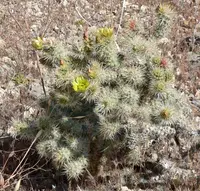
Wiggins' cholla
Cylindropuntia echinocarpa
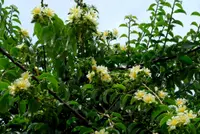
Barbados gooseberry
Pereskia aculeata
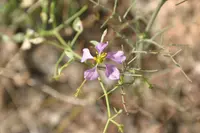
sticky fagonbush
Zygophyllum pachyacanthum
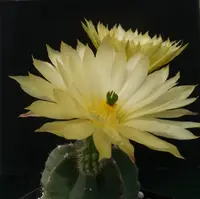
Echinocereus subinermis
Echinocereus subinermis
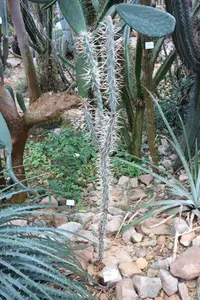
Long-spine Cholla
Cylindropuntia molesta

Armatocereus matucanensis
Armatocereus matucanensis
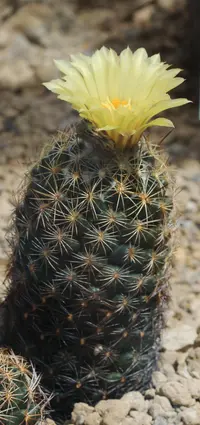
Rhinoceros Cactus
Coryphantha cornifera
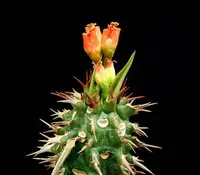
Euphorbia viguieri
Euphorbia viguieri