Hurricane Cactus Care (Lepismium cruciforme)

About Hurricane Cactus

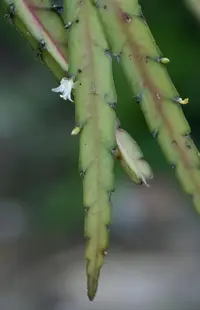
Hurricane cactus (Lepismium cruciforme) is an epiphytic cactus, meaning it often grows on trees rather than in the ground. It forms long, flattened, zigzagging stems that cascade and twist, giving a soft, trailing look. In nature it occurs in tropical and subtropical forests of South America, where it grows in shaded, humid environments. This background explains its preference for bright, indirect light and evenly moist, airy soil rather than hot, dry desert conditions. It is generally considered easy to moderate to grow, as it tolerates typical indoor temperatures but dislikes drought and waterlogged soil. Understanding this forest origin helps clarify how to care for Hurricane Cactus in a home setting.

Main Plant Requirements

Care Difficulty

Moderate Care

Light Preference

Bright Indirect Light

Water Requirements

Moderate Water

Temperature Preference

Tropical / Frost Sensitive

Hardiness Zone

11–12

Soil Texture

Sandy, Loamy, Organic-rich

Soil pH

Acidic (5.5–6.5), Slightly acidic (6.5–7.0)

Soil Drainage

Moist but well-drained

Fertilization

Light (every 4–6 weeks)

Get Personalized Care Plan

Scan your plant to receive care tips personalized for your specific plant

Personalized Care in the App

Available on iOS and Android

How to Care for the Hurricane Cactus

This epiphytic cactus prefers bright, indirect light that mimics dappled forest conditions.

  • Provide 6–8 hours of bright, filtered light each day, such as near an east or bright north window or under light tree shade outdoors.
  • Allow gentle morning sun but protect Hurricane Cactus from strong midday or afternoon sun, which can scorch stems and cause pale, rough patches.
  • In winter, move the plant to the brightest spot available; if stems grow thin and stretched, increase light intensity or duration gradually.

This species prefers consistently lightly moist soil with brief drying at the surface between waterings.

  • Water only when the top 2–3 cm of soil feel dry, then water thoroughly so excess drains away and no water remains in saucers or cachepots.
  • Reduce watering in winter, allowing the top 3–5 cm to dry; slightly wrinkling stems suggest thirst, while mushy segments or sour smell indicate overwatering.
  • Use a fast-draining mix suited to epiphytic cacti so Lepismium cruciforme roots receive moisture but also abundant air, limiting root rot risk.

This cactus grows best in mild, stable temperatures with protection from frost and extreme heat.

  • Aim for 65–80°F (18–27°C) during active growth, with only small day–night swings to avoid stress on stems and roots.
  • Protect from cold; growth slows below 55°F (13°C), and damage or tissue collapse can occur below about 40°F (4°C), especially in wet soil.
  • In hot periods above 85°F (29°C), increase shade and airflow and avoid heat-reflecting surfaces, as prolonged high heat can cause wilt and sun stress.

This epiphytic cactus prefers moderately humid air but tolerates typical indoor levels if not too dry.

  • Aim for 40–60% humidity to keep Lepismium cruciforme stems plump and growing evenly.
  • Tolerates brief drops to 30–35%, but prolonged very dry air leads to shriveling tips and crispy edges on Hurricane Cactus segments.
  • Increase humidity with a nearby pebble tray, grouped plants, or a small humidifier rather than misting directly onto stems.

This species needs a loose, airy, fast-draining mix that still holds some moisture.

  • Use a base of cactus or succulent mix blended with 30–40% fine orchid bark and perlite for Lepismium cruciforme.
  • Aim for slightly acidic to neutral pH around 6.0–7.0, which supports root function and nutrient uptake.
  • Ensure the mix feels gritty and open, with visible chunky particles that let water drain in seconds, not minutes.
  • Avoid heavy garden soil, peat-only mixes, or compacted substrates that stay wet and exclude air around the roots.

This cactus is very suitable for container growing, especially in hanging or elevated pots.

  • Choose a wide, shallower container to accommodate its spreading, trailing roots rather than a deep, narrow pot.
  • Select a heavier or weighted pot if hanging growth makes the container tip or shift easily in wind or when bumped.
  • Leave several centimeters between root ball and rim to prevent dense trailing stems from blocking airflow and trapping moisture on the surface.

Lepismium cruciforme benefits from light, controlled feeding during its active growing season.

  • Apply a balanced liquid fertilizer (around 10-10-10) at 1/4–1/2 strength every 4–6 weeks in spring and summer.
  • Use either a diluted balanced NPK or a small amount of compost; avoid high-nitrogen lawn products.
  • Stop feeding in fall and winter, when growth slows, as Hurricane Cactus rests and excess nutrients can damage roots.
  • Flush the pot with plain water every few months to limit salt buildup from fertilizers.

Lepismium cruciforme responds well to light pruning that maintains length, shape, and plant health.

  • Prune in late winter or early spring before the main growth flush begins.
  • Use clean, sharp scissors or pruning snips to remove dead, shriveled, or damaged stems at the base.
  • Thin crowded or tangled segments to improve airflow and light penetration, which can support flowering.
  • Shorten overly long stems just above a joint to encourage branching and a fuller, cascading form.

This epiphytic cactus prefers slightly snug pots and only needs repotting when clearly rootbound.

  • Check for roots circling the pot, pushing through drainage holes, or slowed growth as signs it is time to repot.
  • Plan to repot every 2–3 years in spring, when active growth helps the plant recover from root disturbance.
  • Select a container 2–3 cm wider with excellent drainage and use a chunky cactus or orchid-style mix.
  • Gently loosen circling roots, keep them slightly moist, then place the plant at the same depth and shade it from strong sun for 1–2 weeks to reduce stress.

This cactus is most commonly propagated from stem cuttings, which root reliably under warm, bright conditions.

  • Take 7–10 cm healthy stem segments in spring or early summer and let cut ends callus for 1–3 days.
  • Insert callused cuttings upright into a slightly moist, free-draining cactus mix or perlite blend.
  • Keep in bright, indirect light at 68–80°F with high humidity and minimal watering until new growth appears.
  • After firm rooting, slowly transition plants to normal watering and standard Lepismium cruciforme care.

Lepismium cruciforme is frost-sensitive and needs mild, protected conditions through winter in most climates.

  • Keep indoor plants at 55–70°F in bright, indirect light away from cold drafts and heater blasts.
  • Move outdoor containers indoors before temperatures drop near 40°F, checking for pests first.
  • Reduce watering so the mix dries more between waterings, but do not let roots stay bone-dry for long.
  • In very dry heated homes, provide moderate humidity with a tray of water and pebbles beneath the pot.

Care Tips

Support Hanging Stems

Install a sturdy wall hook or ceiling anchor and use a wide, smooth hanger or bracket so the long, jointed stems can hang freely without kinking, which reduces breakage and improves air flow around the plant.

Rotate For Even Form

Turn the pot 90° every 2–3 weeks so all sides receive similar light, which encourages balanced, radial growth instead of sparse, one-sided trailing.

Plan For Seasonal Rest

From late fall to early spring, slightly reduce watering and stop repotting or heavy feeding to allow a mild rest period that supports better flowering and stronger new growth in the following season.

Use Gentle Stem Training

Guide young stems over time using soft plant ties or clips attached to a hoop, trellis, or rail if a more sculpted or cascading shape is desired, avoiding sharp bends that can snap the segmented growth.

Monitor Segment Health

Check stem segments monthly for corking, shriveling, or soft spots and remove only the clearly dead or mushy sections with sterilized scissors, which helps maintain plant vigor when growing Hurricane Cactus.

Common Pests and Diseases

Mealybugs

This pest often hides in stem joints and along the ribbed edges of the flattened segments, feeding on sap and weakening the plant over time. Symptoms include cottony white clumps, sticky honeydew, and distorted or yellowing segments.

Solution

Remove visible insects with a cotton swab dipped in 70% isopropyl alcohol, then rinse the plant gently with lukewarm water. Improve air circulation, isolate the plant from others, and repeat spot treatment weekly until no new mealybugs appear, using a light insecticidal soap spray on the stems if the population is larger.

Scale insects

These insects attach tightly along stems and older segments, appearing as flat or domed brown bumps that do not move. Symptoms include slow growth, dull or yellowing tissue, and sticky residue on the plant or nearby surfaces.

Solution

Scrape or lift individual scale insects off with a fingernail or soft brush, then wipe stems with a cloth lightly moistened with diluted alcohol. For heavier infestations, apply insecticidal soap or a horticultural oil spray, ensuring thorough coverage of stems and joints, and repeat every 7–10 days as needed while monitoring the plant closely as part of ongoing Lepismium cruciforme care.

Spider mites

This pest thrives in warm, dry indoor air and can cause fine stippling and bronzing on the narrow stem wings. Symptoms include very fine webbing in branch forks and a dusty appearance on segments when populations are high.

Solution

Rinse the plant thoroughly under a gentle shower or faucet, focusing on the undersides and edges of segments, then allow it to dry in bright, indirect light. Raise humidity around the plant and, if mites persist, use insecticidal soap or a miticide labeled for houseplants, repeating applications every 5–7 days until new growth emerges clean.

Soft rot (bacterial)

This disease develops in overly wet, poorly ventilated conditions and causes water-soaked, mushy areas on the segmented stems. Symptoms include foul odor, tissue collapse at the base of segments, and rapid spread in warm conditions.

Solution

Cut away all affected tissue with a sterile, sharp tool back to firm, healthy segments, and discard the infected material. Allow cut surfaces to dry for 1–2 days before replanting if needed, reduce watering, improve drainage and airflow, and keep the plant in a warm, bright, indirect light location to discourage further bacterial growth.

Fungal stem spot

This disease appears as small brown, purple, or black spots along the flat segments, often with a slightly sunken or dry texture. Symptoms include gradual expansion of lesions and occasional cracking or deformation of affected areas, especially in high humidity with poor airflow.

Solution

Remove and discard heavily spotted segments to reduce the source of fungal spores, cutting back to clean, unspotted tissue. Improve air movement around the plant, avoid wetting the stems when watering, and if spots continue to spread, apply a houseplant-safe fungicide according to label directions while adjusting watering frequency to keep the substrate slightly dry between waterings.

Interesting Facts

Epiphytic forest dweller

This species naturally grows as an epiphyte on trees in Atlantic Forest regions of Brazil, Argentina, and Paraguay, anchoring to bark rather than rooting in soil, and absorbing water and nutrients from rain, humidity, and organic debris.

Flattened cruciform stems

Its stems are distinctly flattened into narrow, cross-shaped segments with wing-like edges, an adaptation that increases surface area for photosynthesis while staying lightweight and flexible in the tree canopy.

Nocturnal pollination strategy

In habitat it tends to produce small, pale, often night-scented flowers that are accessible to nocturnal pollinators such as moths, a common strategy among many forest cacti living under shaded canopies.

Botan icon

Did you know?

Unlike many desert cacti, this species belongs to a group of rainforest cacti that have evolved to tolerate lower light, higher humidity, and frequent rainfall, illustrating a major ecological shift in the cactus family from arid ground habitats into shaded tree canopies.

FAQs about Hurricane Cactus

Flowering often fails when light intensity, day length, or seasonal temperature changes are insufficient. Mild winter cooling, slightly drier rest, and stable, bright but indirect light usually trigger buds. Avoid frequent repositioning while buds are forming.

Grow Healthy Plants with Botan Care

Keep your plants happy and healthy with plant identification, disease detection, and easy care guidance.

Botan plant care app — identify plants on mobile

Explore More Plants