Segment support check
Inspect long hanging stems every few months and gently reposition or support heavy sections on the rim of the pot or in a basket hanger so the plant does not tear its own segments at the base.

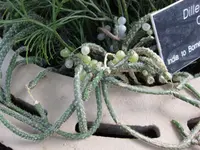
Mistletoe cactus, Rhipsalis baccifera, is an epiphytic cactus that naturally grows in trees rather than in desert soil. It forms long, thin, hanging stems that create a soft, cascading look.
In the wild it occurs in tropical forests of Central and South America, parts of the Caribbean, and some areas of Africa. Its stems are usually smooth and cylindrical, sometimes branching densely into a curtain-like mass.
This species is generally forgiving and considered easier than many desert cacti, as long as it is protected from strong direct sun and kept slightly moist rather than dry. These traits make it suitable for people who want to learn how to care for Mistletoe Cactus without complex routines.

Care Difficulty
Easy Care

Light Preference
Bright Indirect Light

Water Requirements
Moderate Water

Temperature Preference
Tropical / Frost Sensitive

Hardiness Zone
11–12

Soil Texture
Sandy, Loamy, Organic-rich

Soil pH
Acidic (5.5–6.5), Slightly acidic (6.5–7.0)

Soil Drainage
Moist but well-drained

Fertilization
Light (every 4–6 weeks)
Scan your plant to receive care tips personalized for your specific plant
Available on iOS and Android
This epiphytic cactus prefers soft, filtered light that mimics bright forest shade.
Moisture needs are moderate and depend strongly on soil drainage and season.
Stable, warm conditions support steady growth and reduce stress for this species.
This epiphytic cactus prefers moderate humidity and reacts if air is very dry.
Use a loose, airy mix that drains very fast yet holds some moisture around the roots.
This species is well suited to container culture, especially in hanging pots or elevated planters.
This epiphytic cactus benefits from light, balanced feeding during the active growing season.
Pruning Rhipsalis baccifera is mainly used to manage length, density, and overall shape.
This trailing cactus prefers slightly snug containers and only needs repotting from time to time.
This species is commonly multiplied from stem cuttings taken during the warmer months.
This tropical cactus is frost sensitive and needs mild, protected conditions in winter.

Plant Health Check
Not sure what's wrong with your plant? Check your plant's health inside the app.
This epiphytic cactus is the only cactus species native to both the New World and the Old World, occurring naturally in parts of Central and South America, the Caribbean, and also in tropical Africa and Sri Lanka.
Its small, white, berry-like fruits are adapted for dispersal by birds, which likely enabled its unusually wide transoceanic distribution over evolutionary time.
In nature it usually grows as an epiphyte on tree branches in humid tropical forests, anchoring to bark rather than rooting in soil and absorbing moisture and nutrients from rain, debris, and humid air.

Genetic and biogeographical studies suggest that this species may have crossed the Atlantic Ocean naturally, most likely via seeds transported in the guts of migratory or storm-blown birds, making it a rare example of long-distance oceanic dispersal in the cactus family.
Poor flowering usually comes from insufficient light, lack of a short cool rest period, or inconsistent care. Provide bright, indirect light, stable temperatures, and avoid frequent repotting. Mature, unstressed plants bloom more reliably than young or recently disturbed ones.
Keep your plants happy and healthy with plant identification, disease detection, and easy care guidance.