Hairy Stemmed Rhipsalis Care (Rhipsalis pilocarpa)

About Hairy Stemmed Rhipsalis

Hairy stemmed rhipsalis (Rhipsalis pilocarpa) is an epiphytic cactus from Brazilian forests, where it grows on trees in bright shade and high humidity. It naturally forms arching, branching stems covered in fine hairs, giving a soft, fuzzy look rather than a typical desert cactus appearance.

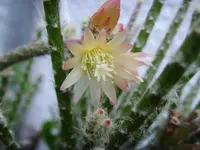
Over time it creates a cascading mound that works well in hanging baskets or on high shelves. Small white to cream flowers and later colorful berries add seasonal interest.

This species is considered relatively easy if its forest origins are respected. It prefers bright, indirect light, consistently lightly moist but not waterlogged soil, and good air flow, which are key points in how to care for Hairy Stemmed Rhipsalis.

Main Plant Requirements

Care Difficulty

Moderate Care

Light Preference

Bright Indirect Light

Water Requirements

Moderate Water

Temperature Preference

Tropical / Frost Sensitive

Hardiness Zone

11–12

Soil Texture

Sandy, Loamy, Organic-rich

Soil pH

Acidic (5.5–6.5), Slightly acidic (6.5–7.0)

Soil Drainage

Well-drained

Fertilization

Light (every 4–6 weeks)

Get Personalized Care Plan

Scan your plant to receive care tips personalized for your specific plant

Personalized Care in the App

Available on iOS and Android

How to Care for the Hairy Stemmed Rhipsalis

This epiphytic cactus prefers soft, filtered light that mimics a bright forest canopy.

  • Provide 6–8 hours of bright, indirect light daily, such as near an east- or north-facing window or under light shade outdoors.
  • Allow gentle early morning sun but protect Hairy Stemmed Rhipsalis from strong midday or afternoon sun, which can cause yellowing or reddish scorch patches on stems.
  • In winter, move the plant slightly closer to the light source or supplement with grow lights if stems become pale and elongated, a sign of low light.

This species prefers evenly moist but not saturated substrate, with brief dry periods in between.

  • Water when the top 2–4 cm of the mix feels dry, then water thoroughly so excess drains away, avoiding any standing water around roots.
  • In spring and summer, expect to water more often as growth is active; in autumn and winter, extend intervals once drying slows and growth reduces.
  • Watch for shriveling, curling segments as a sign of underwatering, and for limp, dark, or mushy segments as a sign of overwatering and poor drainage.

This cactus prefers mild, stable temperatures that resemble a sheltered, subtropical environment.

  • Aim for 65–80°F (18–27°C) for best growth, with good air movement but no cold drafts or sudden temperature swings.
  • Protect the plant from temperatures below 50°F (10°C); brief drops to 45°F (7°C) may be tolerated but frost will damage stems and roots.
  • In hot periods above 85°F (29°C), increase shade and airflow, and avoid placing the plant near heat-reflective surfaces that can overheat the pot and roots.

This epiphytic cactus prefers moderate, steady humidity and dislikes very dry air indoors.

  • Aim for 40–60% humidity; it tolerates brief dips lower but prolonged air below 30% can cause tip dieback.
  • Crisping or browning of fine stems and hair-like bristles indicates humidity stress, especially near heating or air vents.
  • Increase humidity for Hairy Stemmed Rhipsalis by grouping plants, using a small humidifier, or placing the pot on a pebble tray above water.

Rhipsalis pilocarpa grows best in a loose, airy mix that mimics organic debris collected on tree branches.

  • Use a blend of roughly 40% fine bark, 30% peat-free compost, and 30% perlite or pumice for fast drainage and strong aeration.
  • Keep the structure chunky and open; individual particles should be visible rather than forming a smooth, compact mass after watering.
  • Target a slightly acidic to neutral pH around 6.0–7.0, avoiding strongly alkaline mixes based on large amounts of lime or garden soil.
  • Avoid dense, heavy, or water-retentive mixes such as straight potting compost, which encourage root rot and limit oxygen around the roots.

This species is very suitable for container growing, especially in hanging pots or elevated planters.

  • Choose a wide, shallow pot to accommodate its fibrous, surface-oriented roots and trailing habit without leaving deep, unused soil to stay soggy.
  • Use slightly heavier materials such as ceramic when hanging or elevating the pot, which adds stability against the sideways pull of maturing stems.
  • Ensure drainage holes stay fully exposed above any cachepot or decorative sleeve so runoff water cannot pool against the pot base.

Rhipsalis pilocarpa benefits from light, consistent feeding during its active growth period.

  • Use a balanced liquid fertilizer (such as 10-10-10) diluted to 1/4–1/2 strength, suitable for epiphytic cacti.
  • Feed every 4–6 weeks in spring and summer while stems are actively elongating.
  • Stop or reduce feeding to 1 light application in late fall and none in midwinter dormancy.
  • For caring for Hairy Stemmed Rhipsalis, avoid heavy, slow-release pellets and never fertilize very dry soil.

Rhipsalis pilocarpa responds well to light pruning that maintains shape and plant health.

  • Prune in late winter or early spring before strong new growth begins.
  • Use clean, sharp scissors or snips to remove dead, shriveled, or damaged segments.
  • Thin congested or crossing stems at the base to improve light and air around the center.
  • Shorten overly long stems to encourage branching and a fuller, cascading form.

This epiphytic cactus prefers slightly tight quarters but still needs periodic repotting to stay healthy.

  • Check for roots circling the pot, pushing through drainage holes, or slowed growth as signs repotting is needed.
  • Repot every 2–3 years in spring, choosing a pot only 2–3 cm wider with excellent drainage holes.
  • Use a loose, airy mix such as cactus soil blended with fine bark and perlite to mimic epiphytic conditions.
  • Gently loosen roots, remove old compacted mix, water lightly after potting, and keep in bright, indirect light while recovering.

New plants of Rhipsalis pilocarpa are most commonly produced from stem cuttings taken in the growing season.

  • Take 5–10 cm firm, healthy stem segments in late spring or summer and let cut ends callus for 1–2 days.
  • Insert cuttings into a slightly moist, very well-drained mix of cactus soil and perlite or sand.
  • Provide bright, indirect light, 70–80°F warmth, and high but not stagnant humidity for rooting.
  • Alternatively, sow fresh seeds on the surface of a fine, sterile mix and keep evenly moist until germination.

This species is frost sensitive and needs mild, protected winter conditions, especially in containers.

  • Keep temperatures above 50°F; prolonged exposure below 40°F can damage stems.
  • Move container plants indoors or into a greenhouse before the first frost in temperate climates.
  • Place in bright, indirect light indoors and reduce watering so the mix dries slightly more between waterings.
  • Avoid cold drafts and sudden temperature swings, which stress tissues and increase rot risk.

Care Tips

Encourage Bushy Growth

Pinch back soft stem tips by 0.5–1 in in late spring to stimulate branching and create a denser, more cascading plant over time.

Support Cascading Stems

Use a hanging basket with a wide rim or a tall pedestal pot so stems can drape freely without kinking against hard edges, which reduces breakage and misshapen growth.

Seasonal Light Shifting

Move the plant slightly farther from bright windows in mid-summer and closer again in fall to prevent light stress while maintaining enough energy for healthy growth.

Clean Stems Gently

Every 1–2 months, use a soft brush or a clean makeup brush to remove dust from the hairy stems so they can photosynthesize efficiently and dry quickly after watering.

Check Roots Without Disturbance

Use a nursery pot with side drainage holes and gently press the pot walls to feel for firm root presence; this helps decide on repotting time without pulling the plant out and stressing the fine roots when growing Hairy Stemmed Rhipsalis.

Common Pests and Diseases

Mealybugs

This pest feeds on stems and leaf joints, often hiding in the plant’s dense hairs and along hanging segments. Symptoms include white cottony clusters, sticky honeydew, and distorted or weakened growth.

Solution

Remove visible insects with a cotton swab dipped in 70% isopropyl alcohol, then rinse the plant thoroughly with lukewarm water. Isolate the plant, repeat alcohol spot-treatments weekly until no new insects appear, and improve air movement and light levels to reduce reinfestation when caring for Hairy Stemmed Rhipsalis.

Spider mites

These insects thrive in warm, dry indoor air and can be hard to spot on thin, jointed stems. Symptoms include fine webbing between segments, dull or stippled tissue, and gradual yellowing or segment drop.

Solution

Shower the plant with a firm but gentle stream of water to wash off mites and webbing, then increase humidity and avoid very dry air near heaters or vents. For persistent problems, use a neem oil or insecticidal soap spray directed to all stem surfaces every 5–7 days for several cycles, keeping the plant out of direct sun after application.

Soft scale

This pest appears as small, brown or tan bumps along stems and nodes, often blending with the plant’s branching structure. Symptoms include sticky honeydew, black sooty mold on nearby surfaces, and general decline in vigor.

Solution

Gently pry off individual scales with a fingernail or soft toothbrush, then wipe infested areas with diluted alcohol (about 1 part 70% isopropyl alcohol to 3 parts water). Follow with a thorough rinse, then monitor weekly and repeat targeted cleaning and a mild horticultural oil spray if new scales appear.

Fungal stem blight

This disease develops under cool, overly wet conditions, especially where water sits on dense, hairy stems. Symptoms include dark, sunken lesions on segments, sudden segment collapse, and sometimes gray or brown fungal growth on affected tissue.

Solution

Cut off all visibly affected segments with a sterile tool, trimming back into firm, healthy tissue, and discard them in the trash. Allow the potting mix to dry more thoroughly between waterings, improve air circulation, avoid overhead watering, and if spread continues, repot into fresh, well-draining cactus mix and disinfect the old container.

Bacterial soft rot

This disease is favored by excess moisture and poor air circulation around the base of the plant. Symptoms include rapidly soft, mushy segments with a foul odor and water-soaked, translucent tissue that collapses easily.

Solution

Remove and discard all affected segments immediately and sterilize cutting tools between each cut. Allow the remaining plant to dry, reduce watering volume and frequency, increase airflow, and only keep the substrate lightly moist; in advanced cases, take healthy, firm cuttings from unaffected segments and root them in fresh, sterile medium to rescue the plant.

Interesting Facts

Epiphytic cloud forest native

This species is naturally found in humid cloud forests of southeastern Brazil, where it grows as an epiphyte on tree branches rather than rooted in soil.

Hair-like stem bristles

Its pencil-thin, jointed stems are covered in fine, white bristles produced from small areoles, giving the plant a distinctly fuzzy or hairy appearance unusual even among epiphytic cacti.

Strongly scented blooms

The small, star-shaped white flowers are surprisingly fragrant, releasing a noticeable sweet scent that is especially strong in the evening and at night.

Botan icon

Did you know?

In its native range, the bright red, berry-like fruits are eaten by birds, which then disperse the sticky seeds onto tree branches, a key step that allows this cactus to colonize new host trees high in the forest canopy.

FAQs about Hairy Stemmed Rhipsalis

Lack of bloom usually comes from insufficient light, overly warm winter conditions, or excess nitrogen fertilizer. This epiphytic cactus forms buds more reliably with bright, indirect light, a slightly cooler, drier winter rest, and lean, well-drained substrate.

Grow Healthy Plants with Botan Care

Keep your plants happy and healthy with plant identification, disease detection, and easy care guidance.

Botan plant care app — identify plants on mobile

Explore More Plants