


Rotate The Rosette
Turn the pot 90° every 2–3 weeks so the fronds develop a symmetrical rosette and do not lean or twist toward a single light source.

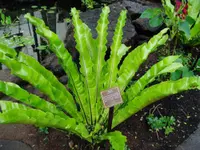
The Japanese bird's-nest fern (Asplenium antiquum) is an evergreen fern valued for its tidy rosette of upright, strap-shaped fronds. The leaves are glossy, arching, and emerge from a central crown that resembles a shallow nest.
This species is native to East Asia, where it grows on forest floors and rocky slopes in warm, humid, shaded habitats. Its slow, compact growth and tolerance of lower light make it suitable for indoor containers and small spaces.
Understanding how to care for Japanese bird's-nest fern starts with providing stable warmth, consistent moisture, and a loose, well-drained mix that stays lightly damp but not waterlogged.

Care Difficulty
Moderate Care

Light Preference
Bright Indirect Light

Water Requirements
Keep Soil Moist

Temperature Preference
Tropical / Frost Sensitive

Hardiness Zone
10–11

Soil Texture
Loamy, Peaty, Organic-rich

Soil pH
Acidic (5.5–6.5)

Soil Drainage
Moist but well-drained

Fertilization
Light (every 4–6 weeks)
Scan your plant to receive care tips personalized for your specific plant
Available on iOS and Android
This fern prefers soft, filtered light that mimics a bright forest understory.
This species prefers consistently moist but not waterlogged soil around its fibrous roots.
This fern grows best in stable, mild temperatures without sharp swings.
This fern benefits from consistently high humidity to keep fronds healthy and glossy.
Asplenium antiquum prefers a loose, moisture-retentive yet well-drained, organic-rich substrate.
This species is well-suited to container growing when moisture and stability are carefully managed.
This fern benefits from light, consistent feeding during active growth but is sensitive to excess salts.
Pruning Asplenium antiquum is minimal and focuses on hygiene rather than shaping.
This fern prefers slightly snug pots and infrequent repotting to limit stress on its sensitive roots.
Asplenium antiquum is slow to propagate and is usually purchased as a nursery-grown plant.
This fern is frost sensitive and needs mild, protected conditions over winter, especially in containers.

Plant Health Check
Not sure what's wrong with your plant? Check your plant's health inside the app.
This species forms a tight vase-like rosette of narrower, more erect fronds compared with the broader, more spreading bird’s‑nest fern Asplenium nidus. The upright form helps funnel organic debris and water toward the center of the plant in its native habitat.
In the wild, this fern commonly grows as an epiphyte on tree trunks or as a lithophyte on rocks in Japan, Taiwan, and nearby regions. Its short, sturdy rhizome anchors into moss and crevices rather than deep soil.
Asplenium antiquum is native to warm, humid evergreen forests, where it grows under dense tree canopies. This origin explains its adaptation to filtered light and consistently moist, but not waterlogged, conditions in cultivation and informs many Asplenium antiquum care instructions.

Japanese horticulture has selected several ornamental forms of Asplenium antiquum, including cultivars with crinkled, forked, or strongly wavy fronds, which highlight the natural tendency of this species to produce stable leaf shape variations.
Brown edges or tips usually come from low humidity, underwatering, or exposure to hot or cold drafts. Uniform brown patches often indicate fertilizer burn or direct sun. Trim damaged fronds and correct the environmental cause.
Keep your plants happy and healthy with plant identification, disease detection, and easy care guidance.

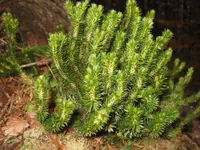
toothed clubmoss
Huperzia serrata

Philodendron 'McColley's Finale'
Philodendron 'McColley's Finale'
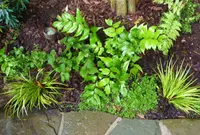
Japanese Holly Fern
Cyrtomium falcatum 'Rochfordianum'
 POPULAR
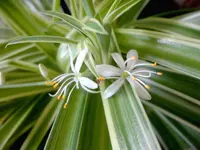
Spider Plant
Chlorophytum comosum
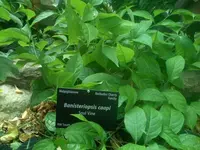
ayahuasca
Banisteriopsis caapi
 POPULAR
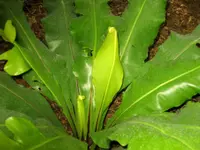
Bird's nest ferns
Asplenium nidus
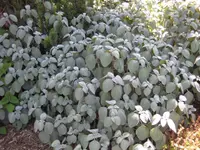
Silver spurflower
Coleus argentatus
Giant Leopard Plant
Farfugium japonicum var. giganteum