Bamburanta Care (Ctenanthe lubbersiana)

About Bamburanta

Bamburanta, Ctenanthe lubbersiana, is a tropical evergreen grown mainly for its striking foliage rather than flowers. It belongs to the prayer plant group, with leaves that may slightly move in response to light changes.

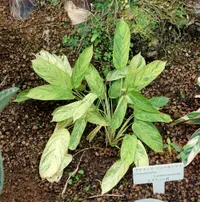
The plant forms a low, bushy clump with oval leaves patterned in green, yellow, and cream, giving a variegated, bamboo-like look. It naturally occurs in the understory of Brazilian rainforests.

Ctenanthe lubbersiana prefers warm, humid conditions, soft indirect light, and consistently lightly moist soil. Its sensitivity to dry air, irregular watering, and low light makes it moderately challenging, so understanding how to care for Bamburanta helps prevent leaf browning and stress.

Main Plant Requirements

Care Difficulty

Moderate Care

Light Preference

Bright Indirect Light

Water Requirements

Keep Soil Moist

Temperature Preference

Tropical / Frost Sensitive

Hardiness Zone

11–12

Soil Texture

Loamy, Peaty, Organic-rich

Soil pH

Acidic (5.5–6.5), Slightly acidic (6.5–7.0)

Soil Drainage

Moist but well-drained

Fertilization

Light (every 4–6 weeks)

Get Personalized Care Plan

Scan your plant to receive care tips personalized for your specific plant

Personalized Care in the App

Available on iOS and Android

How to Care for the Bamburanta

Ctenanthe lubbersiana prefers bright, indirect light that mimics a lightly shaded tropical understory.

  • Provide 6–8 hours of filtered light daily, such as near an east window or behind a sheer curtain with soft morning sun.
  • Tolerates partial shade (3–4 hours of dappled light), but very dim rooms cause leggy growth and fading Bamburanta leaf patterning.
  • Avoid direct midday or strong afternoon sun, which scorches leaves; move farther from south/west windows in summer when light intensity is highest.

This species needs evenly moist but not waterlogged soil to keep roots healthy and foliage full.

  • Water when the top 2–3 cm of soil feels dry, letting water flow through freely, then empty any saucer to prevent standing water.
  • Reduce watering in winter, allowing the top 3–4 cm to dry; in warm, active growth periods the soil will dry faster and need closer monitoring.
  • Signs of overwatering include yellowing, limp leaves and sour-smelling soil; crisp edges, curling, and very light pots indicate underwatering in Ctenanthe lubbersiana.

This plant prefers stable, warm conditions with no sudden temperature swings.

  • Aim for 65–80°F (18–27°C) for best growth; it slows noticeably below 65°F (18°C).
  • Protect from cold; damage often appears below 55°F (13°C), and frost can kill foliage and roots.
  • In heat above 85°F (29°C), increase humidity and airflow, shade from intense afternoon sun, and avoid placing near heaters or cold drafts in winter.

This species benefits from consistently high humidity to keep foliage healthy and reduce leaf damage.

  • Aim for 60–75% humidity; it survives around 50% but becomes prone to crispy edges and slower growth in drier air.
  • Watch for curling leaves, browned tips, and pale patches as signs of humidity stress in Bamburanta.
  • Increase humidity with a nearby humidifier, grouping plants, or a pebble tray, rather than frequent misting that can encourage leaf spotting.

Ctenanthe lubbersiana prefers a loose, airy, organic-rich mix that drains freely yet holds steady moisture.

  • Use a base of peat or coco coir with added compost, plus perlite and fine bark to create a fibrous, well-structured substrate.
  • Target slightly acidic to neutral pH around 6.0–7.0 to support nutrient uptake and stable leaf color.
  • Ensure water drains within a few seconds of watering; mix in extra perlite or bark if water lingers or the pot feels heavy for long.
  • Avoid dense garden soil, high clay content, or mixes that stay soggy, which restrict roots and encourage fungal root rot.

This species is well suited to container growing when moisture and root space are carefully managed.

  • Choose a pot just 2–5 cm wider than the root mass so the mix does not stay wet for long periods in unused space.
  • Select a stable, wider-than-tall container shape to support the spreading foliage and reduce the risk of tipping.
  • Use a slightly moisture-retentive material like glazed ceramic or thick plastic to keep the mix evenly damp without rapid edge drying.

Ctenanthe lubbersiana benefits from light, consistent feeding during active growth for steady foliage production.

  • Use a balanced liquid houseplant fertilizer (around 10-10-10 or 20-20-20) diluted to 1/4–1/2 strength.
  • Feed every 4–6 weeks in spring and summer, skipping doses if growth is slow or leaves look stressed.
  • Stop or reduce feeding to 1 light application for the whole period in fall–winter, when growth slows.
  • For Bamburanta indoor care, avoid heavy salt buildup by flushing the pot with plain water every 1–2 months.

Ctenanthe lubbersiana benefits from light, selective pruning to maintain a neat, compact form.

  • Prune in spring or early summer when the plant is actively growing and recovers fastest.
  • Remove yellow, brown, or damaged leaves at the base with clean, sharp scissors or snips.
  • Thin out crowded or inward-growing shoots to improve air flow and keep an even, rounded shape.
  • Pinch back very long stems just above a node to encourage bushier growth and more uniform foliage.

This plant prefers slightly snug pots and moderate repotting, mainly to refresh soil and relieve root crowding.

  • Check for roots circling the pot, pushing through drainage holes, or for slow, weak growth as repotting signs.
  • Plan to repot every 2–3 years in spring, stepping up only 2–5 cm in pot diameter with fresh, airy mix.
  • Water the day before, then gently loosen and keep the root ball mostly intact to limit root stress.
  • After repotting Ctenanthe lubbersiana, water lightly, keep in bright indirect light, and avoid fertilizing for 3–4 weeks.

Ctenanthe lubbersiana is most reliably propagated by division, since seeds and stem cuttings are rarely practical indoors.

  • Carry out division in spring, when new growth starts and recovery is fastest.
  • Lift the plant from its pot and separate the clump into sections, each with several stems and healthy roots.
  • Plant divisions into small pots with moist, well-drained mix and firm gently around the roots.
  • Keep divisions in warm (70–80°F), humid, bright-indirect conditions, and maintain evenly moist soil until established.

This tropical species is frost-sensitive and needs warm, stable conditions through winter, especially in containers.

  • Keep indoor temperatures around 65–75°F and avoid cold drafts or sudden temperature drops.
  • If grown outdoors in pots, move indoors before temperatures fall below 55°F.
  • Maintain slightly drier soil in winter, allowing the top layer to dry a bit more between waterings.
  • For outdoor plantings in mild climates, use a light mulch layer to buffer root temperature swings without waterlogging.

Care Tips

Rotate For Symmetry

Rotate the pot 90° every 2–3 weeks so the plant does not lean toward one side and to keep the variegation evenly lit and balanced across the foliage.

Use Wide, Shallow Pots

Choose a pot that is wider rather than very deep to match the plant’s spreading root system and to reduce the risk of soggy lower soil that can cause root decline.

Gentle Leaf Cleaning

Wipe leaves every 3–4 weeks with a soft, barely damp cloth to remove dust, which improves light capture and allows quicker detection of early pest activity when caring for Bamburanta.

Root Health Checks

At least once a year, slip the plant gently out of its pot to inspect roots, trimming only clearly brown, mushy sections and repotting before the root mass becomes a tight, circling ball.

Summer Outdoor Stints

In mild climates, move the plant outdoors in bright shade for part of late spring to early fall, but acclimate it over 5–7 days and protect it from wind and direct midday sun to avoid leaf damage.

Common Pests and Diseases

Spider mites

This pest often appears when air is dry and leaves are thin, causing fine webbing and a faded, speckled look on foliage.

Solution

Rinse leaves thoroughly with lukewarm water, including undersides, then increase humidity to 50–60% and avoid hot, dry drafts; for persistent infestations, use repeated applications of insecticidal soap or a neem oil spray every 5–7 days until new growth looks clean.

Mealybugs

These insects cluster in leaf axils and along midribs, appearing as white cottony tufts and causing leaf yellowing and sticky honeydew.

Solution

Isolate the plant, dab visible insects with cotton swabs dipped in 70% isopropyl alcohol, then wash foliage and repeat spot treatments weekly; in heavier cases, apply insecticidal soap to all leaf surfaces and inspect regularly while growing Bamburanta in warm indoor conditions.

Fungal leaf spot

This disease produces small water-soaked or brown spots along leaf edges and between veins, often spreading in overly wet or crowded conditions.

Solution

Remove and discard affected leaves, allow the top of the soil to dry slightly between waterings, and improve air movement around the plant; if new spots continue to form, use a copper-based or broad-spectrum houseplant fungicide according to label directions and avoid wetting the foliage.

Bacterial leaf blight

Symptoms include irregular, dark, translucent patches on leaves with yellow halos, often starting at the margins where water collects.

Solution

Promptly prune and discard infected leaves, avoid overhead watering and never leave water sitting on foliage, then increase spacing and airflow; in severe cases, discard heavily affected plants and sanitize pots and tools to prevent spread to other Marantaceae species.

Fungus gnats

These insects thrive in constantly moist substrate, with adults hovering near the soil surface and larvae feeding on fine roots.

Solution

Let the top 2–3 cm of the potting mix dry between waterings, use yellow sticky traps to capture adults, and, if needed, drench the soil with a biological control containing Bacillus thuringiensis israelensis (BTI) to reduce larvae while maintaining moderate, not soggy, moisture levels.

Interesting Facts

Variegation pattern stability

This species naturally produces irregular yellow and cream patches on its leaves that remain relatively stable over time, unlike many variegated plants that frequently revert to solid green foliage. The pattern is caused by genetically programmed sectors of leaf tissue with reduced chlorophyll, rather than temporary stress responses.

Crepuscular leaf movement

Like other members of the Marantaceae family, this plant performs nyctinasty, a daily movement where leaves slightly adjust their angle between day and night in response to light changes. The movement is controlled by a specialized swollen joint at the base of the leaf blade called a pulvinus.

Understory light adaptation

In its native Atlantic Forest habitats of Brazil, this plant grows as an understory herb in dappled shade under taller vegetation. Its broad, thin leaves with pale undersides are adapted to capture diffuse, low-intensity light rather than direct sun.

FAQs about Bamburanta

Brown, crispy edges usually result from low humidity, inconsistent watering, or excess fertilizer salts. Improve humidity, keep the potting mix evenly moist but not soggy, flush the soil occasionally, and protect the plant from hot or cold drafts.

Grow Healthy Plants with Botan Care

Keep your plants happy and healthy with plant identification, disease detection, and easy care guidance.

Botan plant care app — identify plants on mobile

Explore More Plants