Sky flower Care (Duranta erecta)

Also known as: Pigeon Berry, Sky Flower, Golden Dew Drop, Forget-Me-Not-Tree

About Sky flower

Sky flower, Duranta erecta, is a tropical flowering shrub or small tree grown for its hanging clusters of purple or white blooms and bright golden berries. It often forms a dense, fast-growing hedge or specimen plant with arching branches and small leaves.

In nature it occurs in the Caribbean, Central America, and northern South America, but it is widely planted in warm climates as an ornamental. Its rapid growth and tolerance of pruning make it easy to shape, but regular trimming is needed to control size.

It prefers bright light, warmth, and well-drained soil, so it is usually easier outdoors in mild regions than indoors. Gardeners who understand how to care for Sky flower generally find it manageable and rewarding.

Main Plant Requirements

Care Difficulty

Moderate Care

Light Preference

Full Sun

Water Requirements

Moderate Water

Temperature Preference

Tropical / Frost Sensitive

Hardiness Zone

9–11

Soil Texture

Sandy, Loamy, Organic-rich

Soil pH

Acidic (5.5–6.5), Slightly acidic (6.5–7.0)

Soil Drainage

Well-drained

Fertilization

Light (every 4–6 weeks)

Get Personalized Care Plan

Scan your plant to receive care tips personalized for your specific plant

Personalized Care in the App

Available on iOS and Android

How to Care for the Sky flower

Duranta erecta grows best with strong light for reliable flowering and dense foliage.

  • Provide 6–8 hours of direct sun daily; morning sun with light afternoon shade reduces leaf scorch in hot climates.
  • Tolerates light or partial shade (3–4 hours of sun), but flowering and berry production decline noticeably in dense shade.
  • In summer, protect Sky flower from intense late-afternoon sun in very hot regions; in winter, prune nearby shade and avoid deep shade from structures or trees.

Duranta erecta prefers evenly moist, well-drained soil rather than constant wetness or drought.

  • Water when the top 3–5 cm of soil feels dry, soaking deeply so moisture reaches the root zone, then let excess drain away.
  • In hot summer, expect faster drying and more frequent watering; in cool seasons, extend intervals to prevent soggy conditions and root rot.
  • Wilting, crisp leaf edges, and leaf drop suggest underwatering, while yellowing leaves, soft stems, and persistent wet soil indicate overwatering.

This shrub thrives in warm conditions and reacts quickly to cold or frost exposure.

  • Ideal growing temperatures are 70–85°F (21–29°C), supporting steady shoot growth and abundant flowering.
  • Duranta erecta is damaged near 30°F (-1°C) and may die back or be killed below 28°F (-2°C), so protect or replace in frost-prone areas.
  • Tolerates brief heat up to about 95°F (35°C) if soil moisture is maintained; in heat waves, reduce stress with mulch and afternoon shade.

This species grows best in moderately humid air but tolerates typical outdoor conditions.

  • Aim for 40–60% humidity; short dry spells are acceptable for Sky flower if soil moisture is well managed.
  • Low humidity stress shows as crisp leaf edges, slowed growth, and increased spider mite activity on tender shoots.
  • Increase humidity locally with grouped plantings, nearby mulched beds, or a moist gravel tray under patio containers rather than misting leaves.

Duranta erecta prefers freely draining, moderately fertile soil that does not stay waterlogged.

  • Use a loamy or sandy-loam structure with 30–40% coarse materials such as perlite, pumice, or sharp sand to keep pores open.
  • In containers, combine 2 parts peat- or coir-based potting mix with 1 part compost and 1 part coarse perlite or bark fines for aeration.
  • Target slightly acidic to neutral pH around 6.0–7.0; avoid strongly alkaline sites that can limit nutrient uptake and cause leaf yellowing.
  • Do not plant in heavy, compacted clay or spots where water stands for more than a few hours after rain, as roots are prone to rot.

This species is well suited to container growing, especially on patios or in small gardens.

  • Choose a wide, heavy container to counterbalance the shrub’s bushy, sometimes top-heavy canopy in windy sites.
  • Select thick-walled terracotta or concrete pots if extra moisture loss and root-zone cooling are needed in hot climates.
  • Raise the container on pot feet or bricks so drainage holes stay clear, allowing rapid exit of excess irrigation or rainwater.

Duranta erecta responds well to moderate feeding during its active growing season.

  • Use a balanced, slow-release granular fertilizer (for example 10-10-10 or 14-14-14) mixed into the topsoil in spring.
  • Feed container or hedge plants every 6–8 weeks in spring–summer; reduce to light feeding or none in fall–winter.
  • Apply at 1/2 the labeled strength for shrubs, especially for Sky flower grown in pots, to limit salt buildup.
  • Water thoroughly after feeding to distribute nutrients and lower the risk of root burn.

Pruning helps keep Duranta erecta dense, flowering, and within bounds.

  • Plan main structural pruning for late winter or very early spring before vigorous new growth starts.
  • Use clean, sharp hand pruners to remove dead, diseased, or crossing branches back to healthy wood.
  • Thin crowded interior stems to let in light and air, which supports better flowering and reduces fungal issues.
  • Tip-trim new shoots during the growing season to maintain desired height and shape hedges or standards.

Duranta erecta adapts well to transplanting and occasional repotting when roots become crowded.

  • Look for roots circling the pot, pushing through drainage holes, or noticeably slowed growth as cues to move up 1 pot size.
  • Carry out major transplanting in spring or early summer when soil is warm and recovery is fastest.
  • Plan on repotting container plants every 2–3 years, refreshing at least the top 3–5 cm of mix annually.
  • Gently loosen circling roots, trim damaged sections, water thoroughly after moving, and shade for a few days to reduce stress.

Duranta erecta is commonly propagated from semi-ripe stem cuttings and sometimes from seed.

  • Take 10–15 cm semi-ripe cuttings in late spring–summer from non-flowering shoots.
  • Remove lower leaves, dip the cut end in rooting hormone, and insert into a moist, free-draining mix such as 50% perlite and 50% peat or coco coir.
  • Keep cuttings at 70–80°F in bright, indirect light with high humidity until roots form in 4–8 weeks.
  • Sow fresh ripe seeds in warm conditions, lightly covered, and keep evenly moist for gradual germination.

Duranta erecta is frost-sensitive and needs protection in regions with cold winters.

  • In-ground plants in mild climates benefit from 5–8 cm of organic mulch over the root zone, kept away from the trunk.
  • In areas with freezing nights, treat it as a tender shrub and grow in containers that can be moved indoors before frost.
  • Overwinter indoor plants in bright light at 55–65°F, watering sparingly to keep the root ball just slightly moist.
  • After severe cold, delay pruning until late winter so you can clearly see which stems have died back.

Care Tips

Train As Standard

When plants are young, select one strong central stem, stake it securely, and remove lower side shoots over time to form a clean trunk and rounded canopy for easier maintenance and better air flow.

Control Size With Pinching

Pinch back soft shoot tips by 1–2 in several times during the growing season to keep plants dense, reduce legginess, and encourage more flowering wood instead of tall, weak stems.

Use Structured Hedges

For hedge use, plant in a straight line with consistent spacing, then lightly shear only the outer surface several times a year so inner foliage still receives light and does not thin out.

Copper Management Of Dieback

At the first sign of stem dieback or blackened tips, cut into healthy wood, dispose of prunings, and apply a copper-based fungicide to cuts and foliage to limit further spread in humid climates.

Winter Container Strategy

In colder regions, grow plants in large containers that can be moved under cover before frost, then reduce water and prune lightly so they overwinter as compact, semi-resting specimens, which simplifies caring for Sky flower in marginal climates.

Common Pests and Diseases

Whiteflies

This pest feeds on the undersides of leaves, sucking sap and causing yellowing, leaf drop, and sticky honeydew that can lead to sooty mold. Infestations are common on lush, tender growth of golden dewdrop hedges and potted plants.

Solution

Reduce numbers by spraying the undersides of leaves with a strong stream of water and removing heavily infested leaves. Use yellow sticky traps to monitor adults and apply insecticidal soap or neem oil thoroughly every 5–7 days until new growth appears clean; in warm regions, encouraging beneficial insects such as lady beetles and lacewings also helps long-term Duranta erecta care.

Duranta leaf miner

This pest is caused by larvae that tunnel inside the leaves, creating pale, winding trails and blotches that distort foliage and reduce vigor. Symptoms include patchy, thinned canopies on hedges and young plants.

Solution

Prune and dispose of affected leaves as soon as mines appear to remove larvae before they mature. For persistent problems, use a systemic insecticide labeled for leaf miners on ornamental shrubs, applied according to label directions, and avoid excessive nitrogen fertilization that encourages soft, attractive new growth.

Spider mites

These insects thrive in hot, dry conditions and cause fine stippling, dull leaves, and eventual bronzing, often with delicate webbing between leaves and stems. Symptoms include slow decline and premature leaf drop, especially on container plants or plants near reflective surfaces.

Solution

Increase humidity around the plant and hose down foliage, focusing on leaf undersides to physically remove mites. If populations remain high, apply insecticidal soap or horticultural oil every 5–7 days for several cycles, and avoid water stress that favors mite outbreaks.

Sooty mold

This disease grows on the sugary honeydew excreted by whiteflies, aphids, or scale, coating leaves and stems with a black, soot-like film. Symptoms include reduced photosynthesis, dull appearance, and sometimes leaf yellowing beneath the mold.

Solution

Control the underlying sap-sucking insects first using water sprays and targeted soft insecticides such as insecticidal soap. Once honeydew is reduced, gently wipe or rinse affected leaves to remove mold, and thin dense growth slightly to improve airflow and light penetration.

Leaf spot

This disease causes tan to dark brown circular or irregular spots on leaves, sometimes with yellow halos, which can coalesce and lead to premature defoliation in humid, warm conditions. Symptoms include a thinned canopy and weakened plants when infections are severe or recurrent.

Solution

Remove and discard spotted leaves from the plant and the ground, and water at the soil level rather than overhead to keep foliage dry. Improve spacing and air circulation, and in persistent or severe cases use a copper-based or other ornamental shrub fungicide, applied according to label directions during warm, wet periods.

Interesting Facts

Toxic yet bird-dispersed

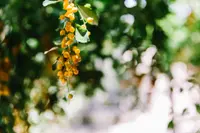
The bright orange berries are toxic to humans and many mammals but are eaten by some bird species, which disperse the seeds through their droppings.

Unstable flower color

The violet to bluish flowers often show pale edges and white centers because their pigments can vary with light intensity and temperature, giving inflorescences a two-toned appearance.

Serious invasive potential

In warm climates such as parts of Australia, the Pacific, and the Caribbean, this species escapes cultivation, forms dense thickets, and displaces native vegetation, so many regions list it as an environmental weed.

Botan icon

Did you know?

Duranta erecta can naturally develop both spines on older woody branches and nearly spineless growth on younger shoots, a combination that likely evolved as a defense against browsing animals while still allowing flexible new growth for rapid expansion.

FAQs about Sky flower

Lack of flowers usually comes from insufficient light, heavy pruning at the wrong time, or excess nitrogen fertilizer. Ensure strong sun, avoid cutting new wood before flowering, and use a balanced or low‑nitrogen formula to restore blooms.

Grow Healthy Plants with Botan Care

Keep your plants happy and healthy with plant identification, disease detection, and easy care guidance.

Botan plant care app — identify plants on mobile

Explore More Plants