Highbush blueberry Care (Vaccinium corymbosum)

Also known as: New Jersey blueberry, Smallflower blueberry, Southern blueberry, Northern highbush blueberry

About Highbush blueberry

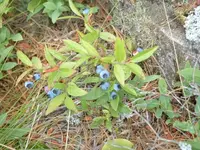
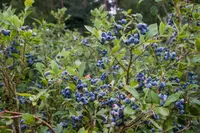
Highbush blueberry (Vaccinium corymbosum) is a deciduous fruiting shrub grown for its edible berries and attractive seasonal foliage. It typically forms an upright, multi-stemmed bush with small bell-shaped flowers and blue-black fruits.

This species is native to North America and is widely cultivated in home gardens and commercial fields. Plants are long lived and can become productive once established, but they need the right soil and site.

Highbush blueberry prefers acidic, well-drained soil, consistent moisture, and full sun to light shade. Understanding these basic needs is the key to successful care for Highbush blueberry.

Main Plant Requirements

Care Difficulty

Moderate Care

Light Preference

Full Sun

Water Requirements

Regular Water

Temperature Preference

Cold Hardy

Hardiness Zone

3–8

Soil Texture

Sandy, Loamy, Peaty

Soil pH

Strongly acidic (4.5–5.5)

Soil Drainage

Moist but well-drained

Fertilization

Light (every 4–6 weeks)

Get Personalized Care Plan

Scan your plant to receive care tips personalized for your specific plant

Personalized Care in the App

Available on iOS and Android

How to Care for the Highbush blueberry

Highbush blueberry shrubs need ample sun for strong growth and good fruiting.

  • Provide 6–8 hours of direct sun daily, with a preference for full morning sun and light afternoon shade in hotter regions.
  • Tolerates light partial shade (around 4–5 hours sun), but fruit yield and sweetness decline as shade increases.
  • In hot summers, protect from intense late-afternoon sun with neighboring plants or structures to reduce leaf scorch and moisture stress.

Vaccinium corymbosum prefers consistently moist but not saturated soil.

  • Water when the top 3–5 cm of soil feels dry, aiming for evenly moist soil down to the root zone, especially during flowering and fruiting.
  • Ensure soil drains freely; raised beds or sloped sites help prevent waterlogging, root rot, and weak, yellowing foliage.
  • In hot, dry periods, monitor more often for drooping leaves and dry soil; in cool or rainy seasons, reduce watering to avoid standing water.

This shrub is adapted to cool to temperate climates with cold winters and mild summers.

  • Optimal growing temperatures are about 65–80°F (18–27°C) during the growing season, with cooler nights improving overall vigor.
  • Dormant plants tolerate winter lows down to about -10°F to -20°F (-23 to -29°C), depending on cultivar and wind exposure.
  • Young growth and flowers are sensitive to late frosts below 28°F (-2°C), while extended heat above 90°F (32°C) can reduce fruit set and cause heat stress.

This shrub prefers moderate ambient humidity but is fairly tolerant in most outdoor climates.

  • Aim for 40–60% humidity, which typical outdoor conditions provide in many temperate regions.
  • Leaves that brown at the edges and curl during hot, dry, windy weather may indicate humidity stress combined with drought.
  • Use a 5–8 cm mulch layer and wind protection rather than misting to buffer short dry spells for Highbush blueberry.

Vaccinium corymbosum requires acidic, well-aerated soil with reliable drainage to fruit well.

  • Use a loose, sandy or loamy mix rich in organic matter; peat moss and fine pine bark help maintain structure and moisture.
  • Target a soil pH of 4.5–5.5; blend peat-based mix with pine bark fines and a small amount of compost to acidify.
  • Ensure fast drainage by avoiding heavy clay; add coarse sand or perlite if water lingers on the surface after irrigation.
  • Avoid alkaline amendments like lime or wood ash, which raise pH and restrict nutrient uptake, leading to chlorotic yellow leaves.

This species is suitable for container growing when the pot is large, stable, and drains very efficiently.

  • Choose a container at least 40–50 cm deep to accommodate its fibrous root system and maintain more even moisture.
  • Use a tall, slightly heavier pot or add weight at the base to reduce tipping from the shrub’s dense, top-heavy canopy.
  • Elevate the container on pot feet or bricks so drainage holes stay clear and excess water escapes quickly after rain or watering.

Vaccinium corymbosum benefits from careful, acid-friendly feeding to support shoots, flowers, and fruit.

  • Apply an acid-forming, slow-release fertilizer or compost formulated for blueberries once in early spring, just as buds swell.
  • Use a low to moderate NPK ratio (for example 10-5-5), at 1/2 label strength for young plants to avoid root burn.
  • Repeat a light application in late spring if growth is weak, then stop feeding by midsummer to prevent soft late growth.
  • Do not fertilize dormant plants in fall or winter; maintain a 5–8 cm layer of acidic mulch instead.

Vaccinium corymbosum responds well to structured pruning that maintains an open, productive shrub.

  • Carry out main pruning in late winter to very early spring, before bud break, using clean bypass pruners or loppers.
  • Remove dead, diseased, and damaged wood first, then cut out crossing or inward-growing branches to open the center.
  • Thin out some of the oldest, thickest canes at the base every year to encourage new, vigorous shoots and larger berries.
  • Shorten weak twiggy tips lightly to shape the bush, but retain strong 1–3-year-old canes for best fruiting.

Highbush blueberry in containers or the landscape benefits from careful transplanting at the right stage.

  • Transplant or up-pot in early spring or early fall when temperatures are mild and the plant is not under heat stress.
  • Check for roots circling the pot, reduced vigor, or fast-drying soil as signs that a container plant needs a larger volume.
  • Move container plants every 2–3 years into a pot 5–8 cm wider, using fresh acidic, peat-free ericaceous mix.
  • Gently loosen circling roots, water thoroughly after planting, and shade for a few days to limit transpiration and transplant shock.

Vaccinium corymbosum is most reliably propagated from cuttings taken during the growing season or dormant period.

  • Take softwood cuttings in late spring to early summer or hardwood cuttings in late winter from healthy, disease-free stems.
  • Cut 8–12 cm sections, remove lower leaves, dip bases in rooting hormone, and insert into moist, acidic, free-draining mix.
  • Maintain high humidity, bright indirect light, and 65–75°F for rooting; bottom heat improves success for softwood cuttings.
  • Layer low, flexible shoots by pegging them into soil; separate and transplant once a strong, independent root system forms.

Vaccinium corymbosum is generally cold hardy but gains from simple winter care, especially in containers.

  • Most cultivars tolerate freezing temperatures, but sudden hard frosts after mild spells can damage flower buds.
  • Apply 5–8 cm of organic mulch around the root zone in late fall to stabilize soil temperature and moisture.
  • For container plants, group pots together against a sheltered wall or move them into an unheated garage or shed.

Care Tips

Mulch For Roots

Apply a 5–8 cm layer of pine bark or pine needle mulch over the root zone each spring to keep the shallow roots cool, conserve moisture, and maintain surface acidity while keeping mulch 3–5 cm away from the stems.

Annual Cane Renewal

Each late winter, remove 1–3 of the oldest, thickest canes at the base to encourage new productive shoots and maintain an open, well-lit framework that improves fruit quality and reduces disease.

Bird Protection Netting

Install fine, UV-stable bird netting over a simple frame before the berries start to blush so fruit clusters remain accessible for harvest while being fully protected from bird damage.

Cluster Thinning

On young plants, pinch off some flower clusters or small green berries so the plant invests more energy into root and shoot establishment, leading to stronger crops in later years when caring for Highbush blueberry.

Drip Irrigation Ring

Lay a drip hose or soaker hose in a ring around the shrub just outside the main canopy to deliver slow, targeted watering directly to the fibrous feeder roots while keeping foliage dry and reducing fungal issues.

Common Pests and Diseases

Mummy berry

This disease starts with blighted young shoots and leaves, then develops into infected berries that shrivel into hard, gray mummies. Symptoms include tan, wilted new growth in spring and light-colored berries that later turn dry and tough.

Solution

Remove and destroy all mummified berries and blighted shoots during and after the season, and mulch under plants in spring with a fresh 5–8 cm layer to bury any remaining mummies. In areas with a history of the disease, use resistant cultivars when possible and apply a labeled fungicide at bud break and during early bloom if conditions are cool and wet.

Botrytis blight

This disease causes soft, water-soaked flowers and young fruit that quickly develop gray, fuzzy mold, especially in cool, humid weather. Symptoms include dieback of tender shoots and rotting clusters of flowers or berries.

Solution

Improve airflow by pruning crowded branches and avoiding overhead watering, especially close to bloom. Remove and discard all infected flowers, fruit, and shoots, and in high-pressure situations consider a preventive fungicide during bloom according to label directions for Vaccinium corymbosum care instructions.

Blueberry maggot

These insects are small fly larvae that tunnel inside ripening berries, turning the fruit soft and unmarketable. Symptoms include berries that seem sound at harvest but collapse or show small white worms when opened.

Solution

Pick and destroy infested or dropped fruit promptly to break the life cycle, and use fine-mesh netting or row covers before flies begin laying eggs if practical. In yards with repeated infestations, hang yellow sticky traps or species-specific baited traps to monitor adult flies and time any labeled insecticide applications if needed.

Aphids

These pests are small, soft-bodied insects that cluster on tender shoots and leaf undersides, sucking sap and excreting sticky honeydew. Symptoms include curled or distorted new leaves and sometimes sooty mold growing on the honeydew.

Solution

Dislodge colonies by spraying plants with a strong stream of water, and encourage natural predators like lady beetles by minimizing broad-spectrum insecticides. For persistent infestations, use insecticidal soap or horticultural oil, making sure to wet the undersides of leaves and repeating as needed according to label directions.

Blueberry stem blight

This disease causes sudden wilting and death of individual canes or portions of the bush, often following drought or other stress. Symptoms include brown streaking in the wood when canes are cut open and dieback starting from the tip downward.

Solution

Prune out and discard affected canes at least 20–25 cm below visible symptoms, sterilizing pruning tools between cuts. Reduce plant stress by maintaining even soil moisture, avoiding mechanical damage, and fertilizing lightly with an acid-forming fertilizer rather than heavy nitrogen that stimulates weak, susceptible growth.

Interesting Facts

Native bog specialist

This species evolved in nutrient-poor, acidic bogs and barrens of eastern North America, forming shallow, fibrous roots that are highly adapted to low-nutrient, low pH soils around 4.0–5.5.

Color change chemistry

The berries start green, then turn pink or reddish before becoming deep blue, as chlorophyll breaks down and anthocyanin pigments accumulate in the skin and outer pulp.

Mycorrhizal partnership

Its fine roots typically form ericoid mycorrhizae, a specialized partnership with soil fungi that helps the plant access organic nitrogen and phosphorus in harsh, acidic substrates.

Botan icon

Did you know?

Highbush blueberry was one of the first North American fruit shrubs to be systematically domesticated in the early 20th century, when botanist Frederick Coville and farmer Elizabeth White selected wild New Jersey plants and laid the foundation for the modern cultivated blueberry industry.

FAQs about Highbush blueberry

Yellowing leaves often indicate high soil pH, nutrient deficiency (especially iron or nitrogen), or poor drainage. Check soil pH, improve drainage, and apply an appropriate acid-loving fertilizer according to Highbush blueberry care instructions.

Grow Healthy Plants with Botan Care

Keep your plants happy and healthy with plant identification, disease detection, and easy care guidance.

Botan plant care app — identify plants on mobile

Explore More Plants