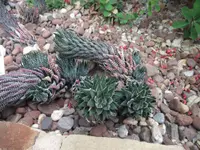
Crown-of-thorns Care (Euphorbia milii)

Also known as: Crown of thorns, crown-of-thorns

About Crown-of-thorns

Crown-of-thorns (Euphorbia milii) is a shrubby succulent grown mainly for its long-lasting colorful bracts and thick, thorn-covered stems. It usually stays compact in pots, making it suitable for bright indoor spaces and warm outdoor patios.

The plant comes from Madagascar, where it grows in hot, dry, rocky areas, so it naturally tolerates drought and strong sun. Its small, true flowers sit in clusters above fleshy leaves, giving nearly year-round color in good light.

Because it stores water in its stems, it copes well with occasional neglect and uneven watering. To care for Crown-of-thorns successfully, provide strong light, well-draining soil, and avoid chronic overwatering.

Main Plant Requirements

Care Difficulty

Easy Care

Light Preference

Full Sun

Water Requirements

Low Water

Temperature Preference

Tropical / Frost Sensitive

Hardiness Zone

10–11

Soil Texture

Sandy, Loamy, Rocky

Soil pH

Acidic (5.5–6.5), Slightly acidic (6.5–7.0)

Soil Drainage

Well-drained

Fertilization

Light (every 4–6 weeks)

Get Personalized Care Plan

Scan your plant to receive care tips personalized for your specific plant

Personalized Care in the App

Available on iOS and Android

How to Care for the Crown-of-thorns

This succulent shrub needs bright, direct light to bloom well and stay compact.

  • Provide 4–6 hours of direct sun daily, ideally morning or late-afternoon sun, with bright filtered light the rest of the day.
  • Plant Crown-of-thorns where it gets at least 2–3 hours of direct winter sun; low winter light reduces flowering and may cause leggy, weak growth.
  • In very hot climates, protect from harsh midday sun that can scorch leaves; use light shade cloth or position near high, open shade.

This drought-tolerant succulent prefers deep, infrequent watering and fast-drying soil.

  • Allow the top 3–5 cm of soil to dry completely before watering; in warm growing seasons this may mean watering every 7–14 days depending on climate and soil.
  • Use very well-draining, gritty soil so excess water exits quickly; prolonged wetness around the roots increases risk of rot and stem collapse.
  • Reduce watering significantly in cooler months when growth slows; shriveling stems suggest underwatering, while yellowing, mushy roots and stems indicate overwatering for Euphorbia milii.

This species thrives in warm, frost-free conditions similar to a subtropical climate.

  • Aim for 65–80°F (18–27°C) for best growth and flowering, with slightly cooler nights tolerated if kept dry.
  • Protect from cold; growth slows below 55°F (13°C), and exposure below 40°F (4°C) can cause leaf drop, tissue damage, or death, especially with frost.
  • Euphorbia milii handles dry heat up to about 95°F (35°C) if shaded from intense midday sun and given good air movement, but prolonged heat with high humidity increases rot risk.

This species handles typical indoor humidity well and rarely needs special humidity management.

  • Aim for 30–50% humidity; dry room air is usually tolerated if watering and light are appropriate.
  • Low humidity rarely harms Crown-of-thorns, but extreme dryness plus heat can cause faster leaf drop and marginal browning.
  • If air is very dry near heaters, move the plant slightly away from the heat source rather than using misters or humidifiers.

This succulent shrub needs a sharply draining, mineral-rich mix that dries quickly after watering.

  • Use a gritty, sandy mix such as 50–70% cactus/succulent blend combined with coarse perlite or pumice for structure.
  • Maintain a loose texture; large mineral particles improve aeration around the roots and reduce the risk of rot.
  • Aim for slightly acidic to neutral pH around 6.0–7.0, which suits Euphorbia milii in most home conditions.
  • Avoid dense, peat-heavy or clayey substrates; if using regular potting mix, lighten it with at least 50% coarse perlite, pumice, or horticultural sand.

This species adapts very well to container growing in both indoor and outdoor settings.

  • Choose a stable, heavy pot to counterbalance the woody, sometimes top-heavy stems and reduce tipping risk.
  • Select a relatively snug container to limit excess wet substrate, which helps prevent root and stem rot.
  • Use unglazed terracotta if extra evaporation is desired, as it allows the mix to dry faster between waterings than plastic.

This succulent benefits from light, consistent feeding during active growth for balanced Euphorbia milii plant care.

  • Use a balanced liquid fertilizer (around 10-10-10 or 20-20-20) diluted to 25–50% strength for Crown-of-thorns.
  • Feed every 4–6 weeks in spring and summer when growth and flowering are strongest.
  • Skip or reduce feeding to 1 light dose all winter, especially in low light or cool rooms.
  • Avoid heavy organic compost; instead use a low-salt, synthetic or cactus fertilizer to prevent root burn.

Thoughtful pruning keeps Euphorbia milii compact, safe to handle, and flowering well.

  • Best time is late winter to early spring, before vigorous new growth begins.
  • Remove dead, damaged, rubbing, or inward-facing stems to improve light and air flow.
  • Shorten overly long branches just above a leaf node to control size and shape the plant.
  • Use sharp, disinfected pruners, wear gloves and eye protection, and avoid skin contact with the milky sap.

Container-grown plants need infrequent repotting because this succulent prefers slightly tight conditions.

  • Repot every 2–3 years, or when roots circle the pot, emerge from drainage holes, or growth slows despite good care.
  • Choose late spring as the best time, using a cactus or fast-draining mix and a pot only 2–3 cm wider.
  • Water lightly 1–2 days before repotting, then slide the root ball out gently to limit root breakage.
  • After repotting, keep soil barely moist, provide bright indirect light, and avoid fertilizing for 3–4 weeks while roots recover.

New plants are most often produced from stem cuttings taken from healthy, non-woody shoots.

  • Take 7–10 cm cuttings in late spring or early summer, wearing gloves to avoid contact with the milky sap.
  • Rinse or blot away latex, then air-dry cut ends for 1–2 days until a dry callus forms.
  • Insert cuttings into a sterile, gritty mix, keeping the lower nodes just below the surface.
  • Provide bright, indirect light, warmth around 70–80°F, and barely moist soil until roots develop in several weeks.

This species is frost sensitive and needs protection in regions with cold winters.

  • Keep plants above 50°F; prolonged exposure near or below freezing damages stems and roots.
  • Move containers indoors to a bright window or heated greenhouse before night temperatures drop below 55°F.
  • Water sparingly in winter, letting most of the root ball dry to avoid rot in cool, low-light conditions.
  • In mild climates, use a very light, dry mulch around outdoor roots while keeping the stem base free and well-aerated.

Care Tips

Safe handling setup

Set up a fixed work area with gloves, eye protection, and a catch tray so every time you repot or prune, sap is contained and contact with skin and eyes is minimized.


Controlled branching cuts

To keep a compact, floriferous shrub, remove individual long, bare stems back to just above a node with small leaves or spurs, which encourages low, dense branching instead of tall, leggy growth.

Gradual light shifts

When moving a plant between indoor and outdoor positions, increase light intensity over 7–10 days by shifting it closer to full sun every few days, which prevents sun scorch on older leaves and bracts.

Long-term pot selection

Use a heavy, wide, low pot rather than a tall, narrow one so the plant’s top-heavy, thorny stems are less likely to tip and the root zone dries evenly after deep watering.

Winter rest adjustment

In cool, low-light winters, allow longer dry intervals and avoid repotting or major pruning so the plant can rest, then resume more active care when days lengthen and you are caring for Crown-of-thorns during spring growth.

Common Pests and Diseases

Mealybugs

This pest feeds on sap and hides in stem joints and along the thorny stems, leaving white cottony clusters and sticky honeydew on the plant. Symptoms include distorted new growth and slow decline in vigor.

Solution

Isolate the plant, then dab visible mealybugs with cotton swabs dipped in 70% isopropyl alcohol, taking care around spines and eyes. Repeat weekly until no new insects appear, and improve light and air movement; for heavy infestations, use a systemic insecticide labeled for succulents according to Euphorbia milii care instructions.

Spider mites

These insects thrive in warm, dry indoor air and often colonize undersides of leaves and young stems, causing fine webbing, stippled leaves, and a dull, dusty appearance. Symptoms include gradual yellowing and leaf drop, especially in low-humidity rooms.

Solution

Rinse the plant thoroughly with a firm but gentle stream of lukewarm water, focusing on leaf undersides and thorny stems, then allow it to dry in bright light. Increase humidity slightly around the plant without overwatering, and apply insecticidal soap or horticultural oil labeled for mite control in 2–3 repeat treatments at 5–7 day intervals.

Scale insects

This pest appears as small brown, gray, or tan bumps tightly attached to stems and leaf midribs, often blending in with the woody, thorny structure. Symptoms include sticky honeydew, sooty mold, and gradual weakening of the plant.

Solution

Manually scrape or rub off individual scales using a cotton swab or soft brush dipped in 70% isopropyl alcohol, then dispose of the debris. For persistent colonies, apply a systemic insecticide suitable for succulents and monitor monthly, since juveniles may settle in new spots along older stems.

Powdery mildew

This disease causes white to gray powdery patches on leaves and tender stems, which may lead to yellowing and premature leaf drop. Symptoms include a dusty coating that spreads in shaded, crowded, or poorly ventilated conditions.

Solution

Remove the most affected leaves and improve light and air circulation around the plant while avoiding overhead watering. If disease continues, use a fungicide labeled for powdery mildew on ornamentals and space future waterings so the soil dries between them, which helps keep this succulent less susceptible.

Bacterial leaf spot

This disease leads to small, water-soaked spots on leaves that turn dark brown to black, sometimes with yellow halos and irregular shapes. Symptoms include speckled foliage and early leaf drop, especially when leaves stay wet for long periods.

Solution

Promptly remove and discard affected leaves and avoid splashing water on foliage, watering only at the soil level. Increase spacing and airflow around the plant, and if new spots continue to appear, apply a copper-based bactericide according to label directions and keep the plant in a warm, bright, well-ventilated spot.

Interesting Facts

Madagascar rock specialist

This species is native to arid, rocky slopes of Madagascar, where it anchors itself in crevices and survives with very little soil and seasonal drought.

Real thorns, not spines

Its sharp structures are true thorns formed from modified stem tissue, unlike cactus spines that develop from specialized areoles, showing a different evolutionary pathway to similar armament.

Latex defense system

The milky white sap is a latex rich in toxic diterpenoid esters, which deter herbivores and can cause strong skin and eye irritation in humans and animals.

Botan icon

Did you know?

Historical records suggest that this species was introduced to the Middle East from Madagascar in ancient times and was cultivated around Christian religious sites, which likely contributed to the common name Crown-of-thorns and its long-standing symbolic association with the Passion story.

FAQs about Crown-of-thorns

Sparse or absent flowering often comes from insufficient light, too much nitrogen fertilizer, or cool temperatures. Provide very bright light, avoid heavy feeding, keep it slightly root-bound, and allow the potting mix to dry somewhat between waterings to encourage blooms.

Grow Healthy Plants with Botan Care

Keep your plants happy and healthy with plant identification, disease detection, and easy care guidance.


Botan plant care app — identify plants on mobile

Explore More Plants