Shallow potting
Use a wide, shallow pot and position stems close to the rim so flower buds can hang freely and avoid resting on wet soil, which reduces rot and fungal issues.

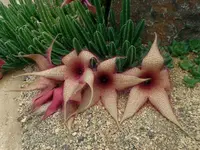
The carrion plant, Stapelia gigantea, is a succulent from arid regions of southern Africa. It forms low, leafless, cactus-like stems that grow in clumps. The plant is best known for its very large, star-shaped flowers with a strong odor that attracts flies for pollination. These blooms can be striking but also surprising indoors. Stapelia gigantea stays compact, making it suitable for containers and sunny windowsills. It prefers bright, indirect light, fast-draining soil, and careful watering that allows the roots to dry between waterings. With a stable warm environment and restraint with water, it is relatively simple to care for Сarrion plant.

Care Difficulty
Easy Care

Light Preference
Partial Sun

Water Requirements
Low Water

Temperature Preference
Tropical / Frost Sensitive

Hardiness Zone
10–11

Soil Texture
Sandy, Loamy, Rocky

Soil pH
Slightly acidic (6.5–7.0), Neutral (7.0)

Soil Drainage
Well-drained

Fertilization
Minimal (feed rarely)
Scan your plant to receive care tips personalized for your specific plant
Available on iOS and Android
This succulent prefers bright, indirect light with limited direct sun exposure.
Water this succulent sparingly and only when the potting mix has dried adequately.
This plant prefers warm conditions and does not tolerate frost.
This succulent handles low household humidity well and rarely needs special moisture control.
This species needs a sharply draining, airy mix that dries quickly after watering.
This species is very suitable for container growing because its shallow roots and spreading stems adapt well to pots.
Stapelia gigantea benefits from light, controlled feeding rather than heavy fertilization.
Pruning Stapelia gigantea is mainly done to maintain plant health and a manageable clump.
This succulent prefers slightly tight containers and infrequent repotting to avoid excess moisture in the root zone.
Stapelia gigantea is most commonly propagated by stem cuttings, with seeds used less often for home growing.
This species is frost sensitive and needs indoor or greenhouse conditions in regions with cold winters.

Plant Health Check
Not sure what's wrong with your plant? Check your plant's health inside the app.
This species produces some of the largest known carrion-type flowers, commonly reaching 25–40 cm across, which helps it visually mimic a rotting carcass to attract flies.
The star-shaped flowers are densely covered with long, silky hairs that break up the outline of the petals and create a fuzzy texture, increasing their resemblance to decomposing mammal skin and fur.
Its flowers emit a smell similar to rotting meat and display mottled, flesh-like colors, a classic sapromyiophilous pollination strategy that specifically targets blow flies and carrion flies as pollinators.

Stapelia gigantea is frequently used in pollination biology studies as a textbook example of floral mimicry, because it imitates not just the smell but also the texture, color pattern, and even temperature profile of a small carcass to deceive flies into laying eggs on the flower.
Lack of flowering usually comes from insufficient light, a pot that is too large, or winter conditions that are too warm and moist. Cooler, drier rest in winter and bright light in spring often trigger buds in this species.
Keep your plants happy and healthy with plant identification, disease detection, and easy care guidance.