


Secure mounting
When grown on slabs or large pieces of hardwood, fix the plant firmly with soft ties or nylon stocking strips so new roots can attach quickly and the heavy canes do not shift in wind or when watered.

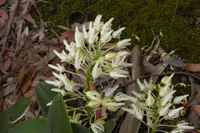
Rock orchid, Dendrobium speciosum, is a large epiphytic or lithophytic orchid native to eastern Australia. It often grows on trees or rocky outcrops in bright, open habitats.
The plant forms clumps of thick, cane-like pseudobulbs with tough leaves and produces large, branched sprays of small, creamy to yellow flowers with a strong scent. It is long lived and can become a substantial specimen over time.
This species is considered robust for an orchid, but its size, bright-light needs, and seasonal growth pattern mean it suits growers who can provide consistent conditions and some space. Understanding how to care for Rock orchid involves matching its high light, airy substrate, and good airflow needs.

Care Difficulty
Moderate Care

Light Preference
Partial Sun

Water Requirements
Moderate Water

Temperature Preference
Warm Climate

Hardiness Zone
10–11

Soil Texture
Sandy, Rocky, Organic-rich

Soil pH
Acidic (5.5–6.5)

Soil Drainage
Well-drained

Fertilization
Light (every 4–6 weeks)
Scan your plant to receive care tips personalized for your specific plant
Available on iOS and Android
This species needs bright, high-intensity light to flower well but must still be protected from harsh extremes.
Watering should support firm canes and healthy roots without leaving the plant wet for long periods.
This orchid prefers warm to hot conditions with a slight drop in temperature at night and over winter.
This orchid prefers moderate humidity but adapts to many home conditions.
This species grows best in a coarse, fast-draining, airy mix rather than dense potting soil.
This species is suitable for container growing if the pot is stable and well drained.
Dendrobium speciosum responds well to moderate, balanced feeding during its active growing season.
Pruning Dendrobium speciosum is light and mainly focused on hygiene and space management.
Repotting this orchid is infrequent and should be done only when the plant clearly outgrows its container.
Propagation of Dendrobium speciosum is most reliable through division of mature clumps.
Winter care depends on climate, as this orchid dislikes hard frost and prolonged freezing.

Plant Health Check
Not sure what's wrong with your plant? Check your plant's health inside the app.
This orchid naturally anchors itself on sandstone outcrops and rock ledges in eastern Australia, often forming huge clumps that can dominate exposed cliffs and rocky hillsides.
Flowering is strongly promoted by a distinct drop in night temperatures at the end of winter, which helps switch the plant from vegetative growth into producing its large, branched flower spikes.
Different wild populations can have noticeably different flower fragrance, ranging from sweet and honey-like to relatively faint, reflecting genetic variation and local pollinator interactions.

Mature plants in optimal habitat can form massive clumps weighing several hundred kilograms and carrying dozens of tall, many-flowered spikes, making them some of the largest and most visually dominant orchids in the wild.
Lack of flowers usually comes from insufficient light, too-warm winter nights, or fertilizing too heavily with nitrogen. Provide bright conditions, a cooler and slightly drier winter rest, and a balanced orchid fertilizer to support bud formation.
Keep your plants happy and healthy with plant identification, disease detection, and easy care guidance.

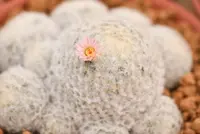
Powderpuff cactus
Mammillaria bocasana
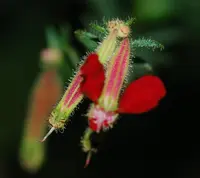
Cuphea hookeriana
Cuphea hookeriana
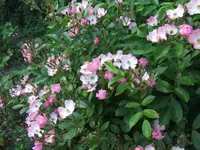
Rose
Rosa 'Ballerina'
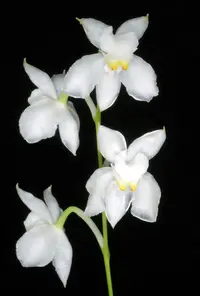
Cuitlauzina pulchella
Cuitlauzina pulchella

Variegated Creeping Charlie
Glechoma hederacea 'Variegata'
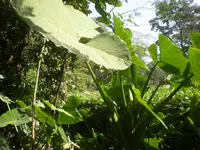
Xanthosoma wendlandii
Xanthosoma wendlandii
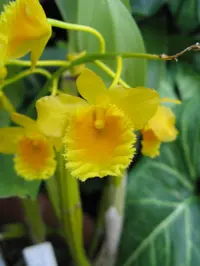
fried-egg orchid
Dendrobium chrysotoxum
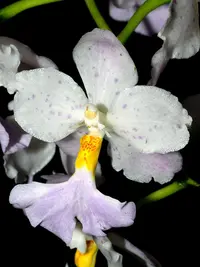
Cuitlauzina pendula
Cuitlauzina pendula