Clean the Water Line
If the houseplant is grown in water, rinse the container and roots regularly to prevent algae, odor, and bacterial buildup.
This is especially useful when caring for lucky bamboo in clear glass vases.

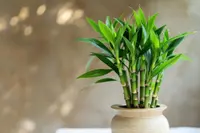
The plant with a fun common name is a tropical evergreen species. People prefer to grow it indoors because it has upright canes and aesthetically pleasing, narrow green leaves. However, despite its common name, it is not a true bamboo but a member of the asparagus family.
In nature, this plant occurs in tropical regions of Central Africa. Indoors, it is generally easy to grow because it tolerates lower light and can adapt to water or soil culture. The main aspect of caring for lucky bamboo is keeping its roots clean and maintaining stable moisture levels.

Care Difficulty
Easy Care

Light Preference
Bright Indirect Light

Water Requirements
Keep Soil Moist

Temperature Preference
Tropical / Frost Sensitive

Hardiness Zone
9-12

Soil Texture
Loamy, Organic-rich

Soil pH
Slightly acidic (6.5–7.0), Neutral (7.0)

Soil Drainage
Moist but well-drained

Fertilization
Light (every 4–6 weeks)
Scan your plant to receive care tips personalized for your specific plant
Available on iOS and Android
Dracaena sanderiana grows best in bright, filtered light, with protection from harsh direct sun.
Tip: Rotate your plant regularly to make sure all sides receive even light.
Remember that this houseplant prefers evenly moist conditions, but it should not sit in stale, soggy soil. Water about once a week indoors in warm seasons and about every 2 weeks in fall and winter. Yellow leaves, soft stems, or a sour smell from the soil often indicate excess moisture or poor drainage.
Note: Water your lucky bamboo with bottled or distilled water, or use tap water left out for 24 hours so the chlorine can evaporate. This plant is sensitive to hard water, chlorine, and other chemicals often found in tap water.
Many tropical plants prefer warm and stable temperatures that are best for healthy growth and leaf color, and this one is not an exception.
Moderate humidity supports lucky bamboo, but it usually tolerates typical indoor air. Try to keep about 40-60% humidity when possible, and keep in mind that dry air may cause brown leaf tips or curled edges. Use a pebble tray or group plants together if the air stays very dry.
Lucky bamboo grows best in a loose, moisture-retentive mix that still allows air to reach the roots.
That’s interesting: It can thrive when grown in pebbles or simply placed in a vase of water, as long as it always has at least an inch of standing water.
Container growing is a nice option for this houseplant, as long as moisture and drainage are controlled. Use an average 4-6 inch (10-15 cm) container for small stems, with enough depth to hold roots securely. Also, choose a pot with drainage holes and empty excess water promptly.
Note: Use a heavier terracotta container if tall canes become top-heavy.
For lucky bamboo, you can use a usual fertilizer for most houseplants or choose a special fertilizer for this species.
Generally, Dracaena sanderiana doesn't need regular pruning of its main stem. However, it's a good idea to cut the offshoots when stems become leggy, crowded, or uneven.
Life hack: This species gets its signature twists and curves through careful light training rather than cutting. By gradually turning the stalks near a light source, growers encourage the plant to bend and grow in that direction.
Sometimes, this procedure is needed. For example, when the stalks are too tall for the vessel to support properly.
You can start new lucky bamboo plants from cuttings whenever you like, but the new growth will usually develop in a more natural form rather than keeping the decorative shape of the original plant.
Note: Healthy roots naturally have a red color, so there’s no need to worry if you notice them in a glass vase.
Protecting from the frost is important because this tropical species is sensitive to cold and frost. Keep it above 55°F (13°C) during winter and move container plants away from cold windows, doors, and drafts. Reduce watering slightly as growth slows in darker conditions. Never leave it outdoors during frost or freezing weather.

Plant Health Check
Not sure what's wrong with your plant? Check your plant's health inside the app.
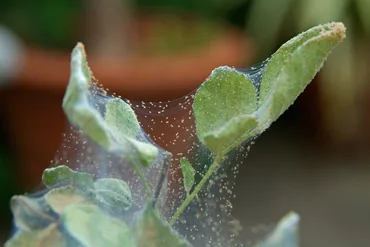
This very small pest can appear in warm, dry conditions and may cause fine webbing, pale speckling, or dull-looking leaves.
Solution
Wash the leaves gently with water and wipe the undersides where mites often hide.
Increase airflow around the plant and use insecticidal soap if the problem continues.
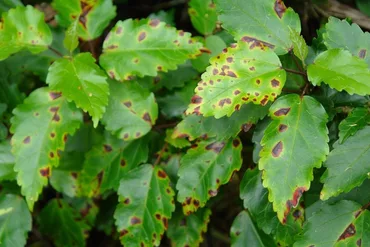
Symptoms include brown or yellow-edged spots on leaves, often linked to wet foliage, poor airflow, or contaminated water.
Damaged leaves decline gradually if conditions stay damp.
Solution
Remove affected leaves and don't splash water onto the foliage.
Keep the container clean, improve air movement, and separate infected plants from healthy ones.
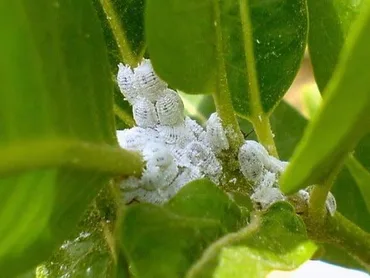
The white insects look like small cottony clusters around leaf bases, stem joints, or cane nodes.
They feed on plant sap and can weaken new growth over time.
Solution
Remove visible insects with a cotton swab dipped in alcohol. Wipe the affected areas clean.
Check your lucky bamboo weekly because hidden mealybugs can return from tight stem spaces.
Although it is widely sold as “lucky bamboo,” this plant is not a bamboo species.
It belongs to the genus Dracaena, so its structure, growth, and care needs are closer to tropical dracaenas than to grasses.
The genus name Dracaena comes from the Greek "drakaina", meaning “female dragon.”
The species name sanderiana was chosen in honor of Henry Frederick Conrad Sander (1847-1920), a German-born English nurseryman and horticulturist known for his work with orchids.
This plant became closely linked with Feng Shui. Its connection to traditional bamboo symbolism, along with its green color associated with luck and renewal, made it a natural fit.
In Feng Shui, it is thought to invite positive energy, or chi, into a space.
A fully yellow, soft cane usually does not recover, especially if the base is declining. Remove it from the arrangement so the problem does not spread to nearby healthy stems.
Keep your plants happy and healthy with plant identification, disease detection, and easy care guidance.