Desert Rose Care (Adenium obesum)

Also known as: Mock Azalea, impala lily

About Desert Rose

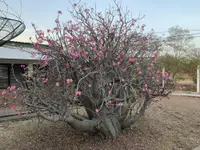
Desert rose (Adenium obesum) is a succulent shrub known for its swollen, bottle-shaped trunk and bright, funnel-shaped flowers in pink, red, or white. It stays compact in containers and can be shaped as a bonsai-style specimen.

In nature it grows in arid, rocky areas of East Africa and the Arabian Peninsula, adapted to long dry periods and intense sun. It stores water in its thick caudex, which helps it tolerate drought but makes it sensitive to overwatering.

This plant suits growers who prefer a sunny spot and are comfortable letting soil dry well between waterings. Understanding how to care for Desert Rose starts with providing strong light, warmth, and very free-draining soil.

Main Plant Requirements

Care Difficulty

Moderate Care

Light Preference

Full Sun

Water Requirements

Low Water

Temperature Preference

Tropical / Frost Sensitive

Hardiness Zone

11–12

Soil Texture

Sandy, Loamy, Rocky

Soil pH

Slightly acidic (6.5–7.0), Neutral (7.0)

Soil Drainage

Well-drained

Fertilization

Light (every 4–6 weeks)

Get Personalized Care Plan

Scan your plant to receive care tips personalized for your specific plant

Personalized Care in the App

Available on iOS and Android

How to Care for the Desert Rose

This succulent shrub needs strong, direct light to flower and keep a compact form.

  • Provide 6–8 hours of full sun daily; morning sun with light afternoon shade is ideal in very hot regions.
  • In mild climates, Desert Rose tolerates full sun all day; in intense summer heat, protect from harsh sun reflecting off walls or pavement.
  • Insufficient light causes stretched, weak growth and poor flowering, so move plants from deep shade to brighter sun gradually over 1–2 weeks.

This drought-tolerant caudiciform stores water in its swollen base and prefers thorough but infrequent watering.

  • Water only when the top 3–5 cm of soil are completely dry; in active growth this may mean every 5–10 days, but timing depends on heat, wind, and soil.
  • Use a very fast-draining, gritty mix and a pot with drainage holes to reduce root-rot risk in Adenium obesum.
  • In cool or dormant periods, reduce watering sharply; signs of overwatering include yellowing, mushy stems, while severe wrinkling of the caudex indicates underwatering.

This species prefers warm, dry conditions and reacts poorly to cold, especially when wet.

  • Aim for 70–90°F (21–32°C) during active growth; brief peaks up to 100°F (38°C) are tolerated if soil drains quickly and roots are not waterlogged.
  • Protect from cold; growth slows below 60°F (16°C), serious damage occurs near 40°F (4°C), and frost can rapidly kill exposed tissues.
  • In regions with cool winters, shift plants to a warmer, sheltered location before nights drop below 55°F (13°C) and keep drier while semi-dormant.

This species prefers dry to moderately dry air and does not need extra humidity.

  • Target 30–50% humidity, similar to typical heated indoor air in arid or temperate homes.
  • Desert Rose tolerates lower humidity but prolonged levels above 60% encourage rot and fungal spots.
  • Signs of excess humidity stress include mushy stems, yellowing lower leaves, and lingering surface moisture on mix.

Soil must be very fast-draining and gritty to prevent root and caudex rot in Adenium obesum.

  • Use a cactus or succulent base mix amended with 40–60% coarse materials such as pumice, perlite, or 3–5 mm gravel.
  • Aim for a sandy, open structure that dries within 2–4 days, with pH around 6.0–7.0.
  • Increase aeration by avoiding fine peat; instead add chunky bark or coconut chips to create air pockets.
  • Avoid heavy garden soil, clay-rich mixes, or water-retentive compost that stay wet and collapse around the roots.

This species is very suitable for container growing due to its compact root system and caudex form.

  • Choose a shallow, wide pot so the caudex can spread laterally while the mix dries evenly after watering.
  • Select unglazed terracotta if extra evaporation is needed in humid or cooler climates to reduce rot risk.
  • Use a pot shape and weight that prevent tipping, since the swollen caudex and branching canopy can become top-heavy over time.

This succulent responds well to light, controlled feeding during its active growing season.

  • Use a balanced liquid fertilizer (for example 10-10-10 or 20-20-20) diluted to 25–50% strength for Desert Rose in spring and summer.
  • Apply every 4–6 weeks during active growth, only on moist soil to reduce root burn risk.
  • Stop feeding in fall and winter when growth slows or the plant is dormant.
  • Avoid heavy organic compost; instead choose a low-salt, cactus or succulent-specific formula.

Thoughtful pruning supports compact shape and flowering in Adenium obesum.

  • Carry out structural pruning in late winter or early spring before strong new growth begins.
  • Remove dead, diseased, or rubbing branches first, then thin crowded stems to open the canopy.
  • Shorten leggy shoots to encourage branching and more flower-bearing tips.
  • Use clean, sharp pruning shears and allow cut surfaces to dry and callus in good airflow.

Container-grown plants benefit from infrequent but careful repotting into well-drained media.

  • Plan to repot every 2–3 years in late spring when growth is active and temperatures are warm.
  • Look for roots circling the pot, slow growth, or very rapid drying of soil as signs to move up 1 pot size.
  • Use a shallow, wide container with a gritty cactus mix, keeping the caudex slightly above soil level.
  • Handle roots gently, trim only rotten tissue, and allow the plant to settle in bright shade for several days after repotting.

This species is commonly propagated by both seeds and stem cuttings for new plants.

  • Sow fresh seeds in late spring to early summer on a warm seedling heat mat at 75–85°F in a sterile, gritty mix.
  • Keep seed medium lightly moist, not wet, and provide bright light for strong, compact seedlings.
  • For cuttings, take semi-hardwood tips in warm weather, let them callus 2–3 days, then plant in a fast-draining medium.
  • Maintain high light, warmth, and minimal but consistent moisture until roots form, then transition gradually to normal watering.

This tropical succulent is highly frost-sensitive and needs strict winter protection in temperate climates.

  • Move containers indoors before temperatures drop below 50°F and avoid any frost exposure.
  • Place in the brightest possible location indoors, ideally with 6–8 hours of strong light or supplemental grow lights.
  • Water very sparingly in winter, just enough to prevent shriveling of the caudex, and do not fertilize.
  • In mild climates, outdoor plants need excellent drainage and a gravel mulch to keep the root zone drier in cool weather.

Care Tips

Caudex Exposure

Gradually raise the plant a little higher in the pot with each repotting so the swollen caudex sits partly above the soil line, which improves air flow around the base and highlights its natural form.

Controlled Root Pruning

During repotting in warm weather, lightly trim long, thick roots and dust cuts with a sulfur-based fungicide to encourage a compact, fibrous root system and reduce rot risk.

Flowering Cycle Management

After a strong flowering flush, allow a brief, slightly drier rest period and avoid heavy feeding to support the plant’s natural cycle and promote future bud formation.

Branching by Pinching

Pinch or cut back soft new tips by 1–2 cm in late spring to stimulate multiple side branches and create a fuller canopy with more future flowering points when growing Desert Rose.

Rain Protection Strategy

If the plant is outdoors, place it under a roof overhang or use a simple clear cover during extended rainy periods to keep the potting mix from staying saturated for too long.

Common Pests and Diseases

Oleander aphids

This pest consists of bright yellow aphids that cluster on young tips, flower buds, and undersides of leaves, sucking sap and causing distortion and sticky honeydew. Symptoms include curled new growth, stunted buds, and black sooty mold growing on the honeydew.

Solution

Remove heavily infested shoot tips, then wash remaining colonies off with a strong but controlled stream of water. For persistent populations, treat soft tissue with insecticidal soap or a horticultural oil, repeating every 5–7 days until no new aphids appear and avoiding applications during very hot sun to prevent leaf burn.

Spider mites

These insects are tiny sap-feeding mites that thrive in hot, dry conditions and cause fine speckling, dull leaves, and sometimes fine webbing between leaves and stems. Symptoms include slowed growth, leaf edge bronzing, and premature leaf drop.

Solution

Shower foliage thoroughly, including leaf undersides, to dislodge mites and increase local humidity around the plant. If activity continues, apply insecticidal soap or a light horticultural oil to all leaf surfaces at 5–7 day intervals, and reduce heat stress by avoiding placement right against reflective hot windows in midsummer.

Mealybugs

This pest appears as white, cottony clusters in leaf axils, along stems, and sometimes on the caudex, where they suck sap and weaken the plant. Symptoms include sticky honeydew, yellowing leaves, and slowed growth in otherwise warm, bright conditions.

Solution

Isolate the plant, then dab visible mealybugs with cotton swabs dipped in 70% isopropyl alcohol and wipe away residues from crevices. Follow up with a broad spray of insecticidal soap or horticultural oil on all plant surfaces and repeat weekly until no new clusters appear, monitoring especially around the caudex and lower stems since those areas are typical hiding spots when growing Desert Rose.

Stem and caudex rot

This disease usually develops after chronic overwatering or cold, wet soil and causes soft, dark, or mushy areas on stems or the swollen caudex. Symptoms include a foul smell, skin collapse over the caudex, and rapid wilt despite moist soil.

Solution

Immediately withhold water, unpot the plant, and cut away all soft, discolored tissue back to firm, healthy wood with a sterile blade, allowing cut surfaces to dry and callus for several days. Repot into a fresh, fast-draining, gritty mix, keep in warm bright light, and water sparingly until strong new growth confirms recovery.

Leaf spot and blight

This disease presents as tan, brown, or black lesions on leaves, sometimes with a yellow halo, which can coalesce into larger blighted patches, especially in humid or poorly ventilated conditions. Symptoms include premature leaf drop and a generally sparse canopy on an otherwise healthy caudex.

Solution

Remove and discard all affected leaves and debris, and improve airflow by spacing plants and avoiding overhead watering so foliage dries quickly. If spotting continues, apply a copper-based or other labeled ornamental fungicide according to the product directions, and keep the plant in a warm, bright, low-humidity position to reduce recurrence.

Interesting Facts

Swollen water-storing trunk

The bulbous base, called a caudex, is a specialized stem that stores water, allowing the plant to survive long dry periods in its native arid habitats of East Africa and the Arabian Peninsula.

Toxic milky sap

Its white latex contains potent cardiac glycosides, which are poisonous if ingested and have been traditionally used in some regions to tip hunting arrows.

Sun-triggered flowering cycles

In climates with a marked dry season, this species often drops many of its leaves and then produces flushes of tubular pink to red flowers once water and strong sunlight become more available, a strategy that increases pollinator visibility.

Botan icon

Did you know?

In the wild, some individuals can develop caudices wider than 30–40 cm, forming striking, tree-like sculptures that make this species a popular subject for caudiciform bonsai and specialized Adenium obesum plant care collections.

FAQs about Desert Rose

Lack of blooms often comes from insufficient light, cool temperatures, or previous overwatering that weakened new growth. Avoid heavy nitrogen fertiliser, keep it slightly root-bound, and allow a short dry rest period to encourage flower bud formation.

Grow Healthy Plants with Botan Care

Keep your plants happy and healthy with plant identification, disease detection, and easy care guidance.


Botan plant care app — identify plants on mobile

Explore More Plants