Lipstick Care (Echeveria agavoides)

About Lipstick

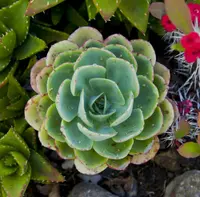
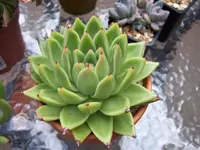
Echeveria agavoides, often called lipstick echeveria, is a compact, rosette-forming succulent from rocky regions of Mexico. It stores water in thick, pointed leaves. Mature plants form tight, symmetrical rosettes with leaf tips that often turn red, especially in bright light, creating a clean, architectural look. Flower stalks may appear seasonally with small, colorful blooms. This species is adapted to strong sun, sharp drainage, and dry periods, which makes it relatively low-maintenance in containers and rock gardens. Understanding how to care for Lipstick mainly involves providing plenty of light, minimal but thorough watering, and gritty, fast-draining soil.

Main Plant Requirements

Care Difficulty

Easy Care

Light Preference

Full Sun

Water Requirements

Low Water

Temperature Preference

Tropical / Frost Sensitive

Hardiness Zone

9–11

Soil Texture

Sandy, Loamy, Rocky

Soil pH

Slightly acidic (6.5–7.0), Neutral (7.0)

Soil Drainage

Well-drained

Fertilization

Minimal (feed rarely)

Get Personalized Care Plan

Scan your plant to receive care tips personalized for your specific plant

Personalized Care in the App

Available on iOS and Android

How to Care for the Lipstick

This succulent thrives with bright, direct light that mimics its native sunny habitats.

  • Provide 4–6 hours of direct morning sun plus bright light the rest of the day; in very hot regions, protect from harsh sun after 2–3 pm to avoid leaf scorch.
  • Lipstick tolerates light partial shade, but prolonged low light causes stretched, pale rosettes and weak growth.
  • In winter, move plants to the brightest available spot and, if indoors, place near a south- or west-facing window to compensate for shorter days.

Watering should respect this plant’s desert adaptation and thick, water-storing leaves.

  • Allow the top 3–5 cm of soil to dry completely before watering, then soak thoroughly so water drains freely from the pot or bed.
  • Reduce watering sharply in winter, and watch for firm, plump leaves as a sign of adequate moisture; wrinkling suggests underwatering.
  • Yellowing, translucent, or mushy lower leaves and a soft base often indicate overwatering, especially in poorly drained or compacted soil.

Stable, warm conditions support compact growth and reduce stress for this succulent.

  • Aim for 65–80°F (18–27°C) for active growth; short spikes up to 90°F (32°C) are tolerated if soil is fast-draining and air is moving.
  • Protect from frost; growth slows below 50°F (10°C), and tissue damage often occurs near 32°F (0°C), especially in wet soil.
  • In regions with cold winters, grow Echeveria agavoides in containers that can be moved under cover when nights drop below 40°F (4°C).

This succulent prefers dry air and does not need extra humidity.

  • Aim for 30–50% relative humidity, similar to typical indoor air in most homes.
  • Lipstick tolerates very dry air, but prolonged damp, stagnant air can encourage fungal spotting on leaves.
  • If air is unusually humid, increase air movement with a small fan and avoid clustering plants too tightly.

This species needs a very fast-draining, airy soil mix to prevent root rot.

  • Use a gritty, sandy structure such as 50–70% mineral content (pumice, perlite, coarse sand) with 30–50% cactus potting mix.
  • Target a slightly acidic to neutral pH around 6.0–7.0, which supports nutrient uptake without encouraging rot.
  • Increase aeration by using large particle sizes (3–6 mm) and avoiding dense materials like clay-rich garden soil.
  • For Echeveria agavoides, avoid moisture-retentive peat-heavy mixes and any potting blend that stays wet longer than 2–3 days.

This compact succulent is very suitable for container growing.

  • Choose a shallow but wide pot to match its fibrous, shallow root system and rosette spread.
  • Select unglazed terracotta if extra evaporation is needed in cool or low-light positions to reduce moisture retention.
  • Secure lightweight containers with top-dressing gravel if the plant becomes top-heavy, to reduce tipping in outdoor wind exposure.

This succulent benefits from light feeding, especially in containers, but heavy fertilization is unnecessary for healthy growth.

  • Use a balanced liquid fertilizer (around 10-10-10) at 1/4–1/2 strength or a diluted organic compost tea during active growth.
  • Feed every 4–6 weeks in spring and summer when growing Lipstick most actively under bright light.
  • Avoid fertilizing in late fall and winter, when growth slows and roots are less active.
  • Do not apply slow-release pellets heavily; a small amount mixed into the topsoil at spring repotting is enough.

Pruning needs for Echeveria agavoides are minimal and mainly focused on cleanliness and shape.

  • Best time for light pruning is late winter to early spring before strong new growth starts.
  • Remove dead, shriveled, or damaged leaves from the rosette base using clean fingers or small scissors.
  • Clear away any crowded, mushy, or diseased tissue promptly to improve airflow and reduce rot risk.
  • Tidying spent flower stalks after blooming maintains a compact rosette and directs energy back to root and leaf growth.

This succulent grows slowly and prefers infrequent disturbance but still benefits from periodic repotting in fresh, fast-draining soil.

  • Plan to repot every 2–3 years in spring when growth resumes, or sooner if roots circle the pot or emerge from drainage holes.
  • Choose a shallow container with drainage and a gritty cactus mix to limit root rot and support firm rosette growth.
  • Lift the plant gently, tease away old soil, and trim any dead or blackened roots with sterile scissors to reduce disease.
  • Allow roots to dry for 1–2 days before first light watering after repotting, reducing stress and giving cuts time to callus.

New plants are commonly produced from offsets and leaf or stem cuttings taken from healthy Echeveria agavoides specimens.

  • Best season is spring to early summer, when warmth and brighter light support strong root formation.
  • Gently separate offsets with a clean knife, ensuring each pup has some roots attached, then pot in a gritty mix.
  • For leaf propagation, twist off full, undamaged leaves, let callus 2–3 days, then lay on barely moist substrate.
  • Provide bright, indirect light, good airflow, and minimal watering until roots and small rosettes are visible.

This species is not frost hardy and needs thoughtful winter care in regions with freezing temperatures.

  • Keep plants above 35–40°F; extended exposure below freezing can damage leaves and roots.
  • Move containers indoors or into a bright, cool, frost-free space before nighttime lows drop near 40°F.
  • Water very sparingly in winter, letting soil dry completely to avoid cold, wet root conditions that promote rot.
  • In mild climates, use a raised, sharply drained bed and a light gravel mulch to keep the crown dry during cold rains.

Care Tips

Offset management

Remove and replant well-rooted offsets in late spring when they are at least 2–3 cm across, using a sterile knife and allowing cut surfaces to dry 2–3 days before potting to keep the mother rosette compact and productive.

Winter light boost

In winter, move the plant to the brightest, coolest indoor spot available or use a small LED grow light 8–10 in above the rosette for 10–12 hours daily to prevent stretching and color loss when you grow Echeveria agavoides in low-light climates.

Prevent rot by angle

When planting in containers, position the rosette slightly above the rim and tilt the pot a few degrees so any water quickly runs off the leaves and away from the crown, which greatly reduces rot after heavy rain or accidental overwatering.

Targeted mealybug control

Inspect leaf axils and the base of the rosette monthly, then spot-treat visible mealybugs with a cotton swab dipped in 70% isopropyl alcohol and repeat every 7–10 days until no new pests appear.

Color through stress

To encourage stronger red leaf edges, maintain slightly tighter root space and provide high light with lean feeding during the growing season, while avoiding any stress that causes permanent wilting or soft leaves.

Common Pests and Diseases

Mealybugs

This pest feeds on leaf and stem sap, often hiding in the tight leaf rosettes and along the leaf bases. Symptoms include white cottony clusters, sticky honeydew, and distorted or stunted new growth.

Solution

Isolate the plant, then dab visible mealybugs with cotton swabs dipped in 70% isopropyl alcohol, taking care to reach between inner leaves. Rinse the rosette gently, improve light and airflow, and repeat alcohol treatments weekly until no new insects appear; for severe cases, use a systemic insecticide labeled for succulents.

Aphids

These insects cluster on flower stalks and young leaves, sucking sap and causing curling, distortion, and sticky honeydew deposits. Sooty mold may develop on the honeydew, darkening leaf surfaces.

Solution

Move the plant to a sink or outdoors and wash aphids off with a firm stream of water, focusing on flower spikes and undersides of leaves. Follow up with an application of insecticidal soap or neem oil, ensuring full coverage of soft tissue, and repeat every 5–7 days until populations decline.

Soft scale

This pest appears as small, smooth, tan to brown bumps on leaves and stems, particularly near the base of the rosette. This pest weakens the plant over time, causing yellowing, reduced vigor, and honeydew buildup.

Solution

Gently scrape or wipe off individual scale insects with a cotton swab or soft cloth dipped in 70% isopropyl alcohol, then rinse the plant. For persistent infestations, apply a systemic insecticide suitable for succulents and reduce plant crowding to increase airflow and light.

Powdery mildew

This disease causes white, powder-like patches on leaves, often starting where airflow is poor or humidity is elevated around dense rosettes. Symptoms include dull, mottled foliage and reduced vigor, especially in shaded or overcrowded conditions.

Solution

Remove heavily affected leaves, increase light, and improve air circulation by spacing plants and avoiding overhead watering late in the day. If needed, apply a sulfur-based or potassium bicarbonate fungicide labeled for ornamentals, keeping leaves dry between treatments.

Bacterial soft rot

This disease leads to rapidly collapsing, water-soaked leaf bases and a foul odor originating from the center of the rosette. Symptoms include mushy tissue that spreads quickly, often following mechanical damage or prolonged wetness in the crown.

Solution

At the first sign, remove and discard all affected tissue and, if most of the rosette is affected, discard the entire plant to protect nearby succulents. Prevent recurrence by watering at the soil level, keeping the crown dry, using a very sharp, clean tool for any cuts, and maintaining a fast-draining mineral-rich substrate as part of general Echeveria agavoides plant care.

Interesting Facts

Agave-like rosette form

This species forms a tight, triangular-leaved rosette that strongly resembles small agaves, which is why it has the species name agavoides, meaning agave-like.

Distinctive leaf tip spine

Mature leaves usually end in a sharp, stiff tip that looks like a tiny spine, a feature much more pronounced in this species than in most other Echeveria.

Native rocky cliff habitats

In the wild in central Mexico, this plant often grows on rocky outcrops and cliffs, anchoring its shallow roots in crevices with excellent drainage and high light exposure.

Botan icon

Did you know?

In habitat, this species can develop hundreds of small offsets over time, forming dense, cushion-like mounds that cover rock surfaces and visually dominate patches of its native cliff faces.

FAQs about Lipstick

Brown leaves usually result from sun scorch, prolonged underwatering, or accumulated fertilizer salts at the leaf edges. Check light intensity, watering rhythm, and whether the pot drains freely. Remove dead leaves and adjust conditions gradually to prevent further damage.

Grow Healthy Plants with Botan Care

Keep your plants happy and healthy with plant identification, disease detection, and easy care guidance.

Botan plant care app — identify plants on mobile

Explore More Plants