Control Rosette Stretch
Rotate containers 90° every 1–2 weeks so all sides receive similar light, which keeps rosettes compact and prevents one-sided, floppy growth when growing Ghost-plant.

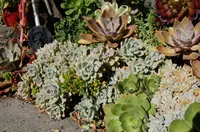
Ghost-plant, Graptopetalum paraguayense, is a small rosette-forming succulent from arid regions of Mexico. It stores water in its thick, pastel-colored leaves. The plant often develops trailing stems, so it works well in shallow pots, bowls, and hanging containers. Leaf color can shift from bluish gray to soft pink or beige depending on light. This species suits beginners because it is drought tolerant and usually forgives occasional neglect. Rot from overwatering is the main risk, so light, fast-draining soil is important. Understanding how to care for Ghost-plant starts with providing plenty of bright light, low humidity, and infrequent watering.

Care Difficulty
Easy Care

Light Preference
Full Sun

Water Requirements
Low Water

Temperature Preference
Warm Climate

Hardiness Zone
9–11

Soil Texture
Sandy, Loamy, Rocky

Soil pH
Slightly acidic (6.5–7.0), Neutral (7.0)

Soil Drainage
Well-drained

Fertilization
Minimal (feed rarely)
Scan your plant to receive care tips personalized for your specific plant
Available on iOS and Android
This succulent prefers bright, direct light but tolerates some light shade, especially in hot climates.
This drought-tolerant succulent stores water in its leaves and needs infrequent but thorough watering.
This species thrives in warm, dry conditions and dislikes prolonged cold or high humidity.
Humidity is not critical for Graptopetalum paraguayense, which thrives in typical dry indoor air.
This species needs a sharply draining, mineral-rich substrate that dries quickly between waterings.
This succulent is very suitable for container growing due to its compact, trailing habit.
This succulent needs only light feeding, so a conservative approach prevents weak, stretched growth in Ghost-plant.
Pruning for Graptopetalum paraguayense is mainly cosmetic, helping maintain a compact, healthy rosette display.
Repotting is infrequent, but timely moves support healthy roots and controlled spread for this succulent.
New plants are commonly produced from cuttings and leaves, making this species simple to multiply.
Cold conditions require attention, as this succulent is only mildly frost tolerant and can be damaged by hard freezes.

Plant Health Check
Not sure what's wrong with your plant? Check your plant's health inside the app.
The leaves develop a natural waxy coating called epicuticular wax that gives the rosettes a pale, ghostly look and helps reduce water loss and sun damage in exposed habitats.
This species propagates very readily from single leaves that detach and root on the soil surface, a strategy that allows it to form scattered colonies on rocky slopes and walls.
Leaf color shifts from bluish gray to pinkish or yellowish tones under higher light and mild drought stress, reflecting changes in protective pigments such as anthocyanins.

Although now a common ornamental succulent worldwide, this species was first described from plants cultivated in Europe that were traced back to Mexico, and its specific epithet "paraguayense" is actually a historical naming error because it does not occur naturally in Paraguay.
Lack of blooms often relates to insufficient light, stress from frequent repotting, or heavy fertilizing. Stable conditions and bright exposure usually trigger late-winter to spring flowering, which is a normal, once-per-year event for this species.
Keep your plants happy and healthy with plant identification, disease detection, and easy care guidance.