Baseball Plant Care (Euphorbia obesa)

Also known as: Baseball Cactus, Fat Milkball, Zulu Hut

About Baseball Plant

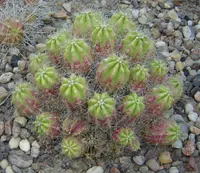
The baseball plant, Euphorbia obesa, is a small, spherical succulent native to arid regions of South Africa. It stays compact and slow-growing, making it suitable for containers and indoor displays.

Its body is usually round to slightly cylindrical with distinct vertical ridges and subtle striping, often resembling a green and gray ball. The plant rarely produces visible leaves and forms tiny flowers near the top.

Euphorbia obesa prefers bright light, infrequent watering, and very well-draining soil, which makes it relatively straightforward for those who learn how to care for Baseball Plant.

Main Plant Requirements

Care Difficulty

Easy Care

Light Preference

Partial Sun

Water Requirements

Low Water

Temperature Preference

Tropical / Frost Sensitive

Hardiness Zone

10–11

Soil Texture

Sandy, Loamy, Rocky

Soil pH

Slightly acidic (6.5–7.0), Neutral (7.0)

Soil Drainage

Well-drained

Fertilization

Minimal (feed rarely)

Get Personalized Care Plan

Scan your plant to receive care tips personalized for your specific plant

Personalized Care in the App

Available on iOS and Android

How to Care for the Baseball Plant

This compact succulent thrives in bright, dry conditions that mimic its native South African habitat.

  • Provide 4–6 hours of bright light daily, ideally morning sun with light afternoon shade to prevent scorching of the rounded stems.
  • Outdoors, place Baseball Plant where it receives early sun and filtered or dappled light later; indoors, use a south or east window with sheer curtain if light is intense.
  • Watch for stress signals: yellowing or brown, hard patches suggest too much sun; elongated, leaning growth indicates insufficient light, especially in winter.

This species stores water in its spherical stem and needs infrequent, careful watering.

  • Allow the top 3–5 cm of soil to dry completely before watering; in dry, warm weather this may mean watering every 2–4 weeks, less often in cool seasons.
  • Use very free-draining, gritty soil so water runs through quickly and the root zone does not stay wet for more than 1 day.
  • Wrinkling or slight softening signals it is time to water; persistent mushy stems, yellowing, or a sour smell indicate overwatering risk for Euphorbia obesa.

This plant prefers warm, stable conditions and is sensitive to cold and sudden temperature drops.

  • Aim for 65–80°F (18–27°C) during active growth; short peaks up to 90°F (32°C) are tolerated if the soil is dry and air is moving.
  • Protect from cold below 50°F (10°C) and never expose to frost; tissue damage can occur quickly near 32°F (0°C).
  • In winter, a cooler rest at 55–65°F (13–18°C) with very low watering supports healthy growth cycles, but avoid drafty windows and rapid swings.

Humidity is rarely a concern for Euphorbia obesa, which prefers dry air similar to typical indoor conditions.

Euphorbia obesa needs a very fast-draining, mineral-lean substrate to prevent root rot.

  • Use a gritty mix such as 60–70% inorganic material (pumice, coarse sand, or perlite) with 30–40% cactus potting mix.
  • Aim for slightly acidic to neutral pH around 6.0–7.0, avoiding strongly acidic or alkaline substrates.
  • Ensure the mix feels loose and airy; large, irregular particles keep oxygen around the roots and let water drain quickly.
  • Avoid dense, peat-heavy, or water-retentive mixes that stay wet for more than 1–2 days after watering.

This species is well suited to container growing due to its compact, shallow root system.

  • Choose a pot only slightly wider than the plant’s body so the mix dries evenly between waterings.
  • Select a heavy ceramic or clay container to keep the rounded stem stable and reduce the risk of tipping.
  • Use a shallow pot to match the root depth, which limits excess wet substrate at the bottom of the container.

This succulent Baseball Plant needs only light feeding to support slow, compact growth in containers.

  • Use a balanced liquid cactus fertilizer diluted to 1/4–1/2 strength to avoid root burn.
  • Feed once every 4–6 weeks during the warm growing season when light and growth are adequate.
  • Do not apply fertilizer in winter dormancy when growth pauses.
  • Flush the pot occasionally with plain water to prevent salt buildup in the soil.

Euphorbia obesa needs almost no pruning because it naturally keeps a compact, spherical form.

This slow-growing succulent stays compact and needs infrequent repotting to avoid stressing its shallow roots.

  • Repot only when roots circle the container drainage holes or growth noticeably slows.
  • Plan repotting in late spring to early summer when active growth supports recovery.
  • Move up just 1 pot size, using a fast-draining cactus mix and a pot with large drainage holes.
  • Handle the root ball gently, keep the plant slightly dry for 3–5 days afterward, then resume light watering.

Propagation of Euphorbia obesa is usually done from seed and is considered slow and specialized.

This species is not frost hardy and needs controlled indoor conditions during winter in most climates.

  • Keep plants above 50°F, ideally 60–70°F, with bright light and good air circulation.
  • Move outdoor containers indoors before nights drop near 50°F, placing them in a dry, sunny window.
  • Water very sparingly in winter, letting the mix dry fully to prevent root rot during semi-dormancy.

Care Tips

Rotate For Symmetry

Turn the pot 90° every 2–3 weeks so all sides receive similar light, which keeps the sphere evenly shaped and prevents leaning toward the window.

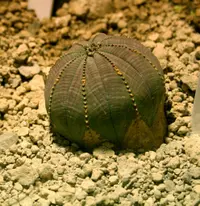
Use Heavy Containers

Plant it in a heavier clay or ceramic pot or add a top dressing of gravel to lower the center of gravity and reduce the risk of the plant tipping over as it gains height.

Safe Handling Routine

Always handle the plant with gloves and avoid breaking the skin, then wash hands and tools afterward to prevent irritation from the toxic latex sap.

Controlled Flowering Support

If the plant produces many flowers, provide a very thin layer of low-nitrogen granular fertilizer only once at the start of the growing season to support flowering without pushing soft, weak growth.

Winter Rest Management

During winter rest, move the plant slightly farther from the window or use a sheer curtain to reduce light intensity, which helps it stay compact and supports natural dormancy while caring for Baseball Plant.

Common Pests and Diseases

Mealybugs

This pest feeds on sap and often hides in rib grooves and around the stem base, leaving white cottony clusters. Symptoms include slowed growth, slight yellowing, and sticky honeydew on the plant or nearby surfaces.

Solution

Isolate the plant, then dab visible insects with cotton swabs dipped in 70% isopropyl alcohol and repeat weekly until no new clusters appear. For heavier infestations, rinse the plant carefully with lukewarm water, allow it to dry fully, then apply a light, labeled insecticidal soap or neem oil to all surfaces, keeping the soil dry and the plant in bright, indirect light during treatment.

Spider mites

These insects are tiny and often go unnoticed until fine webbing appears between ribs and the plant surface looks dull or slightly speckled. This pest thrives in warm, very dry indoor air, especially on stressed plants.

Solution

Move the plant to a sink and gently hose or shower the body of the plant to remove mites and webbing, keeping water off the soil as much as possible. After drying, increase ambient humidity slightly, improve airflow, and use a labeled miticidal product or neem oil sprayed on the stem surface every 7–10 days for several cycles, inspecting with a magnifier if possible.

Scale insects

This pest appears as small, hard, brown or gray bumps on the stem, especially near the crown and in grooves, and excretes sticky honeydew that may attract sooty mold. Symptoms include weakened growth and a slightly shriveled appearance despite normal watering.

Solution

Manually remove scales with a cotton swab or soft brush dipped in 70% isopropyl alcohol, taking care not to damage the epidermis. For persistent problems, repeat spot treatment every 7–10 days and apply a thin, even coating of neem oil or horticultural oil to the stem, ensuring the plant is kept warm and dry with good air movement to avoid secondary fungal issues.

Corking and stem rot

This disease begins as soft, discolored or translucent patches on the spherical stem that can quickly collapse and darken, especially after overwatering or cold, wet conditions. Symptoms include a foul smell and tissue that feels mushy to the touch rather than the normal firm, corky aging at the base.

Solution

At the first sign of soft rot, reduce watering immediately, improve drainage, and increase warmth and airflow around the plant; if only a small area is affected, keep it very dry and monitor. When rot is extensive, disposal of the plant and soil is usually recommended to prevent spread; for future Euphorbia obesa care, use a very fast-draining gritty mix, a pot with a large drainage hole, and strict watering intervals that allow the substrate to dry fully between waterings.

Fungal leaf spot–like lesions

This disease shows as small, sunken, brown to black spots or patches on the stem surface that may coalesce, often following minor mechanical damage or prolonged surface moisture. Symptoms include localized scarring and cosmetic damage, but can occasionally deepen into the tissue if ignored.

Solution

Remove any loose, diseased tissue with a sterile blade if it is lifting from the surface, then allow the plant to dry in a warm, bright, well-ventilated spot. Avoid overhead watering or misting, keep the stem dry, and apply a light, labeled copper-based or sulfur-based fungicide to the affected areas if spots expand, monitoring closely and discarding the plant if lesions spread rapidly or reach the growing point.

Interesting Facts

Sexes on separate plants

This species is dioecious, meaning each individual plant produces only male or only female flowers, so seed production requires both sexes to be present and flowering at the same time.

Highly localized native range

In the wild, this succulent is naturally restricted to a small area of the Karoo region in South Africa, where it grows on rocky, well-drained slopes and blends in with surrounding stones.

Convergent cactus-like form

Although it resembles a small cactus, it is a spurge and not a cactus; its spherical, ribbed body evolved independently as a water-storing adaptation to arid conditions, an example of convergent evolution.

Botan icon

Did you know?

In its natural habitat, this species became so heavily collected for the horticultural trade that wild populations declined sharply, leading to its protection under international trade regulations (CITES Appendix II) to limit export from the wild.

FAQs about Baseball Plant

This species blooms only when mature and not stressed. Lack of flowers usually comes from insufficient light, cool temperatures, or recent repotting. Stable warmth, strong light, and patience are key for Euphorbia obesa care.

Grow Healthy Plants with Botan Care

Keep your plants happy and healthy with plant identification, disease detection, and easy care guidance.

Botan plant care app — identify plants on mobile

Explore More Plants