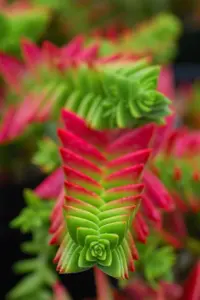
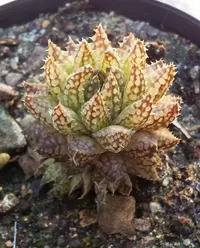
Winter rest period
Reduce watering sharply and keep the plant on the coolest, brightest windowsill in winter to encourage a defined rest phase that supports stronger, more compact growth in the next season.

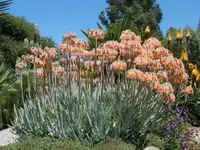
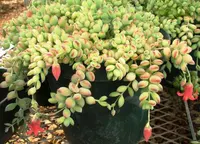
Pig's ear (Cotyledon orbiculata) is a succulent shrub from South Africa, grown for its thick, fleshy leaves and showy tubular flowers. It usually forms upright, branching stems with rounded, flat leaves that often have a red edge. In suitable conditions, it produces tall flower stalks with clusters of orange, yellow, or red blooms. As a drought-tolerant succulent, it stores water in its leaves and copes well with dry indoor air and infrequent watering. These traits make it relatively forgiving for those learning how to care for Pig's Ear, as long as it receives strong light and a well-draining soil mix.

Care Difficulty
Easy Care

Light Preference
Full Sun

Water Requirements
Low Water

Temperature Preference
Tropical / Frost Sensitive

Hardiness Zone
9–11

Soil Texture
Sandy, Loamy, Rocky

Soil pH
Slightly acidic (6.5–7.0), Neutral (7.0)

Soil Drainage
Well-drained

Fertilization
Minimal (feed rarely)
Scan your plant to receive care tips personalized for your specific plant
Available on iOS and Android
This succulent prefers bright, open conditions similar to its native South African habitat.
This drought-tolerant succulent stores water in its leaves and needs infrequent, careful watering.
This species prefers warm, dry conditions and is sensitive to frost and prolonged cold.
Humidity is not a critical factor for this drought-adapted succulent.
This species needs very fast-draining, mineral-rich soil to prevent root rot.
This species is well suited to container growing.
Cotyledon orbiculata benefits from light feeding but tolerates lean, sandy soils well.
Pruning Cotyledon orbiculata is useful to maintain shape, remove damage, and support flowering.
This succulent prefers slightly tight pots and infrequent disturbance, so repot only when needed.
Cotyledon orbiculata is commonly propagated from stem or leaf cuttings, with seeds used less often.
This succulent is frost-tender and needs protection in regions with cold winters.

Plant Health Check
Not sure what's wrong with your plant? Check your plant's health inside the app.
The leaves are covered by a natural whitish wax layer called epicuticular wax, which helps reduce water loss and reflects intense sunlight in its native South African habitats.
Its tubular, pendulous flowers typically open and release more scent at night, attracting nocturnal pollinators such as moths.
This species is known to be poisonous to grazing animals, especially sheep and goats, and is one of the better-studied plant causes of plant-induced neurological symptoms in South African livestock.

In some parts of South Africa, this species has historically been so problematic for grazing animals that farmers learned to actively manage its presence in rangelands, and it is still featured in veterinary manuals on plant poisonings as a classic example of a toxic succulent shrub.
Brown leaf tips or patches usually come from underwatering, intense sun scorch, fertilizer burn, or cold damage. Check for very dry soil, recent temperature drops, or strong midday sun, then adjust watering and positioning accordingly.
Keep your plants happy and healthy with plant identification, disease detection, and easy care guidance.