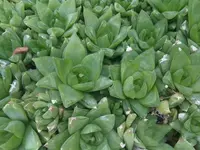
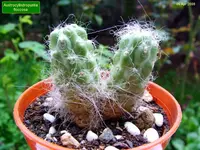
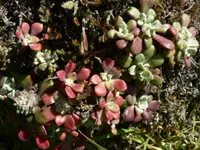
Splitrock Quaggafig Care (Pleiospilos nelii)

About Splitrock Quaggafig

Pleiospilos nelii, commonly called split rock, is a compact succulent from arid regions of South Africa and Namibia. It mimics surrounding stones to avoid herbivores and harsh sun.

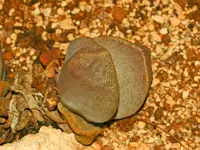
The plant forms a small pair of thick, gray-green leaves with speckles and a cleft in the center, often topped by a daisy-like flower. Growth is slow and seasonal, with new leaves emerging as old ones dry.

Its drought tolerance and small size make it suitable for sunny windowsills and rock-style containers. Understanding how to care for Pleiospilos nelii mainly means avoiding overwatering, using very fast-draining soil, and providing plenty of light.

Main Plant Requirements

Care Difficulty

Moderate Care

Light Preference

Full Sun

Water Requirements

Low Water

Temperature Preference

Tropical / Frost Sensitive

Hardiness Zone

10–11

Soil Texture

Sandy, Rocky, Loamy

Soil pH

Slightly acidic (6.5–7.0), Neutral (7.0)

Soil Drainage

Well-drained

Fertilization

Minimal (feed rarely)

Get Personalized Care Plan

Scan your plant to receive care tips personalized for your specific plant

Personalized Care in the App

Available on iOS and Android

How to Care for the Splitrock Quaggafig

This small succulent needs strong, carefully managed light to stay compact and healthy.

  • Provide 4–6 hours of direct morning sun plus bright, indirect light for the rest of the day; east or southeast exposure suits Pleiospilos nelii well.
  • In very hot, dry climates, protect from intense midday and late afternoon sun with light shade cloth or filtered light to prevent leaf scorching.
  • In winter, maximize light with a south-facing exposure if possible; in low-light regions, consider supplemental grow lights 6–8 hours/day to avoid etiolation.

Watering must be sparse and carefully timed to prevent rot in this rock-mimicking succulent.

  • Allow soil to dry completely, not just the top 2–5 cm; the pot or ground should feel dry and lighter before watering again.
  • During active growth, apply a thorough soak, then drain fully; in winter dormancy or during leaf replacement, withhold water except if wrinkles deepen and leaves soften.
  • Use a very fast-draining mineral mix and a container or site with excellent runoff; yellowing, splitting leaves and a mushy base indicate overwatering, while severe wrinkling suggests prolonged drought.

This species prefers warm, dry conditions with a pronounced cool but frost-free rest period.

  • Aim for 65–80°F (18–27°C) during active growth, with very good air circulation to match its arid habitat.
  • Protect from frost; short dips to 35–40°F (2–4°C) may be survived if perfectly dry, but growth is safer at 45–55°F (7–13°C) in winter rest.
  • In summer heat above 90°F (32°C), give bright light with some midday shade and avoid hot, enclosed spots that trap heat around the plant.

This species prefers very dry air and typical indoor humidity around 20–40%.

  • Tolerates centrally heated, low-humidity rooms without needing any extra moisture.
  • High humidity can promote rot, seen as soft, translucent leaf tissue at the base.
  • If air is extremely dry and hot, increase local humidity slightly by placing a shallow water tray nearby, not under the pot.

Pleiospilos nelii needs a very fast-draining, mineral-heavy mix that dries quickly.

  • Use roughly 70–80% inert grit such as pumice, coarse sand, or small gravel, with 20–30% cactus potting mix.
  • Aim for a gritty, open texture where water drains through in seconds and the surface dries within a few hours.
  • Keep pH slightly acidic to neutral (about 6.0–7.0), avoiding strongly alkaline mixes with lots of lime.
  • Do not use peat-heavy, compact, or water-retentive soil, which holds moisture around the roots and encourages rot.

This species is well suited to container growing due to its compact, shallow root system.

  • Select a shallow, wide pot to match the shallow roots and keep the mix drying evenly across the surface.
  • Choose unglazed terracotta to let moisture evaporate through the pot walls and reduce the risk of root rot.
  • Fill the bottom with a uniform, gritty mix instead of large rock layers, which can trap perched water above them.

This small succulent has very low nutrient needs, so fertilizing should stay light and infrequent to avoid soft, weak growth in Pleiospilos nelii.

  • Use a low-dose, balanced NPK succulent fertilizer or very dilute liquid feed at 1/4 strength.
  • Apply once in late spring and once in midsummer only when the plant is actively growing.
  • Do not fertilize in fall or winter, when growth slows or the plant is semi-dormant.
  • Always water lightly before feeding to reduce root burn risk and avoid getting fertilizer on the leaves.

Pruning needs are minimal and focus on cleanliness rather than shaping for Pleiospilos nelii.

  • Best time for minor grooming is during the active growing season, spring to early fall.
  • Gently remove dried outer leaf pairs once they are fully shriveled and papery.
  • Snip off spent flowers at the base using small, clean scissors if they do not detach on their own.
  • Avoid cutting into firm green leaves, as this can scar the plant and invite rot.

Repotting is rare and should be done cautiously, as this species dislikes root disturbance.

  • Repot only when roots circle the pot, the plant sits high in the mix, or growth stalls despite good light.
  • Plan repotting for late spring, every 3–5 years, using a shallow pot with excellent drainage.
  • Handle the root ball gently, keeping as much soil intact as possible to limit stress and damage.
  • After repotting, leave roots dry for 5–7 days before light watering to allow any injuries to heal.

Propagation of Pleiospilos nelii is usually done by seed and requires patience and controlled conditions.

  • Sow fresh seed in late spring or early summer in a sterile, gritty cactus mix.
  • Press seeds onto the surface and barely cover, maintaining bright indirect light.
  • Keep temperatures around 70–77°F and maintain very light, even moisture until germination.
  • Once seedlings appear, increase airflow, reduce watering slightly, and introduce stronger light gradually.

Winter care focuses on maintaining dryness and avoiding freezing temperatures for Pleiospilos nelii.

  • This species is not frost hardy and should be kept above 40°F, ideally 45–55°F in winter.
  • Move containers indoors to a bright windowsill before nighttime temperatures drop near freezing.
  • Keep the soil almost completely dry in winter to prevent rot in cool conditions.
  • Ensure good air circulation and avoid cold drafts directly on the plant.

Care Tips

Rotation for symmetry

Rotate the pot 90° every 2–3 weeks during active growth so both leaf pairs receive equal light and the plant maintains a compact, symmetrical form instead of leaning toward one direction.

Dormancy-driven restraint

In late winter and early spring, sharply reduce or stop watering as new leaves emerge from the split so the old leaf pair can fully shrivel, which lowers the risk of splitting, edema, and rot.

Top-dressing with grit

Add a 1–2 cm layer of coarse mineral grit or small stones on the soil surface to keep the neck of the plant dry, reduce splash onto the leaf body, and discourage fungus gnat breeding.

Controlled pot sizing

Use a shallow, snug pot only 2–3 cm wider than the plant body to keep the root zone drying evenly, which helps prevent overwatering issues common when growing Pleiospilos nelii in oversized containers.

Inspection after flowering

After flowers fade, gently inspect the plant body and crown area for trapped petals or debris and remove them with tweezers, since decaying material in these tight crevices can invite fungal problems.

Common Pests and Diseases

Mealybugs

These insects hide in leaf fissures and at the base of the plant, sucking sap and causing wrinkling, slowed growth, and pale, stressed tissue.

Solution

Isolate the plant, then dab visible mealybugs with cotton swabs dipped in 70% isopropyl alcohol and repeat weekly until no new insects appear; for larger infestations, use a ready-to-use neem oil or insecticidal soap spray applied carefully around the leaf bases and growing points, keeping the plant dry and in bright light afterward.

Root mealybugs

This pest lives in the root zone, causing the plant to shrivel from the top even though the soil appears moist, and leaving white cottony patches on roots or in the potting mix.

Solution

Remove the plant from its pot, wash all soil from the roots, and cut away heavily infested or rotted tissue, then soak the root ball briefly in a diluted systemic insecticide labeled for root mealybugs before repotting into fresh, mineral, fast-draining soil and a disinfected pot.

Spider mites

This pest thrives in hot, dry indoor air, leading to fine stippling, dull grayish patches on the leaf surface, and very fine webbing in the leaf fissures.

Solution

Rinse the plant gently with lukewarm water to remove mites, then use a light application of insecticidal soap or neem oil around the fissures and lower leaf surfaces, and maintain better humidity and air movement while keeping the soil dry between waterings as part of Pleiospilos nelii indoor care.

Fungal leaf spot

This disease causes small, sunken, brown or black spots on the leaf surface, often starting where water droplets have sat on the plant in cool or low-light conditions.

Solution

Remove severely spotted leaves if possible, keep the leaf surface completely dry, increase light and airflow, and water only at the soil level; in persistent cases, apply a sulfur or copper-based succulent-safe fungicide according to the label and reduce watering frequency.

Interesting Facts

Stone-mimic camouflage

In its native South African habitats, this species closely matches the color and texture of surrounding quartzite and gravel, making individual plants extremely hard to spot and protecting them from herbivores.

Single annual leaf replacement

The plant usually produces one new pair of thick leaves each growing season while the old pair shrivels and provides stored water, an adaptation that limits surface area and reduces water loss in arid environments.

Scented daisy-like flowers

It produces relatively large, yellow, daisy-like flowers that often open in the afternoon sun and may be lightly scented, attracting specific daytime pollinators in its dry, open habitat.

Botan icon

Did you know?

This species often occurs in very small, localized colonies on quartz-rich slopes in the Eastern Cape of South Africa, and in the wild many individuals are partially buried by shifting grit so that only the leaf tops and seasonal flower are visible above the stones.

FAQs about Splitrock Quaggafig

This species usually blooms in late summer to fall, producing a single daisy-like flower from the leaf fissure. Flowers are often yellow or orange, open in bright light, and can be nearly as wide as the plant.

Grow Healthy Plants with Botan Care

Keep your plants happy and healthy with plant identification, disease detection, and easy care guidance.

Botan plant care app — identify plants on mobile

Explore More Plants