Six-Angled Kalanchoe Care (Kalanchoe sexangularis)

Also known as: six-angled kalanchoe, red-leaved kalanchoe

About Six-Angled Kalanchoe

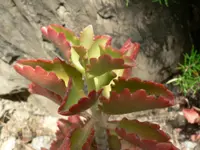
Six-angled kalanchoe (Kalanchoe sexangularis) is a compact, shrubby succulent grown mainly for its bold foliage rather than its flowers. It forms upright, branching stems with thick, scalloped leaves that often develop red or bronze tones in strong light.

This species is native to rocky slopes in southern Africa, where it experiences bright sun, well-drained soils, and periods of drought. These adaptations make it a resilient houseplant or patio container plant when given similar conditions.

For those learning how to care for Six-Angled Kalanchoe, its key traits are drought tolerance, dislike of waterlogged soil, and preference for bright light with good airflow.

Main Plant Requirements

Care Difficulty

Easy Care

Light Preference

Full Sun

Water Requirements

Low Water

Temperature Preference

Tropical / Frost Sensitive

Hardiness Zone

10–11

Soil Texture

Sandy, Loamy, Rocky

Soil pH

Slightly acidic (6.5–7.0), Neutral (7.0)

Soil Drainage

Well-drained

Fertilization

Minimal (feed rarely)

Get Personalized Care Plan

Scan your plant to receive care tips personalized for your specific plant

Personalized Care in the App

Available on iOS and Android

How to Care for the Six-Angled Kalanchoe

This succulent prefers bright light with some direct sun but benefits from protection from harsh extremes.

  • Provide 4–6 hours of direct morning sun or late-afternoon sun, plus bright indirect light for the rest of the day, especially in spring and fall.
  • Tolerates light partial shade, but stems may stretch and leaves lose red color if it receives less than 3–4 hours of strong light daily.
  • In hot summers, shield Six-Angled Kalanchoe from intense midday sun to prevent leaf scorch, particularly on plants in shallow or dark containers.

This drought-tolerant species needs infrequent but thorough watering suited to its succulent leaves and stems.

  • Allow the top 3–5 cm of soil to dry completely before watering; use fingertip or a wooden skewer to check dryness rather than following a fixed schedule.
  • Water deeply until excess drains, then discard runoff; use a gritty, fast-draining soil to limit root rot risk in Kalanchoe sexangularis.
  • Reduce watering in winter when growth slows, watching for wrinkling leaves as a sign of underwatering and yellow, soft leaves as a sign of excess moisture.

This species grows best in warm, frost-free conditions with moderate seasonal variation.

  • Aim for 65–80°F (18–27°C) during active growth; brief peaks up to about 90°F (32°C) are tolerated if soil is well drained and the plant is not waterlogged.
  • Protect from cold below 40°F (4°C); growth slows under 55°F (13°C) and tissue damage can occur near freezing, especially in wet soil.
  • In regions with cool winters, treat it as a tender succulent, moving containers or cuttings indoors before frost or providing cover during short cold snaps.

This species handles typical indoor humidity well and rarely needs special humidity management.

  • Target 30–50% humidity, similar to most heated homes, for stable foliage and growth.
  • Dry air is usually tolerated; leaf shriveling or crispy tips signal combined drought and very low humidity.
  • If air is extremely dry near heaters or vents, group plants or place a shallow water tray nearby to slightly raise local humidity.

Kalanchoe sexangularis prefers a fast-draining, airy, mineral-rich substrate that dries quickly between waterings.

  • Use a gritty mix such as 50–70% cactus/succulent mix blended with coarse sand, perlite, or pumice for sharp drainage.
  • Aim for slightly acidic to neutral pH, around 6.0–7.0, which supports nutrient availability without stressing roots.
  • Improve aeration by adding chunky components (pumice, coarse perlite, small gravel) that create large air pockets and prevent compaction.
  • Avoid dense peat-heavy, clay, or water-retentive mixes that stay wet for more than 2–3 days, as this encourages root and stem rot.

This succulent is very suitable for container growing due to its compact, clumping habit.

  • Choose a pot just 2–5 cm wider than the root ball to keep the mix drying predictably and roots comfortably contained.
  • Select terracotta or other porous materials when possible to help excess moisture evaporate from the root zone.
  • Use a heavy or wide-based container if stems become tall and leafy, which reduces the risk of the pot tipping over.

This succulent benefits from light feeding during active growth but tolerates lean conditions.

  • Use a balanced liquid fertilizer (around 10-10-10 or 20-20-20) diluted to 25–50% strength for Kalanchoe sexangularis.
  • Apply every 4–6 weeks in spring and summer when growth is strongest.
  • Stop or reduce to 1 light feeding for the entire season in fall and winter.
  • Avoid compost-heavy mixes; choose a low-organic, well-drained succulent soil to prevent salt buildup.

Pruning keeps Kalanchoe sexangularis compact, encourages branching, and maintains tidy growth.

  • Best time is late winter to early spring, just before or as new growth begins.
  • Use clean, sharp scissors or pruning snips to remove dead, damaged, or leggy stems.
  • Shorten overly tall shoots above a node to promote bushier side growth and more flowering tips.
  • Pinch or trim spent flower stalks to redirect energy into foliage and future blooms.

Kalanchoe sexangularis grows well in containers and needs only infrequent repotting.

  • Repot every 2–3 years or when roots circle the pot, emerge from drainage holes, or growth slows noticeably.
  • Choose late winter to early spring for repotting, aligning root disturbance with the start of active growth.
  • Move into a pot only 2–5 cm wider, using a gritty, free-draining succulent mix to limit waterlogging.
  • Gently loosen circling roots, remove old soggy soil, water lightly once, then keep slightly dry for 5–7 days to reduce stress.

This species is commonly multiplied from stem cuttings for consistent new plants.

  • Take 5–10 cm non-flowering stem cuttings from healthy Kalanchoe sexangularis in late spring or early summer.
  • Allow cut ends to dry and callus for 1–2 days to reduce rot risk before planting.
  • Insert cuttings into a barely moist, fast-draining succulent mix under bright, indirect light and 68–80°F.
  • Keep humidity moderate, avoid overwatering, and expect rooting in 2–4 weeks before potting on.

This succulent is frost sensitive and needs protection in climates with cold winters.

  • Move containers indoors before temperatures drop below 40°F, placing them in bright, indirect light.
  • In mild regions, grow Kalanchoe sexangularis in pots so relocation is easy in cold spells.
  • Reduce watering in winter, letting the top 50–75% of the mix dry to avoid cold, wet roots.
  • Outdoors in warm zones, use a light, dry mulch around the root zone, keeping it away from stems.

Care Tips

Encourage Compact Growth

Pinch back the soft tips of new stems in early spring and midsummer to keep the plant compact, increase branching, and produce a denser canopy of foliage color.

Rotate for Even Color

Turn the pot 90° every 1–2 weeks during active growth so all sides receive similar light, which reduces leaning and helps maintain uniform red leaf coloration.

Refresh Older Stems

Every 1–2 years, cut and root healthy 7–10 cm tip cuttings, then replant them and remove very woody, leggy stems to keep the planting young and vigorous.

Use Shallow Containers

Choose a wide, shallow pot with good drainage rather than a deep narrow one, as the relatively shallow roots anchor better and the plant spreads more evenly.

Dry-Entry Pest Check

Inspect leaf undersides and stem nodes for mealybugs or scale just before each watering, when the soil is dry and surfaces are easier to examine, and isolate the plant promptly if pests are found to protect other succulents.

Common Pests and Diseases

Mealybugs

This pest feeds on leaf and stem sap, often hiding along the angled stems and in leaf joints, leaving cottony white clusters. Symptoms include stunted growth, sticky honeydew, and sooty mold on the fleshy leaves.

Solution

Isolate the plant, then dab visible mealybugs with cotton swabs dipped in 70% isopropyl alcohol and repeat weekly until clear. For heavier infestations on Kalanchoe sexangularis plant care, rinse the plant under a gentle shower, remove heavily infested parts, and use a labeled systemic insecticide or neem oil spray while improving light and airflow to support recovery.

Aphids

These insects cluster on young shoots and flower stalks, sucking sap and causing curling, distorted new growth. Sticky honeydew and attracted ants are common secondary signs.

Solution

Prune off heavily infested tips, then wash remaining stems and leaves thoroughly with a strong but gentle stream of water. Follow with insecticidal soap or neem oil sprays applied to all plant surfaces every 5–7 days for 2–3 cycles, keeping the plant in bright light and avoiding excess nitrogen fertilizer that encourages soft, aphid-prone growth.

Powdery mildew

This disease produces white, powdery patches on the succulent leaves, often starting on shaded or crowded sections. Symptoms include dull foliage, slowed growth, and sometimes leaf yellowing or distortion.

Solution

Increase air circulation, avoid overhead watering, and space plants so leaves dry quickly. Remove the worst-affected leaves and treat remaining foliage with a sulfur-based or potassium bicarbonate fungicide according to label directions, repeating as needed until new growth stays clean.

Leaf spot

This disease causes small, irregular brown or black spots on leaves, which may enlarge and cause localized yellowing. Symptoms include weakened foliage that may drop prematurely, especially on lower or crowded leaves.

Solution

Remove and discard spotted leaves, clean up any fallen debris, and keep water off the foliage by watering at soil level. Improve air movement around the plant and, if spotting continues, apply a copper-based fungicide labeled for succulents, allowing soil to dry well between waterings to reduce humidity around the canopy.

Scale insects

This pest appears as small, hard, tan or brown bumps on stems and leaf undersides, where it feeds on sap. Symptoms include yellowing leaves, reduced vigor, and sticky honeydew that can support sooty mold growth.

Solution

Gently scrape or rub off individual scales with a fingernail or soft brush, then wipe stems with a cloth lightly moistened with 70% isopropyl alcohol. For persistent problems, use repeated applications of horticultural oil or a systemic insecticide, monitoring new growth regularly and discarding heavily encrusted stems if necessary.

Interesting Facts

Color-shifting foliage

The leaves can shift from bright green in shade to deep burgundy-red in strong sun, due to higher production of anthocyanin pigments that help protect the tissue from light stress.

Distinctive six-angled stems

The species name sexangularis refers to its typically six-angled, somewhat winged stems, which are unusually pronounced compared to many other kalanchoe species.

Natural rock crevice specialist

In its native range in South Africa, this succulent often grows in shallow soil pockets and rock crevices, anchoring itself where competition from larger plants is low and drainage is very rapid.

FAQs about Six-Angled Kalanchoe

This species needs a short-day period to initiate buds, plus adequate light and moderate fertilizer. Long nights, no light interruptions, and avoiding heavy nitrogen encourage flowering. Remove spent blooms and keep the plant slightly pot-bound to support reblooming.

Grow Healthy Plants with Botan Care

Keep your plants happy and healthy with plant identification, disease detection, and easy care guidance.

Botan plant care app — identify plants on mobile

Explore More Plants