Red Dragon Flower Care (Huernia schneideriana)

About Red Dragon Flower

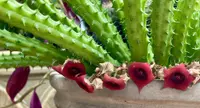
Huernia schneideriana, often called red dragon flower, is a small succulent from eastern Africa, typically found in dry, rocky habitats. It forms low, spreading mats of fleshy, 4-angled stems that resemble a compact cactus but without true spines.

The star-shaped flowers are deep red to burgundy, with a glossy, sometimes slightly bumpy surface, and appear near the base of the stems. This species is popular in collections because it stays small, adapts well to pots, and usually blooms reliably when mature.

Its growth habit and drought tolerance make it suitable for bright indoor windowsills or sheltered outdoor spots in warm climates. Understanding how to care for Red Dragon Flower is mostly about providing bright light, very free-draining soil, and careful watering.

Main Plant Requirements

Care Difficulty

Moderate Care

Light Preference

Bright Indirect Light

Water Requirements

Low Water

Temperature Preference

Tropical / Frost Sensitive

Hardiness Zone

10–11

Soil Texture

Sandy, Loamy, Rocky

Soil pH

Slightly acidic (6.5–7.0), Neutral (7.0)

Soil Drainage

Well-drained

Fertilization

Minimal (feed rarely)

Get Personalized Care Plan

Scan your plant to receive care tips personalized for your specific plant

Personalized Care in the App

Available on iOS and Android

How to Care for the Red Dragon Flower

Huernia schneideriana prefers bright, indirect light that mimics open shade in arid habitats.

  • Provide 4–6 hours of bright, filtered light daily, such as near an east window or under light shade outdoors, avoiding harsh midday sun.
  • Tolerates light morning sun but protect from strong afternoon sun, which can cause purple or brown scorch patches on the stems.
  • In winter, move Red Dragon Flower to the brightest frost-free spot available, as low light causes weak, stretched growth and fewer flowers.

This succulent needs infrequent, careful watering that allows the root zone to dry between soakings.

  • Water only when the top 2–4 cm of soil are completely dry, then water thoroughly so excess drains away from the roots.
  • Reduce watering sharply in winter, sometimes to once every 3–4 weeks, especially in cool conditions, to prevent root rot.
  • Watch for soft, yellowing, or translucent stems as signs of overwatering; wrinkled, slightly shriveled stems indicate it is time to water Huernia schneideriana.

This succulent favors warm, stable temperatures with strong protection from frost.

  • Aim for 65–80°F (18–27°C) during active growth, which supports steady stem development and reliable flowering.
  • Protect from cold below 40°F (4°C); prolonged exposure near or below this level can cause tissue damage and root loss.
  • Tolerates brief heat up to 95°F (35°C) if shaded from intense sun and given good airflow, but growth pauses in extreme heat or cold.

Huernia schneideriana handles typical indoor humidity but prefers slightly dry air.

  • Aim for 30–50% humidity; avoid sustained levels above 60% that keep the potting mix damp.
  • Dry, heated indoor air is usually tolerated; issues arise more from wet soil than from low humidity for Red Dragon Flower.
  • Watch for soft, pale, or rotting stems as signs of excess humidity combined with poor airflow and improve air circulation rather than misting.

This succulent requires a very fast-draining, gritty mix to prevent root and stem rot.

  • Use a cactus/succulent mix amended with 30–50% extra mineral materials such as pumice, coarse perlite, or 2–4 mm grit for structure.
  • Aim for a loose, airy texture that breaks apart easily in the hand; avoid compacted, peat-heavy or clay-based substrates that hold water around the roots.
  • Keep pH slightly acidic to neutral, around 6.0–7.0, which suits Huernia schneideriana and supports nutrient availability without encouraging rot pathogens.
  • Improve drainage by ensuring larger particles settle toward the bottom of the pot and avoid fine sand that can fill air spaces and cause clogging.

This species is well suited to container growing due to its shallow root system and trailing stems.

  • Choose a wide, shallow pot so roots spread laterally and stems can drape over the rim without crowding the center.
  • Select unglazed terracotta if the mix stays damp longer than 2–3 days, as it allows faster moisture loss through the pot walls.
  • Stabilize low, spreading growth by using a heavier pot or top-dressing with coarse gravel to keep the container from tipping when stems elongate.

This succulent needs light feeding, as excessive nutrients can damage its roots and reduce flowering in Red Dragon Flower.

  • Use a diluted balanced liquid fertilizer (such as 10-10-10 or 20-20-20) at 1/4–1/2 strength formulated for cacti and succulents.
  • Feed every 4–6 weeks during the active growing season in spring and summer only.
  • Skip fertilizing in fall and winter when growth slows and the plant rests.
  • Always water lightly before applying fertilizer to avoid root burn and never apply to dry soil.

Pruning Huernia schneideriana is mainly about hygiene and controlling clump size rather than shaping.

  • Best time to prune is in late winter or early spring before strong new growth starts.
  • Remove dead, shriveled, diseased, or mushy stems with clean, sharp scissors or pruners.
  • Thin out congested, healthy stems at the base to improve airflow and reduce rot risk.
  • Discard pruned diseased material and consider rooting healthy cut segments as new plants.

This compact succulent prefers slightly tight pots and only needs infrequent repotting in well-drained soil.

  • Repot every 2–3 years or when roots circle the pot, growth slows, or soil stays wet too long.
  • Choose late spring as the ideal time, when light and temperatures support recovery.
  • Use a shallow container with large drainage holes and a gritty cactus mix to limit water retention.
  • Gently loosen roots, remove old soggy soil, avoid breaking fragile stems, and keep slightly dry for 5–7 days after repotting.

Huernia schneideriana is commonly propagated from stem cuttings, which root reliably in warm, dry conditions.

  • Take firm, healthy stem segments in late spring or summer using a sterile, sharp blade.
  • Allow cuttings to dry and callus for 3–5 days in bright, indirect light before planting.
  • Insert callused ends into a dry, gritty cactus mix and keep barely moist, never wet.
  • Provide warmth (70–80°F), bright filtered light, and good air circulation until roots form.

This succulent is frost sensitive and needs controlled indoor conditions in winter for long-term health.

  • Move containers indoors before temperatures drop below 40°F and keep above 50°F.
  • Place in bright, indirect light and avoid cold drafts from windows or doors.
  • Water sparingly, allowing the mix to dry almost completely between waterings to prevent rot.
  • Do not fertilize in winter and keep humidity low to mimic its dry-season rest.

Care Tips

Pot rim spacing

Leave 1–2 cm between the stem bases and the pot rim so the fleshy stems can lean and drape without pressing against a hard edge, which reduces bruising and rot where they bend.

Controlled stem layering

When long stems flop over the soil, gently pin a few segments onto the mix with a clean wire staple so they can root along the stem and thicken the clump without frequent repotting.

Targeted flower hygiene

After blooms fade, remove any collapsed flowers promptly with clean tweezers so the sticky nectar does not attract fungus gnats or ants around the crown.

Dry winter resting

In winter, keep the plant in the brightest, coolest spot available and water only enough to prevent shriveling, which supports a natural light dormancy and encourages better flowering the following warm season.

Preventive mealybug checks

Inspect the stem angles and around old flower scars every few weeks, and if a single mealybug is seen, dab it with isopropyl alcohol on a cotton swab before populations establish in the crevices, which simplifies caring for Red Dragon Flower over the long term.

Common Pests and Diseases

Mealybugs

This pest feeds on stems and soft tissues, often hiding in the angles between the angular stems and at the base of the plant. Symptoms include white cottony clusters, sticky honeydew, and distorted or weakened growth.

Solution

Isolate the plant, then remove visible insects with a cotton swab dipped in 70% isopropyl alcohol, paying attention to stem joints and crevices. Rinse the plant with a gentle shower, improve light and airflow, and repeat spot treatments weekly until no new mealybugs appear; for larger infestations, use a ready-to-use insecticidal soap labeled for succulents.

Woolly aphids

These insects form white, wool-like colonies along the stems and near new growth, sucking sap and sometimes causing yellowing or stunted segments. Honeydew may attract sooty mold on nearby surfaces.

Solution

Physically wash aphids off the plant under a gentle stream of lukewarm water, then treat remaining colonies with insecticidal soap or neem oil, ensuring full coverage of all stem sides. Repeat every 5–7 days for several cycles and keep the plant slightly drier to discourage rapid reinfestation while monitoring closely as part of Huernia schneideriana plant care.

Spider mites

This pest is favored by warm, very dry indoor air and can cause fine stippling, dull patches, and thin webbing between stem angles and around growing points. Symptoms include slowed growth and a generally tired appearance of the stems.

Solution

Increase humidity around the plant slightly, then rinse stems thoroughly with a strong but controlled spray of water to dislodge mites. Follow with applications of insecticidal soap or a miticide labeled for indoor succulents every 5–7 days for several rounds, and keep the plant away from hot, dry drafts or heater vents.

Soft rot (bacterial)

This disease causes sections of the fleshy stems to become water-soaked, soft, and sometimes foul-smelling, often starting at a wound or where water sits for long periods. Symptoms include rapid collapse of affected segments that can spread if not removed.

Solution

Cut away all affected tissue with a sterile knife, trimming back into firm, healthy stem, and discard infected parts in the trash. Allow cut surfaces to dry and callus for several days in bright, dry conditions, reduce watering, and improve drainage and air movement around the plant to prevent recurrence.

Stem fungal spots

This disease appears as small brown, tan, or black lesions on the green stems, sometimes slightly sunken, often linked to prolonged surface moisture and poor air circulation. Symptoms include slow-spreading spots that can merge and weaken segments over time.

Solution

Remove and discard the worst-affected stems to reduce the source of infection, cutting back into clean, unspotted tissue. Keep stems dry between waterings, increase airflow, avoid overhead watering, and if spotting continues, apply a sulfur-based or copper-based fungicide suitable for succulents according to label instructions.

Interesting Facts

Carrion-scented blooms

The star-shaped flowers produce a faint carrion-like scent that attracts flies, which act as the main pollinators in its native habitat.

Fleshy angular stems

Instead of leaves, this species has succulent, 4–5 angled green stems that handle most of its photosynthesis and water storage.

Ring of inner papillae

Each flower has a raised inner ring covered with small, fleshy projections called papillae, creating a textured landing platform that guides visiting insects toward the pollen.

FAQs about Red Dragon Flower

Lack of flowers usually comes from insufficient light, cool temperatures, or using high-nitrogen fertilizer. Provide bright conditions, a slight winter rest, and a balanced or low-nitrogen feed to support blooming when caring for Red Dragon Flower.

Grow Healthy Plants with Botan Care

Keep your plants happy and healthy with plant identification, disease detection, and easy care guidance.

Botan plant care app — identify plants on mobile

Explore More Plants