Philodendron pastazanum Care

About Philodendron pastazanum

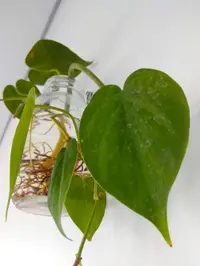
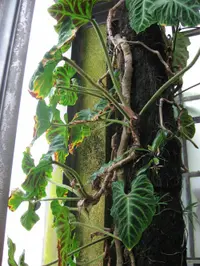
Philodendron pastazanum is a tropical aroid grown mainly for its large, heart-shaped leaves and creeping growth habit. It is usually cultivated as a compact, climbing or trailing houseplant.

In nature it occurs in humid forests of Ecuador, where it grows close to the ground and uses its thick petioles and nodes to spread. The plant is valued for its vigorous growth and generally forgiving nature, which helps beginners care for Philodendron pastazanum successfully.

It prefers bright, filtered light, evenly moist but not waterlogged substrate, and a loose, well-aerated soil mix that lets roots breathe and dry slightly between waterings.

Main Plant Requirements

Care Difficulty

Moderate Care

Light Preference

Bright Indirect Light

Water Requirements

Moderate Water

Temperature Preference

Tropical / Frost Sensitive

Hardiness Zone

11–12

Soil Texture

Loamy, Peaty, Organic-rich

Soil pH

Acidic (5.5–6.5), Slightly acidic (6.5–7.0)

Soil Drainage

Moist but well-drained

Fertilization

Light (every 4–6 weeks)

Get Personalized Care Plan

Scan your plant to receive care tips personalized for your specific plant

Personalized Care in the App

Available on iOS and Android

How to Care for the Philodendron pastazanum

This aroid prefers bright, filtered light that mimics a forest understory.

  • Provide 6–8 hours of bright, indirect light each day, such as near an east- or north-facing window or under light shade outdoors.
  • Tolerates partial shade but growth slows; if stems stretch or leaves shrink and lose gloss, increase light using sheer curtains or dappled shade rather than direct sun.
  • Avoid strong midday or afternoon sun, which can cause yellow patches and crispy edges; in summer, move slightly farther from windows or deeper under shade cloth.

Moist but not waterlogged conditions keep this plant’s roots healthy.

  • Water thoroughly only when the top 2–4 cm of soil feels dry, letting excess drain fully so roots do not sit in standing water.
  • In spring and summer, this may mean watering every few days in warm conditions; in fall and winter, extend intervals as growth slows and drying takes longer.
  • Watch leaves for feedback: yellowing, soft leaves and a sour smell suggest overwatering, while limp, curling leaves and dry soil indicate the plant is too dry.

Stable, warm conditions support steady growth and reduce stress.

  • Aim for 65–80°F (18–27°C) for optimal growth; short dips to 60°F (16°C) are usually tolerated but may slow new leaves.
  • Protect from cold; prolonged exposure below 55°F (13°C) can cause leaf damage, and any frost can kill tender tissue.
  • In hot spells above 86°F (30°C), increase air movement and humidity and shade from harsh sun to limit heat stress and leaf scorch.

This species benefits from moderately high humidity to keep foliage large and healthy.

  • Aim for 50–70% humidity, as prolonged levels below 40% often cause leaf-edge browning and reduced growth.
  • Tolerates average indoor air but reacts to very dry rooms with curled tips, yellowing edges, and stalled new leaves.
  • Increase humidity with a nearby humidifier, grouped plants, and a shallow pebble tray, rather than misting leaves heavily.

This aroid prefers loose, airy, organic-rich soil that drains quickly yet holds moderate moisture.

  • Use a chunky mix of 40% peat or coco coir, 30% medium orchid bark, 20% perlite, and 10% compost for nutrients.
  • Ensure rapid drainage; water should pass through within seconds, leaving the mix moist but never waterlogged or compacted.
  • Target a slightly acidic pH around 5.5–6.5, which supports nutrient uptake and limits micronutrient lockout.
  • Avoid heavy garden soil, pure potting compost, or dense mixes that reduce aeration and increase the risk of root rot in Philodendron pastazanum.

This species is well suited to container growing when the pot supports its creeping, shallow-rooted habit.

  • Choose a wide, shallow pot instead of a deep narrow one to give the creeping stem space to spread horizontally.
  • Select a heavier or terracotta container if the plant is large, as added weight improves stability for big leaves.
  • Use a pot with multiple, unobstructed drainage holes so excess water exits quickly and the lower mix does not stay saturated.

This aroid benefits from modest, consistent feeding during its active season for balanced foliage growth.

  • Use a balanced liquid fertilizer around 10-10-10 or 20-20-20, diluted to 1/4–1/2 strength for Philodendron pastazanum.
  • Apply every 4–6 weeks in spring and summer on already moist soil to avoid root burn.
  • Reduce feeding to 1 light application in autumn and stop in winter dormancy or very low light.
  • Organic options like compost or a slow-release granular product can be mixed lightly into the topsoil at the start of the growing season.

Pruning is mainly used to keep this plant tidy and manage its climbing or creeping habit.

  • Best time is late winter to early spring, just before active growth starts.
  • Remove yellowing, dead, damaged, or crowded leaves and stems with clean, sharp scissors or pruning shears.
  • Cut back leggy vines to just above a node to encourage fuller, more compact growth on Philodendron pastazanum.
  • Disinfect blades with alcohol between plants to limit the spread of pests and diseases.

Container-grown plants appreciate periodic repotting to maintain healthy roots and sustained growth.

  • Check for roots circling the pot, emerging from drainage holes, or slowed growth as a sign Philodendron pastazanum needs a larger container.
  • Plan to repot every 2–3 years in spring, moving up only 2–5 cm in pot diameter with fresh, chunky aroid mix.
  • Slide the plant out gently, loosen circling roots, and trim any rotten sections with sterile scissors to reduce stress.
  • Water lightly after repotting, keep humidity moderate, and provide bright, indirect light while the root system re-establishes.

Vegetative propagation is commonly used to create new plants that match the parent.

  • Stem cuttings with at least 1 node and aerial root are the standard method for Philodendron pastazanum.
  • Take cuttings in late spring or early summer when growth is strong and temperatures are stable.
  • Place cuttings in water, sphagnum moss, or a light mix, keeping humidity around 60–80% and temperatures near 70–80°F.
  • Provide bright, indirect light and avoid overwatering; pot into a small container once several new roots reach 3–5 cm.

This tropical species is not frost tolerant and needs warm, stable conditions in winter.

  • Keep indoor temperatures around 65–75°F and avoid cold drafts, sudden temperature swings, and unheated windowsills for Philodendron pastazanum.
  • In climates below 55°F, grow in containers and move indoors before night temperatures drop in autumn.
  • Reduce watering, allowing the top layer of soil to dry more between waterings, and pause fertilizing until days lengthen again.

Care Tips

Provide crawler support

Use a low, wide support board or flat moss pole so the creeping stem can attach and form larger, more symmetrical leaves, securing the nodes gently with soft plant ties until the aerial roots grip on their own.

Manage aerial roots

Direct aerial roots into the potting mix or a moss pole to improve water and nutrient uptake, trimming only dry, dead roots and avoiding removal of firm, active roots along the stem.

Use wide containers

Choose shallow, wide pots instead of deep narrow ones to match the plant’s creeping habit, giving the stem room to sprawl horizontally and reducing the risk of unstable, top-heavy growth.

Rotate by stem direction

Rotate the pot by 90° every 2–3 weeks so each side of the creeping stem receives similar light, which helps maintain even leaf size and prevents the plant from twisting toward one direction.

Seasonal nutrient break

Reduce or pause fertilizer during the lowest-light months while still caring for Philodendron pastazanum with consistent but slightly drier watering, then resume normal feeding as new growth resumes in spring.

Common Pests and Diseases

Spider mites

This pest often appears on plants kept in warm, dry indoor air and feeds on leaf sap, causing pale speckling and fine webbing on the large heart-shaped leaves.

Solution

Increase humidity around the plant, then wash both sides of the leaves with a strong but gentle stream of lukewarm water and wipe down with a mild insecticidal soap or neem oil solution; repeat weekly until no new activity is seen and keep the plant slightly away from hot, dry air vents for more stable Philodendron pastazanum indoor care.

Mealybugs

These insects cluster in leaf axils and along petioles, appearing as white, cottony masses and causing leaf yellowing and stunted growth.

Solution

Isolate the plant, then dab visible insects with cotton swabs dipped in isopropyl alcohol and wash foliage thoroughly; follow with 2–3 rounds of neem oil or insecticidal soap at 7–10 day intervals, and inspect new growth regularly to catch reinfestations early.

Bacterial leaf spot

This disease produces water-soaked, translucent to dark lesions that may have yellow halos, often starting where water sits on leaves for long periods.

Solution

Remove and discard affected leaves, avoid getting foliage wet during watering, improve air circulation around the plant, and sterilize cutting tools; in severe cases, discard heavily infected plants to protect nearby aroids and always keep foliage dry and well ventilated.

Fungal leaf blight

Symptoms include irregular brown patches that expand quickly in warm, humid conditions, sometimes with a yellow or lighter margin and rapid collapse of affected tissue.

Solution

Trim off and dispose of all affected leaves, increase spacing and airflow, reduce overhead misting, and allow the top of the potting mix to dry slightly between waterings; a copper- or sulfur-based fungicide can be used according to label directions if new spots continue to appear.

Scale insects

These insects attach firmly to petioles and undersides of leaves as small brown or tan bumps, sucking sap and leading to sticky honeydew and sooty mold on the foliage.

Solution

Manually scrape or wipe scale off with a cloth or cotton pads dipped in isopropyl alcohol, then treat all plant surfaces with an insecticidal soap or horticultural oil spray every 7–10 days for several cycles and monitor closely, especially along the midrib and at leaf bases.

Interesting Facts

Unusually flat crawling stem

This species grows as a creeping terrestrial aroid, with its main stem pressed flat against the soil rather than climbing trees, which is unusual compared with many other philodendrons.

Heart leaves built for size

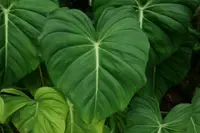
Mature leaves develop a strongly cordate (heart-shaped) blade with very pronounced veins and can become large relative to the short stem, an adaptation that maximizes light capture close to the forest floor.

Origin in Ecuadorian forests

It is native to lowland to premontane rainforests of Ecuador, where it grows in warm, humid, shaded habitats on the forest floor and lower layers of vegetation.

FAQs about Philodendron pastazanum

Brown leaf edges or tips usually result from low humidity, salt buildup from fertilizer, or irregular moisture. Flush the pot with water occasionally, maintain moderate humidity, avoid overfertilizing, and protect foliage from hot or cold drafts.

Grow Healthy Plants with Botan Care

Keep your plants happy and healthy with plant identification, disease detection, and easy care guidance.

Botan plant care app — identify plants on mobile

Explore More Plants