


Preserve Flower Spurs
Do not remove the short, stubby stems where flowers previously formed, as new blooms develop from the same points. This is very important when caring for the wax plant to ensure repeat flowering.

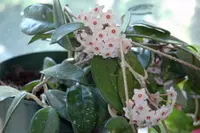
It is a tropical evergreen vine that has glossy leaves and clusters of star-shaped, waxy flowers, which give the plant its common name. It grows as a trailing or climbing plant, and that's why people choose it for hanging baskets on balconies or in indoor gardens.
Hoya carnosa prefers environments where it can cling to trees. Its natural habitat shapes how to care for the wax plant, as it is considered relatively easy to grow. However, there are a few care details that can help it grow and bloom reliably.

Care Difficulty
Easy Care

Light Preference
Bright Indirect Light

Water Requirements
Low Water

Temperature Preference
Tropical / Frost Sensitive

Hardiness Zone
10–11

Soil Texture
Sandy, Loamy

Soil pH
Slightly acidic (6.5–7.0), Neutral (7.0)

Soil Drainage
Well-drained

Fertilization
Light (every 4–6 weeks)
Scan your plant to receive care tips personalized for your specific plant
Available on iOS and Android
Hoya carnosa likes bright light and blooms most prolifically with adequate but indirect sunlight.
Tip: During winter months, if grown indoors without natural light, supplement with a grow light positioned 12-18 inches (30-45 cm) above the plant for 12-14 hours daily.
It prefers to dry out between waterings and is susceptible to root rot if overwatered. Water every 7-10 days, depending on temperature and light, and every 10-14 days in winter, as growth slows and excess moisture can lead to root rot.
Note: Yellowing leaves and soft stems indicate overwatering; brown, crispy leaf edges suggest underwatering.
This tropical species values warmth and stability, so try to maintain these conditions.
Humidity is helpful but not critical for the healthy growth of the Hoya carnosa. The plant prefers humidity around 40-60%, but adapts well to typical indoor levels. It can tolerate drier air, but note that prolonged low humidity may reduce flowering.
Note: Mist your houseplant or place it next to other greenery.
Choose light, airy soil that drains quickly. Try to use a mix of potting soil with perlite, orchid bark, or coarse sand to improve aeration. At the same time, note that slightly acidic to neutral pH supports steady growth.
Tip: Avoid heavy clay-based soils. They retain excess moisture and restrict root oxygen.
This species is well-suited to container growing. Hoya carnosa has a trailing habit, so keep it in mind when choosing a pot. Roots are very sensitive to moisture, so select a container that has drainage holes and is a bit snug. That’s needed to encourage blooming rather than root expansion.
Life hack: Hanging baskets or elevated containers help support trailing stems and prevent crowding.
It is not needed to feed Hoya carnosa often, but fertilization supports steady growth and flowering when applied in moderation.
Occasional pruning is useful for this plant, usually in spring or after flowering. It helps control size and shape.
Repotting Hoya carnosa is occasional, as this plant prefers slightly tight roots and is mainly grown in containers. Repot every 2-3 years or when roots circle the pot. Choose a container only 0.8-2 inches (2-5 cm) wider to avoid excess moisture retention.
It can be propagated by air layering or by stem cuttings, but in most cases, this process is done through the second method during active growth.
Keep in mind that Hoya carnosa is a tropical species and doesn't tolerate cold weather. Keep indoor temperatures stable at home in fall and winter. Maintain temperatures above 60°F (16°C), water every 2-3 weeks, and don't place next to drafts or unheated windows.

Plant Health Check
Not sure what's wrong with your plant? Check your plant's health inside the app.
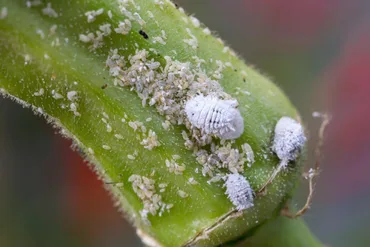
This pest is common to most houseplants and appears as white, cotton-like clusters on stems and leaf joints. It feeds on sap and weakens growth.
Solution
Remove visible insects with a cotton swab dipped in alcohol and rinse the plant with water.
Repeat weekly and isolate damaged plants.
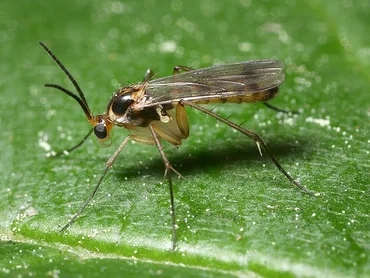
These insects appear as small, dark flying pests around soil. Their larvae feed on organic matter and fine roots, slowing growth.
Solution
Allow the top layer of soil to dry out between waterings. Then, use adhesive traps to catch adults.
Next, improve drainage and remove excess moisture to break their lifecycle.
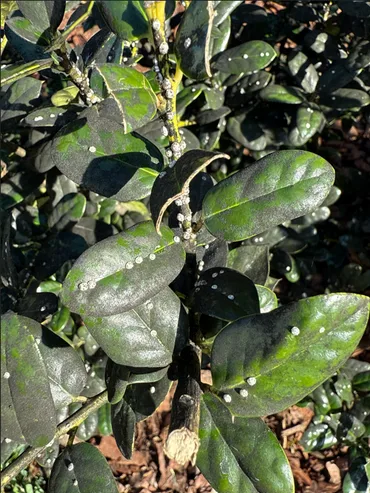
It is a fungal growth that develops on leaves or nearby surfaces after sap-feeding insects leave honeydew behind.
Solution
Wipe foliage with mild soapy water to remove the coating. Then, eliminate the source pests from Hoya carnosa.
Improve airflow and keep foliage clean to stop residue from accumulating and allow normal photosynthesis to resume.
Hoya carnosa 'Compacta' is a natural mutation of the species, producing tightly curled, rope-like leaves instead of flat ones. It gives the plant its distinctive sculptural appearance.
The genus name honors Thomas Hoy, an 18th-century gardener to the Duke of Northumberland, while the species name “carnosa” refers to the plant’s thick, fleshy leaves.
Lack of flowering is usually due to insufficient light, overfertilizing with high nitrogen, or removing old flower spurs. Keep it slightly rootbound, avoid heavy pruning of old peduncles, and use a balanced or bloom-boosting fertilizer sparingly.
Keep your plants happy and healthy with plant identification, disease detection, and easy care guidance.

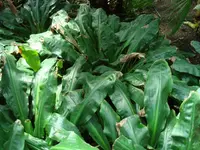
Palisota barteri
Palisota barteri
 POPULAR
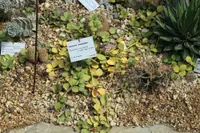
Yerba Linda
Peperomia rotundifolia

Wax Plant
Hoya carnosa 'Variegata'
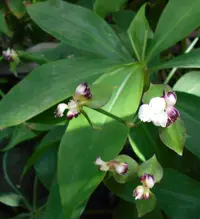
Cohitre Blanco
Tradescantia zanonia
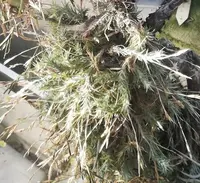
Tillandsia tricholepis
Tillandsia tricholepis
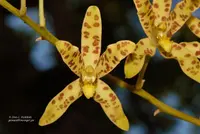
Leopard orchid
Ansellia africana
Inch Plant
Tradescantia cerinthoides 'Nanouk'
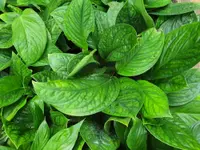
Monstera pinnatipartita
Monstera pinnatipartita