


Sturdy pot choice
Use a wide, heavy container with good drainage so the plant’s spreading roots and top growth do not tip the pot as it gains size and weight.

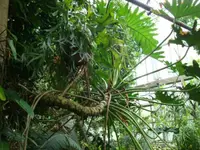
Tree philodendron, Thaumatophyllum bipinnatifidum, is a large tropical aroid grown mainly for its bold, deeply cut foliage. It forms a thick trunk-like stem over time and can reach impressive size indoors or in warm climates outdoors.
In nature it occurs in subtropical and tropical regions of South America, often in bright but filtered light. Its tough leaves and strong root system make it fairly forgiving, especially for growers who provide stable warmth and moderate moisture.
It prefers bright, indirect light, evenly moist but not waterlogged soil, and good air movement, which makes it relatively straightforward to care for Tree philodendron once its space needs are understood.

Care Difficulty
Moderate Care

Light Preference
Bright Indirect Light

Water Requirements
Moderate Water

Temperature Preference
Tropical / Frost Sensitive

Hardiness Zone
9–11

Soil Texture
Loamy, Sandy, Organic-rich

Soil pH
Acidic (5.5–6.5), Slightly acidic (6.5–7.0)

Soil Drainage
Moist but well-drained

Fertilization
Light (every 4–6 weeks)
Scan your plant to receive care tips personalized for your specific plant
Available on iOS and Android
This species thrives in bright, indirect light that mimics light filtered through a tree canopy.
Watering should maintain lightly moist but not saturated soil for steady growth.
This plant prefers stable, warm conditions without sudden temperature swings.
This species prefers moderate to high humidity but adapts to typical indoor levels if other care factors are stable.
Thaumatophyllum bipinnatifidum prefers a loose, organic-rich, well-drained mix that still retains some moisture.
This species is well suited to container growing when the pot supports its eventual size and weight.
This species benefits from moderate feeding to support large leaf and stem growth in containers.
Pruning Thaumatophyllum bipinnatifidum is mainly done to manage size and remove declining foliage.
Container-grown plants occasionally need a larger pot as their thick roots expand.
Propagation is usually done by division or stem cuttings rather than seed for home growers.
This tropical plant is frost-tender and needs protection in regions with cold winters.

Plant Health Check
Not sure what's wrong with your plant? Check your plant's health inside the app.
Although botanically a herbaceous aroid, this species develops a thick, woody, trunk-like stem with prominent leaf scars that can reach several meters tall in mild climates, allowing the plant to behave like a small tree without forming true wood like a shrub or oak.
Its huge leaves are pinnatifid, meaning deeply cut into many narrow segments, which increases air flow through the canopy and helps reduce wind resistance and mechanical damage in storm-prone habitats of southern Brazil, Paraguay, and northern Argentina.
In the wild, plants can start life on the ground or occasionally as hemi-epiphytes on rocks or trees, sending down stout adventitious roots that anchor and support the heavy canopy as the stem elongates and sometimes leans.

The inflorescences of this species can generate heat through a process called thermogenesis, warming the central floral structure above air temperature for several hours; this helps volatilize scent compounds and attract specific beetle pollinators that shelter and feed inside the structure during flowering.
Yellowing leaves often result from overwatering, poor drainage, or natural aging of older foliage. Check that the pot drains freely, allow the top soil layer to dry slightly between waterings, and remove only fully yellow, older leaves.
Keep your plants happy and healthy with plant identification, disease detection, and easy care guidance.

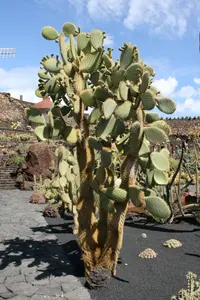
Galápagos Prickly Pear
Opuntia galapageia
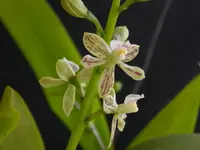
Prosthechea vespa
Prosthechea vespa
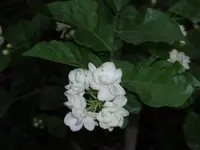
Arabian Jasmine
Jasminum sambac
spotted dead-nettle
Lamium maculatum
Pale Pholidota
Coelogyne pallida
Hemionitis seticaulis
Hemionitis seticaulis
Australian Umbrella Tree
Heptapleurum actinophyllum
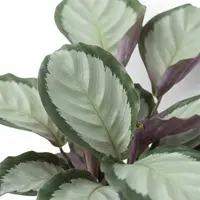
Goeppertia picturata 'Argentea'
Goeppertia picturata 'Argentea'