Thicken the Trunk
If you want your Elephant Bush to obtain a thicker and tree-like trunk, let the plant grow freely for a full season. Then prune it back hard in the spring.
Repeat this cycle for 2-3 years to achieve a truly thick trunk at the base.

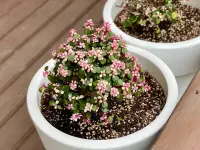
Elephant Bush, or Portulacaria afra, is a soft-wooded succulent shrub native to the arid regions of South Africa. It grows on rocky slopes, and gardeners cultivate it for the small round leaves that line its reddish ropey stems. In the wild, it can reach 15 feet (4.5 meters) in height, forming a small tree. Indoors, it typically remains knee-high and is quite undemanding in terms of conditions.
The old name "dwarf jade" is misleading. Despite its similarity to other species, this plant belongs to a different botanical family than Crassula ovata. It tolerates missed watering and primarily requires bright light. Learning to care for the Portulacaria afra will take perhaps five minutes a week.

Care Difficulty
Easy Care

Light Preference
Full Sun

Water Requirements
Low Water

Temperature Preference
Tropical / Frost Sensitive

Hardiness Zone
9–11

Soil Texture
Sandy, Loamy, Rocky

Soil pH
Slightly acidic (6.5–7.0), Neutral (7.0)

Soil Drainage
Well-drained

Fertilization
Minimal (feed rarely)
Scan your plant to receive care tips personalized for your specific plant
Available on iOS and Android
Bright light helps this succulent stay compact and colorful; otherwise, it can become leggy and dull.
Note: A grow light can compensate for the lack of daylight during the gray winter months, when indoor sunlight is limited.
Many people make mistakes with watering, as Portulacaria afra requires very little water.
This South African plant thrives in warm temperatures. Cold periods have a strong effect on it.
Note: This plant thrives on a sunny shelf alongside other drought-tolerant plants. Echeveria elegans or Senecio rowleyanus make easy companions, as they require similar temperature conditions.
Humidity isn't a major aspect for Portulacaria afra, so you can avoid misting it regularly. Unlike many South African succulents, it tolerates both humid summers (70-80%) and dry heated rooms (20-30%). Normal household air is fine year-round. Pebble trays and humidifiers are unnecessary. Even in a completely dry winter room, it won't darken around the edges like a fern.
For Portulacaria afra, good drainage in the pot is very important.
Note: Elephant bush roots rot quickly in soil that remains wet for more than 2-3 days.
Both simple terracotta pots and shallow bonsai trays work well for Portulacaria afra. A pot with a diameter of 4-6 inches (10-15 cm) is ideal for a young plant. Terracotta is a good choice because clay absorbs water through the walls. Choose a pot with at least one drainage hole at the base.
Tip: A bowl about 2 inches (5 cm) wider than the roots is suitable for a growing plant.
Feeding Elephant Bush is optional, although a light fertilizing from time to time will stimulate new growth.
Few houseplants tolerate pruning so well, which is why bonsai growers love it so much.
You should repot Portulacaria afra every 2-3 years when the roots begin to emerge from the drainage holes of the pot.
Propagation is very simple, as the roots form from regular cuttings.
In winter, the Portulacaria afra goes dormant indoors. Reduce watering to once every 3-4 weeks, as the cold soil dries slowly. Place it near the sunniest window, at least 12 inches (30 cm) from frosted glass. A cool temperature of around 55°F (13°C) is ideal, provided there is no risk of frost.

Plant Health Check
Not sure what's wrong with your plant? Check your plant's health inside the app.
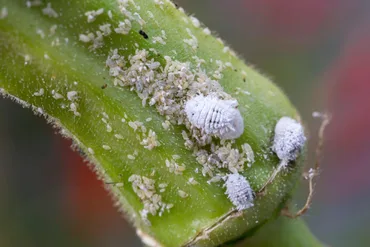
These tiny white pests look like cotton balls stuck in the joints of leaves.
They suck out the sap and leave a sticky film on Portulacaria afra.
Solution
Wipe each joint with a cotton swab dipped in rubbing alcohol.
For more severe infestations, spray the entire plant with diluted insecticidal soap once a week until the mealybugs disappear.
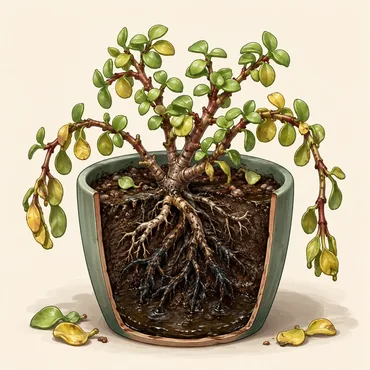
Overwatering is the main cause of death for this succulent. The roots suffocate and rot.
Then the base of the plant becomes soft and dark.
Solution
Dig up the plant and trim off any blackened roots.
Repot in dry loose soil and don’t water it for a week.
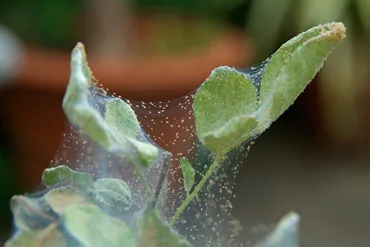
Hot and dry periods can encourage the appearance of these nearly invisible mites.
Look for weak webbing and a mottled dusty coating on the leaves.
Solution
Rinse the plant under a strong shower to remove them.
Then apply neem oil every few days until the webbing disappears.
Spekboom, or Portulacaria afra in African, absorbs carbon from the air at an astonishing speed.
South African restoration teams are planting it in degraded scrubland to store CO2 for the long term.
This plant can switch between two modes of photosynthesis. During favorable conditions, it functions as a normal plant.
During drought, it switches to a water-saving pathway called CAM.
The Portulacaria afra plant got its name for a reason. Wild elephants and black rhinoceroses actively consume it.
The plant simply regrows from the broken stems they leave behind.
This species often refuses to flower indoors because light intensity, daylength, and seasonal temperature shifts are insufficient. It blooms most reliably in bright, dry, frost‑free outdoor conditions where nights are cooler and days are consistently sunny.
Keep your plants happy and healthy with plant identification, disease detection, and easy care guidance.