Pygmy Date Palm Care (Phoenix roebelenii)

Also known as: Dwarf Date Palm

About Pygmy Date Palm

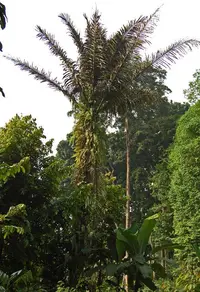
The pygmy date palm, Phoenix roebelenii, is a compact palm species valued for its fine, arching fronds and graceful, fountain-like shape. It is often grown as a single trunk or in small clumps.

In nature it occurs along riverbanks and moist lowland areas in Southeast Asia, which explains its preference for steady moisture and humidity. It grows slowly and stays relatively small, which makes it popular for containers and indoor spaces.

This palm adapts well to bright, filtered light and stable indoor temperatures, so many people find it manageable once basic needs are understood. Knowing how to care for Pygmy Date Palm mainly means providing consistent moisture, good drainage, and protection from harsh, drying conditions.

Main Plant Requirements

Care Difficulty

Moderate Care

Light Preference

Partial Sun

Water Requirements

Moderate Water

Temperature Preference

Tropical / Frost Sensitive

Hardiness Zone

10–11

Soil Texture

Sandy, Loamy, Organic-rich

Soil pH

Acidic (5.5–6.5), Slightly acidic (6.5–7.0)

Soil Drainage

Moist but well-drained

Fertilization

Light (every 4–6 weeks)

Get Personalized Care Plan

Scan your plant to receive care tips personalized for your specific plant

Personalized Care in the App

Available on iOS and Android

How to Care for the Pygmy Date Palm

This palm prefers bright, filtered light that mimics dappled sun under taller trees.

  • Provide 3–5 hours of gentle morning sun with bright shade or filtered light the rest of the day for healthy fronds on a Pygmy Date Palm.
  • Allow partial shade, especially in hot climates; protect from harsh midday and late-afternoon sun to prevent leaf scorch and bleaching.
  • In summer, increase protection during heat waves; in winter, ensure it still receives bright indirect light to avoid weak, stretched growth.

This species prefers evenly moist but not saturated soil with brief drying at the surface between waterings.

  • Water when the top 3–5 cm of soil feels dry, then soak thoroughly so moisture reaches the root zone while excess drains away.
  • Reduce watering in cool seasons, allowing the soil to dry slightly deeper; increase frequency in hot, dry periods to prevent leaf tip browning on Phoenix roebelenii.
  • Watch for yellowing, limp fronds and sour-smelling soil as signs of overwatering, and crisp, browning leaf tips and slow growth as signs of underwatering.

This palm grows best in warm, frost-free conditions with moderate seasonal variation.

  • Aim for an optimal range of 65–85°F (18–29°C), where growth and frond color remain most stable.
  • Protect from cold; sustained temperatures below 30°F (-1°C) can cause serious damage, and hard frost may kill young plants.
  • In hot climates it tolerates short periods up to about 100°F (38°C) if soil moisture is maintained and exposure to intense afternoon sun is limited.

This palm prefers moderate humidity and reacts when air is very dry.

  • Aim for 40–60% humidity to keep foliage healthy and minimize tip browning.
  • It tolerates short dry-air periods, but prolonged low humidity causes brown leaf tips and increased spider mite issues.
  • Increase humidity with grouped plants, a pebble tray kept wet below the pot base, or occasional room humidifier use near the Pygmy Date Palm.

Soil for this palm must stay aerated yet drain quickly after watering.

  • Use a loose, sandy-loam mix with some organic matter to hold moisture without becoming dense.
  • Combine roughly 50% all-purpose potting mix with 25% coarse sand and 25% perlite or fine bark for improved drainage.
  • Keep pH slightly acidic to neutral, around 6.0–7.0, which supports balanced nutrient uptake for Phoenix roebelenii.
  • Avoid heavy clay, compacted mixes, or pots that hold water, as persistent saturation leads to root rot.

This species is well suited to container growing when the pot is chosen for drainage and stability.

  • Select a wide, heavy container to counterbalance the tall, narrow crown and prevent tipping in wind or on balconies.
  • Choose a pot slightly deeper than the root ball to allow vertical root growth without creating a large water-holding reservoir at the base.
  • Use containers with multiple drainage holes so water exits quickly, then elevate the pot on feet to keep outlets clear and prevent soggy roots.

Balanced, moderate feeding supports steady Phoenix roebelenii growth in containers and nutrient-poor soils.

  • Use a balanced slow-release fertilizer (around 10-10-10 or 14-14-14) or palm-specific formula in spring.
  • Apply every 8–12 weeks during the growing season, following label rates and avoiding over-application.
  • For liquid feeds, use at 1/2 strength monthly in warm months on moist soil.
  • Stop or greatly reduce feeding in fall and winter when growth slows.

Thoughtful pruning keeps Phoenix roebelenii safe, tidy, and structurally sound.

  • Prune in late winter to early spring, or after risk of hard frost has passed.
  • Remove only dead, brown, or badly damaged fronds, cutting close to the trunk without nicking it.
  • Thin crowded lower fronds to improve air flow but retain a full, balanced canopy.
  • Use sharp, clean loppers or a pruning saw, disinfecting blades between plants to limit disease spread.

Container-grown Phoenix roebelenii tolerates being slightly root-bound but benefits from occasional repotting or transplanting.

  • Check for roots circling the pot, pushing out drainage holes, or slowed growth as signals to move up 1 pot size.
  • Plan repotting or transplanting for late spring to early summer when active growth helps recovery.
  • Expect repotting every 3–5 years for container plants, using a well-draining, gritty mix.
  • Water deeply before and after moving, keep roots shaded, and reduce sun and wind exposure for 1–2 weeks to limit stress.

Phoenix roebelenii is usually propagated by seed, which is slow, or by carefully removing offsets when present.

  • Sow fresh, cleaned seeds in warm spring conditions at 75–85°F in a sterile, very well-draining mix.
  • Keep the seed medium just lightly moist and be patient, as germination may take several weeks to months.
  • If offsets form at the base, detach only well-rooted ones using a sterile knife and pot individually.
  • Provide bright, indirect light and stable warmth to support early root development and seedling establishment.

Cold-sensitive Phoenix roebelenii needs protection in regions with frost or freezing temperatures.

  • Avoid exposure below about 25°F; repeated light frosts can damage fronds.
  • Mulch 5–8 cm around the root zone, keeping mulch slightly away from the trunk base.
  • Wrap the crown and trunk loosely with frost cloth or burlap during hard freezes.
  • Move container plants indoors or to a bright, frost-free, sheltered spot for winter.

Care Tips

Root flare check

Plant or repot so the top of the root ball and trunk flare sit slightly above the surrounding soil, then brush away any mulch that touches the trunk to reduce crown rot risk.


Frond selection pruning

Remove only fully brown, dead, or dangerously drooping fronds at the base with sterilized tools, and leave any fronds that are still at least 50% green to maintain the palm’s energy reserves.

Spine‑safe handling

Wrap the crown and lower fronds loosely with an old towel or piece of burlap before working around the plant to avoid injury from the sharp leaflet tips and to prevent accidental tearing of fronds.

Winter light repositioning

In cooler months, shift container plants 0.5–1 m closer to the brightest window or to a bright sunroom, as this species slows but still benefits from higher light during short winter days.

Preventing root rock

For outdoor or large container specimens, lightly compact soil around the root zone and, if needed, stake the trunk for the first season after planting to prevent wind rock that can break new roots when growing Pygmy Date Palm.

Common Pests and Diseases

Spider mites

This pest feeds on palm fronds, causing fine yellow stippling, faded color, and delicate webbing between leaflets, especially in dry indoor air.

Solution

Increase humidity around the palm, hose or shower the foliage thoroughly to dislodge mites, then apply insecticidal soap or a neem oil spray to all leaf surfaces every 5–7 days until no new damage appears, while avoiding hot, direct sun right after treatment.

Scale insects

These insects attach to fronds and stems as small, brown or tan bumps, sucking sap and causing yellowing, sticky honeydew, and sometimes sooty mold growth.

Solution

Physically remove visible scale with a soft cloth or cotton swab dipped in alcohol, prune heavily infested fronds, then treat remaining foliage with horticultural oil, repeating at labeled intervals to catch newly hatched crawlers as part of Phoenix roebelenii care.

Mealybugs

This pest appears as white, cottony clusters in leaf bases and along the rachis, weakening the palm and leaving sticky honeydew that can support sooty mold.

Solution

Inspect leaf bases closely, wipe or rinse off visible mealybugs, then use insecticidal soap or neem oil, making sure to spray into tight leaf axils and repeating treatments weekly until no new clusters are seen.

Fusarium wilt

This disease is caused by a soilborne fungus that leads to one-sided yellowing and browning of fronds, frond dieback, and progressive decline of the canopy.

Solution

Remove and destroy affected fronds with sterilized tools, avoid overhead irrigation that wets the crown, improve drainage, and do not replant other susceptible palms in the same soil; there is no reliable home fungicide cure, so prevention and sanitation are critical.

Ganoderma butt rot

This disease attacks the lower trunk and root collar, causing slow decline, reduced vigor, and sometimes bracket-shaped conks (fungal shelves) at the base of the palm.

Solution

Once conks or advanced symptoms appear there is no effective treatment, so the palm should be removed, including as much of the stump and roots as possible, and future palms should not be planted in the same spot; avoid trunk wounds and maintain good site drainage to reduce risk.

Interesting Facts

Miniature riverbank specialist

In the wild, this species naturally grows along riverbanks and seasonally flooded areas in Laos, Vietnam, and southern China, where its fibrous root system tolerates brief inundation yet still needs aerated soil.

Solitary multi-crowned palm

In nature it is a solitary-trunk palm, but commercial growers often plant several seedlings together in one pot, so over time it forms the multi-stemmed, fountain-like clumps commonly sold in cultivation.

Spiny youth, smoother adult

Young plants bear dense, sharp spines along the leaf bases, which offer protection from herbivores, but these spines become less prominent and more widely spaced as the trunk elongates and the palm matures.

Botan icon

Did you know?

This species produces small, date-like fruits that are botanically true drupes; they are technically edible but have very little flesh and almost no commercial value, which is why it has been developed and traded almost exclusively as an ornamental landscaping and container palm rather than as a fruit crop.

FAQs about Pygmy Date Palm

Yes, this species does well in containers due to its compact root system and moderate growth. Use a heavy, stable pot, allow space for root expansion, and repot only when clearly rootbound to avoid stress.

Grow Healthy Plants with Botan Care

Keep your plants happy and healthy with plant identification, disease detection, and easy care guidance.

Botan plant care app — identify plants on mobile

Explore More Plants