Regular Stem Renewal
Every few months, remove the oldest, woodiest stems at the base and replant a few fresh cuttings into the same pot to keep the plant dense and prevent bare, leggy growth over time.

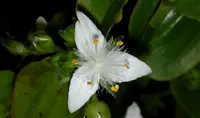
Small-leaf spiderwort, Tradescantia fluminensis, is a trailing, evergreen perennial often grown as a houseplant or in hanging baskets. It forms dense mats of small, glossy, oval leaves on thin, creeping stems.
In nature it occurs in subtropical regions of South America, especially Brazil, and has become naturalized in many mild, moist climates. Its fast growth and easy propagation from cuttings make it simple to share and maintain indoors.
This plant tolerates a range of indoor conditions but stays healthiest with bright, indirect light, consistently slightly moist soil, and good drainage. Those learning how to care for Small-leaf spiderwort usually find it forgiving, as it recovers quickly from minor neglect or pruning mistakes.

Care Difficulty
Easy Care

Light Preference
Bright Indirect Light

Water Requirements
Moderate Water

Temperature Preference
Tropical / Frost Sensitive

Hardiness Zone
9–12

Soil Texture
Loamy, Sandy, Organic-rich

Soil pH
Acidic (5.5–6.5), Slightly acidic (6.5–7.0)

Soil Drainage
Moist but well-drained

Fertilization
Light (every 4–6 weeks)
Scan your plant to receive care tips personalized for your specific plant
Available on iOS and Android
Tradescantia fluminensis thrives in bright, indirect light with some protection from harsh midday sun.
This species prefers evenly moist but never soggy soil with brief drying between waterings.
This plant grows best in mild, frost-free conditions with stable temperatures.
This species grows well in typical household humidity but responds best to slightly humid air.
This plant prefers a loose, airy, organic-rich potting medium that drains quickly yet holds some moisture.
This species is very suitable for container growing due to its trailing habit and moderate root system.
Tradescantia fluminensis benefits from light, consistent feeding during active growth for dense foliage.
Thoughtful pruning keeps Tradescantia fluminensis compact, full, and less prone to tangling.
This species tolerates slightly root-bound conditions but benefits from periodic repotting in containers.
New plants are most often produced from stem cuttings, which root quickly under basic indoor conditions.
This plant has low frost tolerance and needs protection in regions with cold winters, especially in containers.

Plant Health Check
Not sure what's wrong with your plant? Check your plant's health inside the app.
In mild, moist climates, this species forms dense ground-hugging mats through creeping stems that root at almost every node, allowing a single plant fragment to expand into a continuous carpet over large areas.
The small, glossy leaves are adapted to capture low light efficiently, which is why this plant often dominates shaded understories beneath forest canopies and urban trees.
Even short stem pieces with just a few nodes can regenerate into new plants, a trait that makes this species both easy to propagate and difficult to fully remove once established outdoors.

In several mild-climate regions such as parts of New Zealand and Australia, this species has been officially listed as an environmental weed because its thick mats can smother native forest-floor vegetation and slow natural regeneration.
This species spreads quickly through creeping stems and easily rooted nodes. In mild climates it can form dense mats and overwhelm nearby plants, especially in the ground. Regular trimming and physical barriers help limit unwanted spread.
Keep your plants happy and healthy with plant identification, disease detection, and easy care guidance.