Columnar Peperomia Care (Peperomia columella)

About Columnar Peperomia

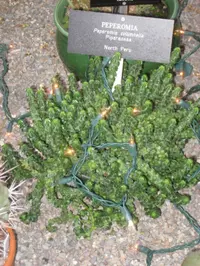
Columnar peperomia, Peperomia columella, is a compact succulent-type houseplant known for its upright, stacked cylindrical leaves. The foliage forms tight columns that store water, giving the plant a sculptural look.

It comes from rocky, arid regions of Peru, where it grows in crevices with bright light and excellent drainage. This origin explains its preference for bright indirect light, airy soil, and careful, infrequent watering.

Growth is relatively slow, but the plant is long-lived if kept dry at the roots and protected from cold drafts. For anyone learning how to care for Columnar Peperomia, its main needs are stable warmth, plenty of light, and protection from overwatering.

Main Plant Requirements

Care Difficulty

Moderate Care

Light Preference

Bright Indirect Light

Water Requirements

Low Water

Temperature Preference

Tropical / Frost Sensitive

Hardiness Zone

11–12

Soil Texture

Sandy, Loamy, Organic-rich

Soil pH

Acidic (5.5–6.5), Slightly acidic (6.5–7.0)

Soil Drainage

Well-drained

Fertilization

Light (every 4–6 weeks)

Get Personalized Care Plan

Scan your plant to receive care tips personalized for your specific plant

Personalized Care in the App

Available on iOS and Android

How to Care for the Columnar Peperomia

This species prefers bright, indirect light that mimics lightly shaded rock crevices in its native habitat.

  • Provide 6–8 hours of bright, filtered light each day, such as near an east- or north-facing window or under sheer curtains indoors for Columnar Peperomia.
  • Tolerates partial shade but stems may stretch and leaf spacing widens if light is too low; move it closer to a brighter spot if growth becomes leggy.
  • Avoid harsh midday and afternoon sun, especially behind glass, which can scorch leaves; in winter, shift it slightly closer to the light source to compensate for weaker light.

This semi-succulent stores water in its leaves and stems, so it prefers a drier watering routine.

  • Water only when the top 2–4 cm of soil feels completely dry, then water thoroughly so it briefly runs from drainage holes, letting excess drain away fully.
  • Use a very free-draining, gritty mix to prevent root rot; a cactus or succulent blend with extra perlite or pumice works well for Peperomia columella.
  • In spring and summer, expect to water more often; in fall and winter, extend the interval and watch for mushy stems (overwatering) or wrinkled, soft leaves (underwatering).

This plant grows best in stable, warm conditions without sudden temperature swings.

  • Aim for 65–80°F (18–27°C) for active growth; short exposures to 60°F (16°C) are usually tolerated but not ideal long term.
  • Protect it from cold; growth slows below 60°F (16°C) and tissue damage can occur near 40°F (4°C), with any frost likely to kill exposed stems.
  • In hot weather above 85°F (29°C), increase air movement and shade from intense afternoon sun to limit heat stress, and avoid placing it next to heaters or cold drafts.

This species handles typical indoor humidity well but benefits from slightly boosted moisture in very dry homes.

  • Aim for 40–60% humidity; avoid prolonged exposure below 30%, especially near heaters or AC vents.
  • Crisping leaf tips, slowed growth, and puckered stems can indicate humidity stress rather than underwatering.
  • Increase humidity with a nearby pebble tray or grouping plants, but keep foliage dry and ensure strong air circulation.

Peperomia columella prefers a loose, sharply draining mix that mimics gritty, rocky substrates.

  • Use roughly 50% cactus mix and 50% mineral components such as perlite, pumice, or coarse sand for strong drainage.
  • Keep texture very airy; chunky bark chips or fine gravel help prevent compaction and improve oxygen around roots.
  • Target a slightly acidic to neutral pH around 6.0–7.0, avoiding heavy, peat-only or clay-rich substrates that hold water too long.
  • Avoid soil that stays wet for more than 1–2 days, as this species is prone to root rot in stagnant, saturated conditions.

This species is well suited to container growing, especially in small pots or hanging planters.

  • Choose a shallow but wide container to support its trailing, columnar stems without encouraging unnecessary deep, wet soil zones.
  • Select unglazed terracotta if extra evaporation is needed in low-light or cooler rooms to reduce moisture buildup.
  • Stabilize lightweight hanging or narrow pots so stems do not tip the container as they elongate and shift the center of gravity.

This succulent Peperomia columella has modest nutrient needs but responds well to light feeding in active growth.

  • Use a balanced liquid fertilizer (around 10-10-10 or 20-20-20) diluted to 1/4–1/2 strength for Columnar Peperomia indoor care.
  • Feed every 4–6 weeks from spring through early fall when growth is visible.
  • Skip compost-heavy mixes; choose a low-salt product suitable for succulents or houseplants.
  • In late fall and winter, reduce or stop feeding to avoid soft, weak growth.

Peperomia columella needs only light, corrective pruning to maintain a compact, tidy form.

  • Best time is in spring or early summer when the plant resumes active growth.
  • Use clean, sharp scissors or small pruning shears to remove dead, damaged, or shriveled stems.
  • Trim back overly long or crowded shoots to maintain shape and encourage branching.
  • Make cuts just above a node to support even regrowth and avoid leaving bare stubs.

This plant prefers slightly tight pots and infrequent repotting to keep its root system stable.

  • Repot every 2–3 years in spring, or when roots circle the pot, emerge from drainage holes, or growth slows noticeably.
  • Choose a shallow pot with good drainage and a gritty, fast-draining mix suited to succulents.
  • Gently loosen circling roots, keep as much soil as possible around them, and avoid breaking thick roots.
  • Water lightly after repotting, keep in bright indirect light, and hold off on fertilizing for 3–4 weeks to reduce stress.

Peperomia columella is commonly propagated from stem cuttings taken during the warmer growing months.

  • Take 5–8 cm healthy stem cuttings in late spring or summer, including several leaves.
  • Allow cut ends to dry for a few hours, then place in a very well-drained, slightly moist succulent mix.
  • Provide bright, indirect light, warm temperatures around 70–80°F, and high air circulation to prevent rot.
  • Once new roots and growth appear, pot each rooted cutting individually and resume light watering.

This warmth-loving succulent requires careful indoor winter care in climates with cold winters.

  • Not frost tolerant; maintain indoor temperatures around 60–75°F and avoid exposure below 50°F.
  • Move container plants indoors before night temperatures drop in fall, placing them in bright, indirect light.
  • Reduce watering, allowing the mix to dry more deeply while still preventing complete desiccation.
  • Keep away from cold drafts, single-glazed windows, and direct hot air from heaters to limit stress.

Care Tips

Rotate For Symmetry

Turn the pot 90° every 2–3 weeks so the columnar stems receive even light exposure and develop upright, balanced growth instead of leaning toward one side.

Use Narrow Pots

Plant in a relatively narrow, deep container so the roots stay slightly confined, which helps prevent overwatering and keeps the tall, stacking stems better supported.

Top-Dress Instead Of Repotting

Instead of frequent repotting, refresh the upper 2–3 cm of mix once a year with fresh, gritty substrate to maintain aeration without disturbing the compact root system.

Support Heavy Stems

If older stems start to flop, add a low ring stake or small decorative stones around the base to brace them and reduce mechanical stress at the root crown.

Inspect Leaf Axils

During routine caring for Columnar Peperomia, check the tight leaf joints with a hand lens or phone camera for early signs of mealybugs or scale, which often hide in the crevices of the stacked leaves.

Common Pests and Diseases

Mealybugs

This pest feeds on plant sap, often hiding in leaf axils and along the ridged stems, leaving cottony white clusters. Symptoms include slow growth, slight stem shriveling, and sticky honeydew deposits.

Solution

Isolate the plant, then dab visible insects with cotton swabs dipped in 70% isopropyl alcohol and gently wipe along the stems and leaf bases. Repeat weekly until no new insects appear and, for heavier infestations, use a ready-to-use insecticidal soap, ensuring the solution reaches crevices along the columns and between leaves.

Spider mites

These insects favor the dry conditions often used for this succulent species, causing fine stippling on tiny leaves and delicate webbing between columns or at stem tips. Symptoms include dull, dusty-looking foliage and gradual leaf drop from stress.

Solution

Rinse the plant thoroughly under a gentle stream of lukewarm water, focusing on crevices where mites hide, then allow it to dry with good air movement. If mites persist, apply insecticidal soap or a neem oil spray to all surfaces every 7–10 days while slightly raising humidity to slow their spread, without keeping the soil wet.

Fungal stem rot

This disease develops when the plant sits in consistently wet soil, leading to soft, darkened stem bases and collapsing columns. Symptoms include mushy tissue at the soil line and a sour or musty smell from the potting mix.

Solution

Remove the plant from the pot, cut away all soft or blackened tissue with sterile tools, and discard saturated or foul-smelling soil. Repot in a fresh, fast-draining cactus or succulent mix, use a pot with drainage holes, and water only when the top 2–3 cm of soil are fully dry to support long-term Peperomia columella care.

Fungus gnats

These insects thrive in moisture-retentive substrates, where larvae feed on organic matter and fine roots, especially in small pots. Symptoms include tiny black flies hovering around the pot and slow, weakened growth from root disturbance.

Solution

Allow the top layer of soil to dry more thoroughly between waterings and remove any decaying plant material from the surface. Use yellow sticky traps to capture adults and, if needed, drench the soil with Bacillus thuringiensis israelensis (Bti) according to label directions to reduce larvae populations while maintaining well-drained, gritty substrate.

Interesting Facts

Windowed leaf columns

The thick, column-like leaves have translucent tissue on their upper surface that acts as a light window, allowing sunlight to penetrate deeper into the photosynthetic tissues while the rest of the leaf stays protected from intense sun.

Cliff-dwelling growth habit

In its native habitat in Peru, this species often grows on rocky cliffs and steep slopes, anchoring its roots into crevices where organic material and moisture collect.

Drought-adapted water storage

The plant’s tightly packed, succulent leaves store water, an adaptation that helps it survive in habitats with irregular rainfall and rapid drainage.

Botan icon

Did you know?

Peperomia columella is considered one of the most xerophytic, or drought-adapted, species in the Peperomia genus, showing a degree of leaf succulence and light-window development that is unusually pronounced for the group.

FAQs about Columnar Peperomia

This species grows slowly, adding only a few cm each year. Growth is most active in spring and summer and slows in winter. Limited root space, cool temperatures, or low light can further reduce its growth rate.

Grow Healthy Plants with Botan Care

Keep your plants happy and healthy with plant identification, disease detection, and easy care guidance.

Botan plant care app — identify plants on mobile

Explore More Plants