Canary Islands dragon tree Care (Dracaena draco)

Also known as: Canary Island Dragon Tree

About Canary Islands dragon tree

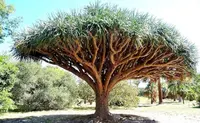
The Canary Islands dragon tree, Dracaena draco, is a slow-growing evergreen tree from the subtropical Canary Islands, Cape Verde, and nearby regions. It naturally forms a thick, single trunk that eventually branches into a rounded, umbrella-like crown.

Its stiff, sword-shaped gray-green leaves grow in dense rosettes, giving it a sculptural, architectural look that suits modern interiors and dry gardens. The red resin, sometimes called dragon’s blood, is a notable feature but is not usually relevant to home growing.

This species adapts well to containers and indoor spaces when given plenty of light, modest watering, and sharply drained soil. Understanding how to care for Canary Islands dragon tree mainly involves avoiding overwatering and providing bright exposure.

Main Plant Requirements

Care Difficulty

Moderate Care

Light Preference

Full Sun

Water Requirements

Low Water

Temperature Preference

Tropical / Frost Sensitive

Hardiness Zone

10–12

Soil Texture

Sandy, Loamy, Rocky

Soil pH

Slightly acidic (6.5–7.0), Slightly alkaline (7.0–7.5)

Soil Drainage

Well-drained

Fertilization

Minimal (feed rarely)

Get Personalized Care Plan

Scan your plant to receive care tips personalized for your specific plant

Personalized Care in the App

Available on iOS and Android

How to Care for the Canary Islands dragon tree

Dracaena draco thrives in bright, open locations with strong but not extreme sun exposure.

  • Provide 4–8 hours of sun daily, ideally full morning sun with light afternoon shade, especially in hot, dry regions.
  • Young plants benefit from bright, filtered light or 30–40% shade cloth to prevent leaf scorch, while mature Canary Islands dragon tree specimens tolerate more direct sun.
  • If stems elongate, leaves pale, or growth slows, the site is too dark; move gradually to a brighter, more open position.

This drought-tolerant species prefers deep but infrequent watering in fast-draining soil.

  • Water only when the top 3–5 cm of soil is completely dry; on established outdoor plants, this often means waiting until the soil looks dusty and feels dry several cm down.
  • Use gritty, well-drained soil or slopes so excess water runs off; persistent soggy soil, yellowing leaves, or a soft stem indicates overwatering.
  • In hot, dry summers, expect more frequent deep soaks; in cool or rainy seasons, reduce or pause watering and rely more on natural rainfall for Dracaena draco.

This species is adapted to warm, dry climates and needs protection from hard frost.

  • Optimal growth occurs around 65–80°F (18–27°C), with slower but acceptable growth down to about 55°F (13°C).
  • Short dips to 30–32°F (-1–0°C) may be survived by mature plants, but repeated or prolonged frost can scar leaves and damage growing tips.
  • In hot climates, it tolerates 95–100°F (35–38°C) if soil drains well and roots are not waterlogged; provide some afternoon shade during extreme heat waves to reduce stress.

This species tolerates dry indoor air but grows best with moderate, stable humidity.

  • Aim for 30–50% humidity; typical home levels suit Canary Islands dragon tree without special equipment in most climates.
  • Dry, crispy leaf tips or marginal browning can indicate air that is too dry or heat vents blowing directly on foliage.
  • If air is very dry, group plants together and keep the container away from radiators, fireplaces, and forced-air vents to reduce leaf desiccation.

Dracaena draco prefers a sharply draining, mineral-lean substrate that mimics rocky, arid habitats.

  • Use a sandy or gritty mix, such as 50–60% cactus mix combined with coarse perlite or pumice, to prevent waterlogging.
  • Keep structure open and airy; avoid compacted or heavy loam that holds water around the roots for long periods.
  • A slightly acidic to neutral pH around 6.0–7.0 is suitable and usually achieved with standard cactus or succulent mixes.
  • Do not add large amounts of peat or fine compost that collapse over time; coarse mineral materials maintain drainage and aeration.

This species is suitable for long-term container growing when the pot is chosen for drainage and stability.

  • Choose a pot that is wider and heavy-bottomed to counterbalance the eventually top-heavy rosette and reduce tipping risk outdoors or on balconies.
  • Use a container material such as ceramic or thick-walled clay when extra weight is needed to stabilize tall, single-stemmed growth in windy positions.
  • Ensure drainage holes remain fully open by placing a pot feet or spacers under the container so excess water can exit rapidly after each watering.

Dracaena draco grows slowly and needs modest feeding to maintain steady, healthy growth in containers.

  • Use a balanced liquid fertilizer (around 10-10-10) at 1/4–1/2 strength for Canary Islands dragon tree in spring and summer.
  • Feed every 4–6 weeks during the active growing season if the plant is in potting mix with low nutrients.
  • Avoid fertilizing in winter or when growth slows, to prevent salt buildup and soft, weak tissue.
  • Flush the pot with plain water every few months to remove excess salts from synthetic fertilizers.

Dracaena draco accepts light structural pruning, mainly to remove damaged tissue and manage shape.

  • Best time is late spring to early summer, when the plant is actively growing and can seal cuts faster.
  • Remove dead, diseased, crossing, or storm-damaged branches using clean, sharp bypass pruners or a fine-tooth saw.
  • Shortening selected branches can encourage limited branching, but heavy cutting slows growth on this naturally architectural tree.
  • Disinfect tools before and after use to reduce transmission of fungal or bacterial pathogens.

This species prefers to stay slightly pot-bound, so repotting or transplanting is infrequent and should be done carefully.

  • Look for roots circling inside the pot, emerging from drainage holes, or noticeably slower growth as signs to move Dracaena draco to a larger container.
  • Plan repotting or outdoor transplanting in late spring, every 3–5 years for container plants, using a gritty, fast-draining mix.
  • Step up only 1 pot size, loosen circling roots gently, and keep the original root ball as intact as possible to limit stress.
  • Water thoroughly after moving, then keep soil just slightly moist and shaded for 1–2 weeks while the roots re-establish.

Dracaena draco is most often propagated from cuttings or seeds, though both methods require patience and stable conditions.

  • Take semi-woody stem cuttings in late spring or early summer, allowing cut ends to callus for a few days before planting.
  • Insert cuttings into a sterile, sharply draining mix, keep at 70–80°F with bright, indirect light, and maintain barely moist conditions.
  • Use a rooting hormone powder or gel to improve success and reduce rot risk in thicker stems.
  • Sow fresh seeds in warm, well-drained medium, providing gentle bottom heat and even moisture; germination may take several weeks.

This species is sensitive to hard frost and benefits from basic winter precautions in cooler climates.

  • Outdoors, it tolerates only light, brief frosts; sustained temperatures below 28°F can damage foliage and young trunks.
  • Apply a dry mulch layer 5–8 cm thick around the root zone in the ground, keeping it slightly away from the trunk base.
  • Move container plants indoors or into a bright, frost-free greenhouse before night temperatures drop near freezing.
  • In winter indoors, provide maximum light, reduce watering, and avoid cold drafts near windows or doors.

Care Tips

Rotation for symmetry

Rotate the container 90° every 2–3 weeks so the rosette develops evenly and the trunk stays straight rather than leaning toward the main light source.

Secure young trunks

In windy outdoor locations, stake young plants with a broad, soft tie around the trunk and stake to prevent rocking that can damage new roots and distort future branching.

Controlled branching cut

When the main trunk reaches a desired height and is well thickened, make one clean cut across the top in late spring to stimulate multiple new heads and create the characteristic umbrella form.

Salt buildup management

Once or twice a year, flush the potting mix thoroughly with clean water until it drains freely to reduce mineral salts, which can otherwise cause tip burn on the stiff leaves.

Cold snap precautions

In regions with occasional frost, keep a lightweight frost cloth ready and wrap the crown and upper trunk on nights below 30°F to protect growing points while still growing Canary Islands dragon tree outdoors.

Common Pests and Diseases

Scale insects

This pest feeds on sap along the leaves and stems, often appearing as small brown or gray bumps that excrete sticky honeydew. Symptoms include yellowing patches, reduced vigor, and sooty mold growing on the honeydew deposits.

Solution

Remove light infestations by gently scraping scales off with a fingernail or cotton swab dipped in 70% isopropyl alcohol, then wipe leaves with a damp cloth. For larger infestations, use a horticultural oil spray labeled for indoor ornamentals, applied thoroughly to leaf undersides and stems, and repeat at 7–10 day intervals while improving light and air movement.

Mealybugs

These insects gather in leaf bases, along leaf edges, and at branching points, forming white cottony clusters. Symptoms include leaf distortion, sticky honeydew, slow growth, and general decline.

Solution

Physically remove clusters with cotton swabs dipped in 70% isopropyl alcohol, then rinse the plant with a gentle shower of lukewarm water to dislodge remaining insects. Follow up with repeated applications of insecticidal soap or a light horticultural oil, paying special attention to tight leaf rosettes and branch crotches where mealybugs hide.

Spider mites

This pest is favored by hot, dry conditions and causes fine speckling on leaves, especially on older foliage, sometimes accompanied by fine webbing between leaves and along leaf tips. Symptoms include dull, gray-green leaves that may eventually dry at the tips.

Solution

Increase humidity around the plant and rinse foliage thoroughly with a firm, lukewarm water spray, including the underside of the leaves, to remove mites and webs. If populations persist, apply insecticidal soap or a low-toxicity miticide labeled for indoor use, repeating every 5–7 days until new growth appears clean.

Fusarium leaf spot

This disease causes small, elongated brown to reddish lesions on the leaves, often starting where water sits on the surface. Symptoms include expanding spots with yellow halos and premature leaf drop on stressed plants.

Solution

Remove and discard affected leaves, then avoid overhead watering and splashing to keep foliage dry, especially in cooler conditions. Improve airflow around the plant and, in persistent or severe cases, use a systemic fungicide labeled for Fusarium on ornamental plants while also correcting any watering or drainage issues that weaken the plant.

Soft bacterial rot

This disease usually enters through wounds in the trunk or leaf bases, leading to water-soaked, foul-smelling, soft tissue and possible collapse of affected areas. Symptoms include localized stem or crown softening and an unpleasant odor near the infected tissue.

Solution

Cut away all soft, discolored tissue with a sterile, sharp tool until only firm, healthy tissue remains, then allow the wound to dry and callus in good airflow. Reduce watering, keep water away from damaged areas, and avoid further injury to the trunk or leaf bases, since preventing entry points is the main long-term strategy in Dracaena draco care.

Interesting Facts

Slow-motion tree life

This species grows extremely slowly and only begins to develop its first main branching crown after producing a tall, unbranched trunk over several decades.

Branching after flowering

Unlike most trees, it usually branches only after a flowering event, so each fork in the canopy represents a past reproductive cycle.

True dragon’s blood resin

When the trunk or leaves are wounded, they exude a dark red resin historically known as dragon’s blood, which has been used for centuries as a pigment and varnish in Europe and the Mediterranean region.

Botan icon

Did you know?

Ancient individuals on the Canary Islands are estimated, through growth ring studies in subterranean tissues and historical records, to have reached many centuries in age, making this species one of the longest-lived monocots known.

FAQs about Canary Islands dragon tree

Leaf tips often brown from low humidity, excess fertilizer salts, or chronic underwatering. Entire leaves browning from the base usually indicate root problems or past severe drought. Remove dead leaves and correct the underlying stress gradually.

Grow Healthy Plants with Botan Care

Keep your plants happy and healthy with plant identification, disease detection, and easy care guidance.

Botan plant care app — identify plants on mobile

Explore More Plants