Philodendron squamiferum Care

About Philodendron squamiferum

Philodendron squamiferum is a tropical aroid grown mainly as a climbing ornamental foliage plant. It is valued for its deeply lobed leaves and striking red, bristly leaf stalks that give it a distinctive texture. In nature it occurs in humid tropical forests of Central and South America, where it grows as an epiphyte or climber on trees.

In homes, it tends to grow upright at first, then climb or trail if given support. Its moderate growth rate and relatively forgiving nature make it suitable for indoor growers with some experience. To care for Philodendron squamiferum, provide bright, filtered light, evenly moist but not waterlogged soil, and stable warmth with moderate humidity.

Main Plant Requirements

Care Difficulty

Moderate Care

Light Preference

Bright Indirect Light

Water Requirements

Moderate Water

Temperature Preference

Tropical / Frost Sensitive

Hardiness Zone

10–12

Soil Texture

Loamy, Peaty, Organic-rich

Soil pH

Acidic (5.5–6.5), Slightly acidic (6.5–7.0)

Soil Drainage

Moist but well-drained

Fertilization

Light (every 4–6 weeks)

Get Personalized Care Plan

Scan your plant to receive care tips personalized for your specific plant

Personalized Care in the App

Available on iOS and Android

How to Care for the Philodendron squamiferum

This species prefers bright, indirect light that mimics a dappled forest canopy.

  • Provide 6–8 hours of bright, filtered light daily, such as near an east- or north-facing window or under light shade outdoors.
  • Tolerates partial shade, but growth slows and leaves may stay smaller if light is below about 4 hours of bright indirect exposure.
  • Avoid harsh midday or afternoon sun, which can cause brown, scorched patches; increase light gradually in winter to prevent leggy stems in Philodendron squamiferum.

Watering should keep the root zone lightly moist but never saturated for long periods.

  • Water when the top 2–4 cm of soil feels dry, using enough water to moisten the whole root zone, then let excess drain away completely.
  • In spring and summer, this typically means more frequent watering as growth and evaporation increase; in fall and winter, extend the interval as growth slows.
  • Watch for yellowing, mushy lower leaves or sour-smelling soil as signs of overwatering, and for limp, curling leaves and very light pots as signs of underwatering.

Stable, warm conditions support steady growth and reduce stress for this aroid.

  • Aim for 65–80°F (18–27°C) for active growth, with the best performance usually around 70–77°F (21–25°C).
  • Avoid exposing the plant to temperatures below 55°F (13°C); tissue damage can occur near this point, and the plant should never be left in frost.
  • It tolerates short heat spikes up to about 90°F (32°C) if humidity is moderate and soil does not dry completely, but prolonged heat or cold drafts can stunt Philodendron squamiferum.

This species prefers moderately high humidity but adapts to typical household conditions if airflow is adequate.

  • Aim for 50–70% humidity to support leaf expansion and reduce brown edges on new growth.
  • Tolerates short periods around 35–40%, but prolonged dry air can cause crispy leaf tips and slower growth.
  • Increase humidity with a nearby humidifier, grouped plants, or a pebble tray, but avoid misting that leaves foliage wet for long periods.

Use a loose, airy, organic-rich medium that drains quickly yet holds some moisture around the roots.

  • Combine roughly 40% peat or coco coir, 30% fine bark, 20% perlite, and 10% compost for structure, moisture retention, and nutrients.
  • Ensure the mix drains within seconds after watering; heavy, compact, or clay-based substrates promote root rot and should be avoided.
  • Keep pH slightly acidic to neutral, around 5.8–6.8, which supports nutrient availability and healthy foliage color.
  • Add extra perlite or bark chips if the pot stays wet for more than 3–4 days, improving aeration for Philodendron squamiferum roots.

This species is well suited to container culture due to its climbing, manageable root system.

  • Choose a stable, wider container or add weight to the base to counterbalance the vine and any support pole.
  • Select slightly snug pots so the mix dries evenly; oversize containers keep the substrate wet for too long around the roots.
  • Use dense plastic or glazed ceramic if slower drying is needed, or terra-cotta in humid homes where faster evaporation helps prevent waterlogging.

Consistent but moderate feeding supports healthy foliage and steady growth in Philodendron squamiferum.

  • Use a balanced liquid fertilizer (around 10-10-10 or 20-20-20) diluted to 25–50% strength for container plants.
  • Apply every 4–6 weeks during the growing season when light and temperatures are stable.
  • Pause or reduce feeding to 1 light application in midwinter if growth slows noticeably.
  • Organic options like dilute compost extract or a mild slow-release fertilizer can supply background nutrition without overloading salts.

Thoughtful pruning helps maintain size, airflow, and structural strength in Philodendron squamiferum.

  • Plan most pruning for late spring or early summer, when the plant is actively growing and can heal quickly.
  • Remove yellowing, diseased, or mechanically damaged leaves and stems back to healthy tissue.
  • Thin crowded vines or crossing stems to manage bulk and direct growth toward a single main support.
  • Use clean, sharp bypass pruners and disinfect blades between cuts if disease is suspected.

Container-grown Philodendron squamiferum benefits from periodic repotting to prevent root congestion and declining vigor.

  • Check for roots circling the pot, pushing through drainage holes, or for soil drying out very fast as signs it needs more space.
  • Plan repotting in spring every 2–3 years, shifting to a container 2–5 cm wider with fresh, chunky aroid mix.
  • Water lightly the day before, then gently loosen and untangle roots, trimming only rotten or dead portions.
  • After repotting, water thoroughly once, keep in bright indirect light, and reduce fertilizer for 4–6 weeks to limit stress.

Stem cuttings are the most practical method for growing Philodendron squamiferum at home.

  • Take 1–2 node stem cuttings in late spring or summer, each with at least 1 healthy leaf and 1 visible aerial root if possible.
  • Root in moist, airy mix or water at 70–80°F with high humidity and bright, indirect light.
  • Remove lower leaves, keep only the top leaf, and bury at least 1 node where roots can form.
  • Optionally dip cut ends in rooting hormone to reduce rot risk and speed callus and root formation.

This tropical species is frost tender and needs controlled indoor conditions for safe winter care.

  • Aim to keep plants above 60°F; brief exposure near 50°F can slow growth but usually is not lethal.
  • For container specimens outdoors, move indoors before first frost and place in bright, indirect light.
  • Reduce watering frequency in winter, allowing the upper mix to dry slightly more between waterings.
  • Keep foliage away from cold drafts, single-pane windows, and heating vents that cause rapid temperature swings.

Care Tips

Provide climbing support

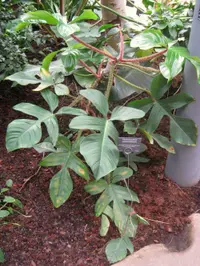
Install a sturdy moss pole or textured stake and loosely tie stems as they elongate so aerial roots can attach and leaves develop their full lobed shape instead of drooping or twisting.

Manage aerial roots

Guide aerial roots toward the pole or into the potting mix and trim only those that are dry, damaged, or excessively long to keep the plant tidy without stressing its support system.

Rotate for symmetry

Turn the pot 90° every 2–3 weeks so the plant receives light from different angles, which encourages even leaf size and reduces leaning or one-sided growth.

Support heavy petioles

As petioles thicken and leaves enlarge, add discreet soft ties or additional stakes to prevent mechanical damage where the fuzzy petioles join the main stem.

Seasonal root check

During spring repotting, gently check roots for circling, mushy, or black sections, pruning only the damaged parts and refreshing the top 3–5 cm of mix to keep growing Philodendron squamiferum vigorous without overpotting.

Common Pests and Diseases

Spider mites

This pest often appears on plants kept in warm, dry indoor air, causing fine stippling on leaves and very thin webbing along veins and petioles.

Solution

Rinse foliage thoroughly with lukewarm water, including the undersides of leaves and the hairy petioles, then repeat every few days; if populations persist, use a dilute insecticidal soap or neem oil spray and increase humidity and air movement to make conditions less favorable. Regularly inspecting new growth is an important part of Philodendron squamiferum care instructions because mites prefer tender leaves first.

Mealybugs

These insects hide in leaf axils, along the hairy stems, and around aerial roots, appearing as white cottony clusters and causing sticky honeydew and distorted growth.

Solution

Remove visible insects with a cotton swab dipped in isopropyl alcohol, then wash the plant with a mild insecticidal soap solution, taking care to reach into crevices around petioles and nodes; repeat weekly until no new bugs appear and isolate the plant from others during treatment.

Scale insects

These insects attach along the midrib and petioles, including the bristly stems, forming small brown or tan bumps that cause yellowing and weakening of the plant over time.

Solution

Gently scrape or wipe off individual scales with a fingernail or soft tool, then treat the entire plant with horticultural oil or neem oil to smother remaining juveniles; repeat treatments every 7–10 days and prune heavily infested stems if necessary.

Bacterial leaf spot

This disease causes translucent, water-soaked spots that turn dark and may have yellow halos, often starting where water sits on the large, lobed leaves.

Solution

Remove and discard affected leaves, avoid wetting foliage when watering, and improve air circulation around the plant; if spread continues, reduce overhead misting, keep leaves dry, and disinfect cutting tools between uses to prevent further transmission.

Fungal leaf blight

Symptoms include irregular brown patches starting at leaf edges or tips, sometimes with a dry, papery texture, often triggered by prolonged moisture on leaves in low airflow conditions.

Solution

Cut off damaged leaves with sterile tools, reduce humidity directly around the foliage while maintaining adequate room humidity, and space plants so air can move freely; allow the top of the soil to dry slightly between waterings and use a well-draining aroid mix to limit prolonged surface moisture that favors fungal spores.

Interesting Facts

Bristly Petiole Hairs

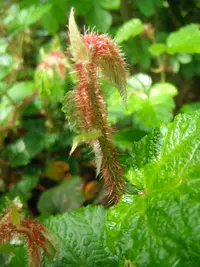
This species has unusually dense, reddish bristles on its leaf stalks (petioles), which are thought to protect young tissues from herbivores and excess light in its native rainforest habitat.

Deeply Lobed Foliage

Mature leaves develop narrow, deeply cut lobes that give the plant a distinctive, almost oak-like silhouette, an adaptation that likely helps light penetrate to lower leaves in crowded forest understories.

Climbing Hemiepiphyte Habit

In nature it often starts life on the forest floor and then climbs tree trunks as a hemiepiphyte, using aerial roots to anchor itself and access brighter canopy light.

FAQs about Philodendron squamiferum

This species is a climbing aroid. It produces long vining stems that naturally attach to tree trunks or moss poles. In containers, it grows upward rather than sideways, so vertical support helps manage size and leaf shape.

Grow Healthy Plants with Botan Care

Keep your plants happy and healthy with plant identification, disease detection, and easy care guidance.

Botan plant care app — identify plants on mobile

Explore More Plants