


Regular vine training
Guide young shoots along a trellis, hoop, or hanging basket rim using soft ties, which encourages dense, even coverage and prevents tangled, bare, or leggy sections.


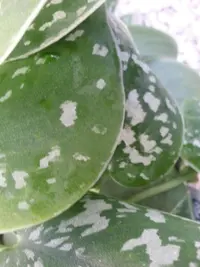
Variegated wax ivy (Senecio macroglossus) is a fast-growing evergreen climber, often grown as a trailing or climbing houseplant. It is not a true ivy but mimics ivy-shaped leaves with a glossy, waxy surface and creamy variegation along the edges.
In its natural range in South Africa, it scrambles through shrubs and along rocky slopes, using slender stems to climb and spread. Indoors, it stays more compact but can form long vines that suit hanging baskets or trellises.
This species is generally easy to grow if given bright light, moderate watering, and a well-drained potting mix. Understanding how to care for Variegated Wax Ivy mainly involves balancing light and moisture so the foliage stays dense and well-colored.

Care Difficulty
Easy Care

Light Preference
Partial Sun

Water Requirements
Low Water

Temperature Preference
Warm Climate

Hardiness Zone
9–11

Soil Texture
Sandy, Loamy, Organic-rich

Soil pH
Acidic (5.5–6.5), Slightly acidic (6.5–7.0)

Soil Drainage
Well-drained

Fertilization
Light (every 4–6 weeks)
Scan your plant to receive care tips personalized for your specific plant
Available on iOS and Android
This scrambling succulent vine prefers bright, indirect light with some gentle direct sun.
This species prefers a thorough soak followed by a clear drying phase in the upper soil layer.
This plant thrives in mild, frost-free conditions with stable temperatures.
This species handles typical indoor humidity well and rarely needs special adjustments.
This plant prefers a fast-draining, airy mix that dries quickly between waterings.
This species is well suited to container growing, including hanging baskets and tall pots.
This succulent vine benefits from light, consistent feeding during active growth, but excess fertilizer can cause weak, leggy growth.
Pruning helps keep Senecio macroglossus compact, encourages branching, and removes weak growth.
Container-grown plants benefit from occasional repotting to refresh soil and manage vigorous roots.
This species is commonly propagated from stem cuttings, which root quickly under suitable conditions.
Winter care focuses on avoiding prolonged freezing, especially for container-grown plants in colder regions.

Plant Health Check
Not sure what's wrong with your plant? Check your plant's health inside the app.
This species closely mimics English ivy in leaf shape, but it is a member of the Asteraceae (daisy family), not the Araliaceae (ivy family), making it an example of convergent leaf morphology in unrelated plant groups.
It is native to coastal regions of South Africa and Mozambique, where it grows as an evergreen scrambling vine in rocky scrub and thicket habitats with mild, frost-free winters.
Despite its ivy-like foliage, the plant produces small, yellow, daisy-like flower heads typical of the aster family, revealing its true taxonomic relationships when it blooms.

In its native range, this species often uses other shrubs as a living trellis, climbing over them rather than developing strong self-supporting stems, which helps it reach better light without investing heavily in woody tissue.
Brown, crispy edges usually indicate underwatering, low humidity, or fertilizer burn. Check soil moisture, flush excess salts if heavily fertilized, and avoid hot, dry drafts. Damaged leaves will not recover but new growth should improve.
Keep your plants happy and healthy with plant identification, disease detection, and easy care guidance.


Parsley Storksbill
Pelargonium caucalifolium
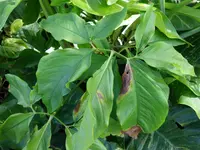
arrowhead vine
Syngonium auritum
 POPULAR
False Shamrock
Oxalis triangularis
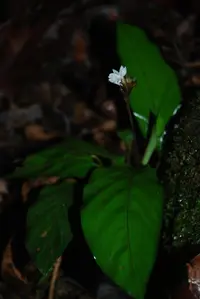
Goeppertia micans
Goeppertia micans
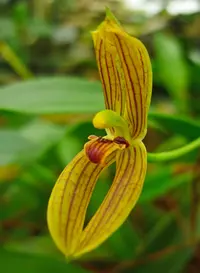
Maxillaria lineolata
Maxillaria lineolata

Silver Philodendron
Scindapsus pictus 'Exotica'
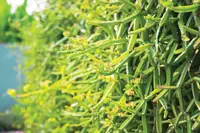
Veld Grape
Cissus quadrangularis
Satin Pothos
Scindapsus pictus 'Argyraeus'