Madagascar jasmine Care (Stephanotis floribunda)

About Madagascar jasmine

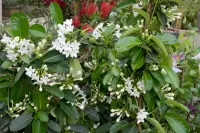
Madagascar jasmine, Stephanotis floribunda, is a woody, evergreen climber valued for its glossy leaves and clusters of waxy, white, tubular flowers. The blooms are fragrant and often used in wedding bouquets and indoor displays.

In nature it occurs in Madagascar’s warm, humid forests, where it twines through supporting vegetation. Indoors or in conservatories, it is usually grown on a trellis or hoop to control its vigorous vines.

This species can be moderately challenging, because it dislikes sudden changes in temperature, drafts, and inconsistent watering. It prefers bright, indirect light, evenly moist but well-drained soil, and stable conditions, so it suits growers who want to learn how to care for Madagascar jasmine with some attention to detail.

Main Plant Requirements

Care Difficulty

Moderate Care

Light Preference

Bright Indirect Light

Water Requirements

Moderate Water

Temperature Preference

Tropical / Frost Sensitive

Hardiness Zone

10–11

Soil Texture

Loamy, Sandy, Organic-rich

Soil pH

Acidic (5.5–6.5), Slightly acidic (6.5–7.0)

Soil Drainage

Moist but well-drained

Fertilization

Light (every 4–6 weeks)

Get Personalized Care Plan

Scan your plant to receive care tips personalized for your specific plant

Personalized Care in the App

Available on iOS and Android

How to Care for the Madagascar jasmine

This tropical climber needs bright light to flower well without scorching its leaves.

  • Provide 4–6 hours of bright, indirect light daily; gentle morning sun with afternoon shade suits Madagascar jasmine best.
  • Outdoors, place where it receives filtered light through a canopy or light dappled shade, especially in hot summer climates.
  • Too little light causes weak, stretched growth and few blooms, while harsh midday or afternoon sun can bleach or burn leaves, especially behind glass.

Stephanotis floribunda prefers evenly moist but never soggy soil, with slight drying between waterings.

  • Water when the top 2–4 cm of soil feel dry, using enough water to moisten the full root zone, then let excess drain away fully.
  • In warm, active growth, expect more frequent watering; in cooler seasons or reduced light, extend intervals as drying slows.
  • Watch for yellowing, soft leaves or a sour soil smell as signs of overwatering, and for dull, limp, or curling leaves as signs of underwatering.

This species thrives in warm, stable temperatures with protection from cold drafts and frost.

  • Aim for 65–80°F (18–27°C) during active growth; short peaks to 85°F (29°C) are tolerated if humidity and watering are adequate.
  • Growth slows below about 60°F (16°C); protect the plant if temperatures approach 50°F (10°C), where cold stress becomes likely.
  • Stephanotis floribunda is not frost hardy; even light frost can damage foliage, while prolonged heat above 90°F (32°C) may cause bud drop and leaf scorch.

This vine benefits from moderately high humidity to keep foliage and buds healthy.

  • Aim for 50–70% humidity, as very dry central-heated rooms often cause bud drop and leaf edge browning in Madagascar jasmine.
  • If air falls below ~40%, monitor for curled leaves, crisp tips, and flowers that fail to open or fall prematurely.
  • Increase humidity with a nearby humidifier, grouping plants, or a pebble tray under the pot, but avoid misting heavy buds to limit fungal spotting.

Stephanotis floribunda grows best in a loose, airy, sharply draining mix that still holds steady moisture.

  • Use a peat- or coco-based potting mix amended with 20–30% perlite and 10–20% fine bark to keep structure open and well aerated.
  • Aim for slightly acidic to neutral pH around 6.0–7.0, which supports nutrient uptake and reduces the risk of micronutrient lockout.
  • Ensure water drains freely in under 30 seconds; if it pools on the surface or the pot feels heavy for days, lighten the mix with more perlite or bark.
  • Avoid heavy garden soil, pure compost, or mixes dominated by clay, which compact easily, suffocate roots, and promote root rot when kept damp.

This species is well suited to container growing when the pot supports its vining, top-heavy habit.

  • Choose a broad, weighty container or place the pot in a heavy cachepot to counterbalance the climbing vine and prevent tipping when trellised.
  • Select a pot deep enough for a firm support stake or trellis so root disturbance is minimal when securing vertical growth.
  • Use slightly porous materials like unglazed clay only if you can water more often, as they dry the mix faster than plastic or glazed containers.

This tropical vine benefits from moderate, targeted feeding to support foliage and flower production.

  • Use a balanced liquid fertilizer (around 10-10-10 or 20-20-20) diluted to 1/2 strength for Madagascar jasmine in active growth.
  • Apply every 2–4 weeks during spring and summer, always on moist soil to prevent root burn.
  • Switch to a balanced slow-release or organic compost-based feed if you prefer fewer applications.
  • Reduce feeding to once every 6–8 weeks, or stop entirely, during fall and winter dormancy.

Thoughtful pruning helps keep Stephanotis floribunda compact, tidy, and flowering well on its support.

  • Carry out main pruning in late winter or very early spring before active growth resumes.
  • Remove dead, damaged, or tangling stems first, then thin crowded shoots to improve light and airflow.
  • Shorten overly long vines to maintain the desired shape and encourage side shoots with more flowering points.
  • Use clean, sharp pruning shears and make cuts just above a leaf node to reduce dieback.

Container-grown plants appreciate careful, infrequent repotting to avoid disturbing their sensitive roots.

  • Repot every 2–3 years in spring when roots circle the pot, emerge from drainage holes, or growth slows noticeably.
  • Choose a container only 2–5 cm wider than the old one and use a free-draining, rich potting mix.
  • Water the plant well the day before, then gently loosen and lift the root ball to limit tearing.
  • After repotting, water thoroughly, keep in bright indirect light, and avoid heavy feeding for 2–3 weeks to reduce stress.

New plants are most reliably produced from semi-ripe stem cuttings rather than seed.

  • Take 8–10 cm semi-ripe cuttings in late spring or early summer from healthy, non-flowering shoots.
  • Remove lower leaves, dip the cut end in rooting hormone, and insert into a sterile, free-draining mix.
  • Maintain high humidity, bright indirect light, and a stable temperature around 70–75°F for rooting.
  • Keep the medium slightly moist, then pot on gently once strong new roots and growth appear.

This vine is frost-sensitive and needs sheltered winter conditions in most temperate climates.

  • Keep outdoor containers in a frost-free spot or move indoors before temperatures drop below 50°F.
  • Grow indoors in bright, cool conditions around 60–68°F, away from cold drafts and heating vents.
  • Water less in winter, allowing the top layer of soil to dry slightly while preventing full dryness.

Care Tips

Train On Support

Install a sturdy trellis, hoop, or wires early and gently spiral new vines around the structure while they are still soft, as older stems become woody and are difficult to redirect without snapping.

Bud Drop Prevention

When flower buds are forming, avoid moving the plant, rotating the pot, or changing room conditions suddenly, since stable light direction and temperature greatly reduce bud drop.

Cool Rest Period

Provide a mild winter rest by keeping the plant slightly cooler and a bit drier from late fall to late winter, which helps synchronize its growth cycle and encourages heavier blooming the following season.

Repotting Discipline

Do not rush to repot; allow roots to become moderately pot-bound and only move to a pot 2–5 cm wider, as slight root restriction supports better flowering when caring for Madagascar jasmine.

Routine Pest Checks

Inspect leaf undersides, stem joints, and flower stalks every 1–2 weeks for mealybugs, scale, and spider mites, and isolate and treat early infestations promptly to protect the plant’s tender new growth.

Common Pests and Diseases

Mealybugs

This pest often hides in leaf axils, along stems, and near flower clusters, feeding on sap and excreting sticky honeydew that leads to sooty mold. Symptoms include white cottony masses, distorted new growth, and reduced flowering.

Solution

Remove visible colonies with cotton swabs dipped in 70% isopropyl alcohol, then rinse the plant thoroughly with lukewarm water. For heavier infestations, use repeated applications of an insecticidal soap or a light horticultural oil, ensuring good coverage of leaf undersides and all stem joints, and isolate the plant from others while treating.

Scale insects

These insects attach firmly to stems and leaf veins, appearing as small brown or tan bumps that do not move. Symptoms include yellowing leaves, weakened growth, honeydew deposits, and sometimes black sooty mold on foliage.

Solution

Gently scrape or wipe off individual scales with a soft cloth or fingernail, then wash the plant with soapy water or insecticidal soap. For persistent problems, apply a horticultural oil spray to smother remaining juveniles, repeating every 7–14 days while monitoring new growth closely as part of ongoing Stephanotis floribunda care instructions.

Spider mites

These pests thrive in warm, dry indoor air and are most common on plants wintered indoors. Symptoms include fine webbing, tiny pale speckles on leaves, and gradual leaf yellowing or drop.

Solution

Shower the plant thoroughly, focusing on the undersides of leaves, to dislodge mites, then increase humidity around the plant and improve air movement. In more severe cases, use insecticidal soap or a miticide labeled for spider mites, repeating at least twice at 5–7 day intervals to break their life cycle.

Sooty mold

This disease is a secondary fungal growth that develops on the honeydew left by mealybugs, scale, or aphids. Symptoms include a black, soot-like coating on leaves and stems that blocks light and reduces photosynthesis.

Solution

First control the honeydew-producing insects, then gently wipe affected leaves with a damp cloth or rinse under lukewarm water to remove the mold layer. Improve air circulation and light levels so foliage dries more quickly after watering, which helps prevent the mold from returning.

Botrytis blight

This disease affects flowers and tender shoots, especially in cool, humid, poorly ventilated conditions. Symptoms include brown water-soaked spots on petals and buds, gray fuzzy mold, and premature bud drop.

Solution

Remove and discard all affected flowers, buds, and soft tissue promptly, avoiding contact with healthy parts. Improve air circulation, reduce overhead watering, keep foliage dry, and if needed apply a fungicide labeled for ornamental botrytis, especially during extended cool, damp periods.

Interesting Facts

Specialized pollination strategy

In its native Madagascar, this vine is pollinated mainly by long-tongued sphinx moths that can reach nectar hidden at the base of its narrow, tubular flowers, while the flower’s structure guides the moth to contact the pollen-bearing parts.

Strong floral scent chemistry

The intense, sweet fragrance of the waxy white flowers comes from a complex mix of volatile organic compounds, which peak in the evening to coincide with the activity of its nocturnal moth pollinators.

Twining woody liana

In nature it grows as a climbing liana that can reach several meters, using twining stems and opposite, leathery leaves to anchor itself among shrubs and small trees in warm, coastal forests of Madagascar.

Botan icon

Did you know?

The plant was historically prized in Victorian-era Europe for wedding bouquets and orange-blossom-style arrangements, leading to its common name Madagascar jasmine and a long-standing association with marriage and ceremonial decorations.

FAQs about Madagascar jasmine

Lack of flowers often comes from insufficient light, too much nitrogen fertilizer, or no cool, slightly drier rest in winter. Root disturbance, recent repotting, or very young plants can also delay bud formation.

Grow Healthy Plants with Botan Care

Keep your plants happy and healthy with plant identification, disease detection, and easy care guidance.

Botan plant care app — identify plants on mobile

Explore More Plants