


Gentle Support Training
Install a small trellis or hoop and loosely tie stems with soft plant ties to keep the foliage upright, improve air flow, and reduce breakage of the fine cladodes (leaf-like structures).

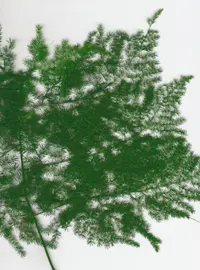
Asparagus fern, Asparagus setaceus, is a soft, feathery foliage plant often grown as a houseplant or in shaded outdoor containers. It is not a true fern but a member of the Asparagaceae family.
The plant forms fine, airy stems with needle-like cladodes that give it a light, cloudlike look, and it can trail or climb with support. It is native to southern Africa, where it grows in woodland and scrub habitats.
Its tolerance of average indoor conditions and ability to recover from light stress make it moderately easy to grow, as long as soil does not stay dry for long periods. Understanding how to care for Asparagus fern starts with providing bright, indirect light and evenly moist, well-drained soil.

Care Difficulty
Moderate Care

Light Preference
Bright Indirect Light

Water Requirements
Keep Soil Moist

Temperature Preference
Tropical / Frost Sensitive

Hardiness Zone
9–11

Soil Texture
Loamy, Sandy, Organic-rich

Soil pH
Acidic (5.5–6.5), Slightly acidic (6.5–7.0)

Soil Drainage
Moist but well-drained

Fertilization
Light (every 4–6 weeks)
Scan your plant to receive care tips personalized for your specific plant
Available on iOS and Android
This species prefers bright, gentle light that mimics a lightly shaded forest edge.
Watering should keep the root zone evenly moist but never saturated.
Stable, mild temperatures support dense, healthy foliage formation.
This species prefers moderate humidity and reacts quickly to very dry air.
Asparagus setaceus grows best in a loose, well-aerated, slightly acidic to neutral mix.
This fine-textured fern is well suited to container growing.
Asparagus setaceus benefits from modest, consistent feeding during the active growing season for dense, healthy foliage.
Pruning supports a tidy shape and long-term vigor in Asparagus setaceus grown indoors or in containers.
Asparagus fern prefers slightly snug pots but benefits from periodic repotting to refresh soil and manage root congestion.
Division is the most reliable method for multiplying Asparagus setaceus for home use.
This species is frost-tender and needs protection in regions with freezing winters.

Plant Health Check
Not sure what's wrong with your plant? Check your plant's health inside the app.
Despite its common name, this species is a flowering plant in the Asparagaceae family, and its tiny leaves are actually modified stems called cladodes rather than true fern fronds.
The real leaves of this plant are very small scales at the nodes, often overlooked without magnification, while the fine, feathery texture comes from needle-like cladodes arranged in clusters.
After inconspicuous white flowers, it develops small spherical berries that turn glossy black when ripe and each usually contains a single seed, aiding its spread where it grows outdoors.

This species was widely used in Victorian-era Europe and early 20th-century floristry as a delicate greenery filler, which led to its global distribution via the cut-flower trade long before it became a common houseplant.
Yellowing fronds usually signal stress from overwatering, poor drainage, or low light, sometimes combined with nutrient depletion. Check the root zone for sogginess, improve drainage, remove affected fronds, and apply a balanced fertilizer at low strength during active growth.
Keep your plants happy and healthy with plant identification, disease detection, and easy care guidance.

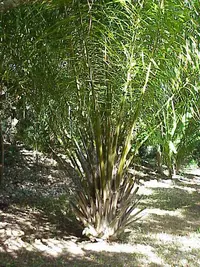
African oil palm
Elaeis guineensis
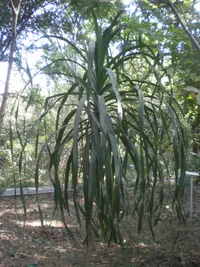
Beaucarnea goldmanii
Beaucarnea goldmanii
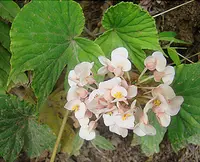
Begonia involucrata
Begonia involucrata

Rubus wallichianus
Rubus wallichianus
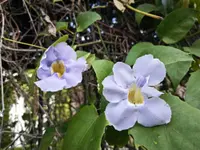
Blue sky vine
Thunbergia grandiflora
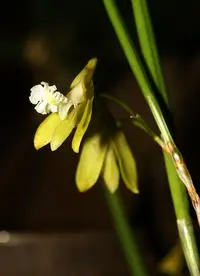
Straggly pencil orchid
Dendrobium bowmanii
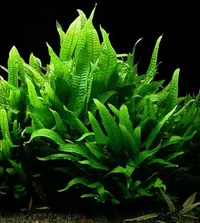
Java fern
Leptochilus pteropus
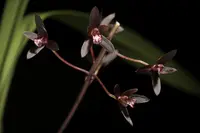
Channelled boat-lip orchid
Cymbidium canaliculatum