


Use shallow pots
Choose a wide, shallow pot with good drainage to keep the dense root system slightly tight, which encourages flowering and helps prevent waterlogging at the crown.

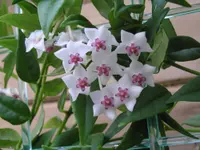
The miniature wax plant, Hoya bella, is a compact, vining epiphyte often grown in hanging baskets or small pots. It belongs to the dogbane family, Apocynaceae. Its slender trailing stems carry small, thick, glossy leaves and clusters of star-shaped white flowers with pink centers that produce a light, sweet scent. The foliage and flowers together give a refined, detailed look. Hoya bella comes from tropical and subtropical forests of India and Southeast Asia, where it grows on trees in warm, humid shade. It is considered moderately easy indoors if its needs are understood. Stable warmth, bright indirect light, and a free-draining mix are the main keys to how to care for Miniature wax plant.

Care Difficulty
Moderate Care

Light Preference
Bright Indirect Light

Water Requirements
Moderate Water

Temperature Preference
Tropical / Frost Sensitive

Hardiness Zone
11–12

Soil Texture
Loamy, Sandy, Organic-rich

Soil pH
Acidic (5.5–6.5), Slightly acidic (6.5–7.0)

Soil Drainage
Well-drained

Fertilization
Light (every 4–6 weeks)
Scan your plant to receive care tips personalized for your specific plant
Available on iOS and Android
Hoya bella prefers bright, indirect light that mimics dappled sun in its natural habitat.
Hoya bella prefers slightly moist but never waterlogged soil, with short dry periods between waterings.
This species grows best in stable, warm conditions without sudden temperature swings.
Hoya bella prefers moderately high humidity but adapts to typical home conditions if watering is well managed.
Hoya bella performs best in a light, airy mix that drains quickly yet holds some moisture around the roots.
This species is very suitable for container growing due to its compact, cascading growth habit.
Hoya bella benefits from light, consistent feeding during active growth for compact, healthy foliage and flowering.
Pruning Hoya bella helps maintain a tidy, trailing shape and supports flowering performance.
Hoya bella prefers slightly snug pots and only occasional repotting to stay healthy and flower well.
Hoya bella is commonly propagated from stem cuttings taken during the active growing season.
Hoya bella is frost sensitive and needs protection from low temperatures in winter, especially in containers.

Plant Health Check
Not sure what's wrong with your plant? Check your plant's health inside the app.
This species is naturally compact, forming small arching stems with closely spaced leaves, which is why it is often called the miniature wax plant and differs visually from larger, thicker-leaved Hoya relatives.
Its umbels produce white, reflexed star-shaped corollas with a raised inner star-shaped corona that is often pink to purplish, creating a two-layered star effect that is characteristic and helps distinguish it from similar species.
Compared with many tropical Hoyas, this species tolerates slightly cooler conditions and comes from higher-elevation habitats in parts of India and surrounding regions, where nights can be cooler and humidity relatively high.

In cultivation, this species is one of the few Hoyas that reliably flowers on relatively young, small plants when given adequate light, so growers often see its fragrant blooms far earlier than with many other Hoya species, which can take several years to flower.
Lack of flowering usually comes from insufficient light, heavy pruning of old flower spurs, or excess nitrogen fertilizer. Keep the plant slightly root-bound, avoid cutting old flower stalks, and maintain stable conditions to encourage buds.
Keep your plants happy and healthy with plant identification, disease detection, and easy care guidance.

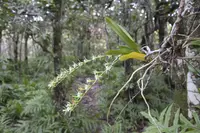
Oeoniella polystachys
Oeoniella polystachys

Peperomia
Peperomia polybotrya 'Raindrop'
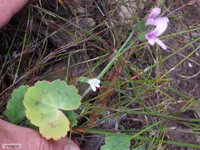
lady’s mantle-leaved pelargonium
Pelargonium alchemilloides
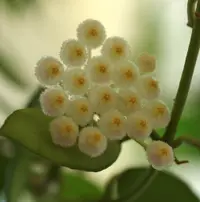
Hoya lacunosa
Hoya lacunosa
Philodendron 'Cobra'
Philodendron 'Cobra'
 POPULAR
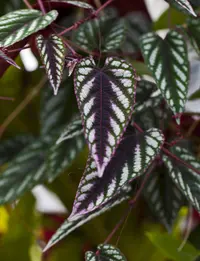
Begonia Vine
Cissus discolor
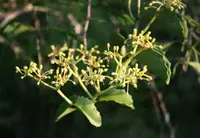
Venezuelan treebine
Cissus rotundifolia
 POPULAR
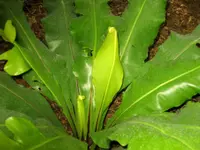
Bird's nest ferns
Asplenium nidus