Kandyan Dancer Orchid Care (Oncidium sphacelatum)

About Kandyan Dancer Orchid

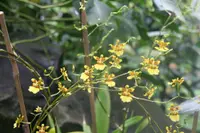
The Kandyan dancer orchid, Oncidium sphacelatum, is an epiphytic orchid that naturally grows on trees in warm forests of Central America and parts of Mexico. It forms tall, branching flower spikes covered with many small yellow and brown blooms that resemble tiny dancing figures.

Plants grow from clustered pseudobulbs, each producing narrow leaves and flowering stems, giving the plant a fountain-like, airy look. It is considered moderately easy for hobby growers who can provide stable warmth, bright but filtered light, and regular moisture with good air movement.

Understanding how to care for Kandyan Dancer Orchid starts with mimicking its airy, tree-dwelling lifestyle rather than treating it like a typical potted houseplant in regular soil.

Main Plant Requirements

Care Difficulty

Moderate Care

Light Preference

Bright Indirect Light

Water Requirements

Moderate Water

Temperature Preference

Tropical / Frost Sensitive

Hardiness Zone

11–12

Soil Texture

Organic-rich, Peaty, Loamy

Soil pH

Acidic (5.5–6.5), Slightly acidic (6.5–7.0)

Soil Drainage

Well-drained

Fertilization

Moderate (every 2–4 weeks)

Get Personalized Care Plan

Scan your plant to receive care tips personalized for your specific plant

Personalized Care in the App

Available on iOS and Android

How to Care for the Kandyan Dancer Orchid

This orchid prefers bright, filtered light with protection from harsh midday sun.

  • Provide 4–6 hours of bright, indirect light daily, such as dappled shade under a tree or under 30–50% shade cloth.
  • Allow gentle morning sun and late-afternoon sun, but avoid strong midday rays that cause leaf yellowing, scorching, or burned leaf tips on Kandyan Dancer Orchid.
  • If new growth is weak, leaves dark green, or flowering is poor, increase light slightly; in summer, move to lighter shade, in winter give more exposure.

Watering should balance consistent moisture with very sharp drainage to protect the roots.

  • Water when the potting mix or bark feels dry in the top 2–3 cm; roots should never sit in waterlogged media.
  • In spring and summer, expect more frequent watering as the mix dries faster; in cooler months, let the top layer stay dry a bit longer before watering again.
  • Soft, wrinkling pseudobulbs signal underwatering, while blackened roots, sour smell, or limp, yellowing leaves suggest overwatering in Oncidium sphacelatum.

This species grows best with warm days and a noticeable but gentle drop at night.

  • Aim for 70–80°F (21–27°C) by day and 60–65°F (16–18°C) at night for steady growth and flowering.
  • Protect from temperatures below 50°F (10°C); brief dips to 45°F (7°C) may be tolerated but repeated chills slow growth and invite rot.
  • In hot weather above 90°F (32°C), increase shade, air movement, and humidity to prevent leaf stress, and avoid any exposure to frost.

This orchid prefers moderately humid air and reacts quickly when conditions are too dry.

  • Aim for 50–70% humidity; it tolerates short dips to 40% if watering is consistent.
  • Crisping leaf tips, accordion-pleated new growth, and stalled buds indicate humidity stress in Kandyan Dancer Orchid.
  • Increase humidity with a pebble tray, grouped plants, or a small fan-assisted humidifier rather than frequent misting.

This epiphytic orchid needs a coarse, airy medium rather than standard potting soil.

  • Use a mix of medium bark, fine bark, and a small portion of sphagnum moss to hold light, even moisture.
  • Add perlite or pumice to increase air spaces and prevent the mix from compacting around the roots.
  • Ensure the mix drains completely within seconds after watering; the roots should never sit in a soggy pot.
  • Slightly acidic to neutral conditions (pH 5.5–7) suit Oncidium sphacelatum, so avoid heavy, lime-rich or clay-based media.

This species grows very well in containers when the pot and medium suit its airy root system.

  • Choose a pot just 2–3 cm wider than the root mass to avoid excess unused medium that stays wet too long.
  • Select a stable, heavier pot if the tall pseudobulbs make the plant prone to tipping in light containers.
  • Use a pot with side slits or ventilation holes to keep the bark medium drier and more oxygenated between waterings.

This orchid responds well to light, consistent feeding during active growth.

  • Use a balanced water-soluble fertilizer (such as 20-20-20) at 1/4–1/2 strength for Kandyan Dancer Orchid.
  • Feed every 1–2 weeks in spring and summer when new roots and leaves are forming.
  • Reduce feeding to once a month or stop entirely in fall and winter rest periods.
  • Flush the pot with plain water monthly to prevent salt buildup around the roots.

Pruning focuses on hygiene and spent flower removal for Oncidium sphacelatum rather than reshaping the plant.

  • Best time is after a flowering cycle finishes and the spike turns brown and dry.
  • Cut dead flower spikes at the base with clean, sharp scissors or pruning snips.
  • Remove only dead, diseased, or shriveled pseudobulbs and leaves; keep firm green tissue.
  • Good pruning hygiene improves air flow, reduces fungal problems, and directs energy to new growth.

Repotting keeps roots healthy and prevents overcrowding in this epiphytic orchid.

  • Plan to repot every 2–3 years, or when roots circle the pot or medium breaks down and growth slows.
  • Choose late winter to early spring, just as new roots start, to minimize stress and support recovery.
  • Use a free-draining orchid mix based on medium bark, and move only to a slightly larger pot.
  • Gently tease old medium from roots, trim dead roots, then keep the plant shaded and slightly drier for 7–10 days.

Division is the standard method for increasing plants of this species.

  • Divide mature clumps in late winter or early spring as new growth begins for best establishment.
  • Unpot the plant, remove old mix, and split the rhizome into sections with at least 3–4 healthy pseudobulbs each.
  • Plant divisions in fresh orchid bark mix, keeping pseudobulbs just above the surface.
  • Maintain bright, indirect light, high humidity (60–70%), and gentle air movement to support rooting.

Oncidium sphacelatum is frost-sensitive and needs protection in regions with cold winters.

  • Keep temperatures above 50°F; prolonged exposure below this can damage leaves and roots.
  • Move container plants indoors or into a heated greenhouse before the first frost is forecast.
  • Provide bright, indirect light and lower watering, allowing the medium to dry slightly more between waterings.
  • Avoid cold drafts and keep foliage away from single-pane windows that can radiate freezing air.

Care Tips

Use Open Baskets

Mount plants in slatted baskets or net pots with coarse media so roots dry quickly and have high air flow, which reduces root rot and supports strong pseudobulb development.

Stabilize Pseudobulbs

Secure loose pseudobulbs to the basket rim or a stake with soft ties so new growths stay upright, preventing wobbling that can damage young roots and flower spikes.

Timed Air Movement

Run a small fan on a timer during the warmest hours of the day to keep foliage dry, which helps prevent fungal spotting and improves gas exchange around the leaves.

Post‑Bloom Cleanup

After flowering, remove only the completely dry spike and any papery bracts, leaving healthy pseudobulbs intact to continue feeding new growths and future flower spikes.

Gradual Light Shifts

When moving plants between indoor and outdoor positions, increase light levels over 7–10 days to avoid leaf burn and stress, especially during seasonal changes in caring for Kandyan Dancer Orchid.

Common Pests and Diseases

Scale insects

This pest feeds on sap along the pseudobulbs and leaf bases, often appearing where bracts and sheaths create sheltered spots on the arching canes. Symptoms include sticky honeydew, yellowing patches, and rough brown or tan bumps that do not wipe off easily.

Solution

Isolate the plant, then wipe affected areas with cotton pads dipped in 70% isopropyl alcohol, paying special attention to the bases of pseudobulbs and under leaf sheaths. Repeat weekly until no new scale appears, remove badly infested sheaths, and improve air movement and light to keep the plant drier around crowded growths.

Spider mites

These insects thrive on Oncidium leaves grown in warm, dry indoor air, causing fine stippling, dull leaf color, and sometimes fine webbing on the undersides of the narrow leaves. This pest is especially problematic when plants hang high in bright, dry positions.

Solution

Rinse foliage thoroughly under a gentle shower or hose, washing the undersides of leaves, then follow with repeated applications of a miticide labeled for orchids or a strong insecticidal soap spray. Increase humidity, avoid hot dry spots near vents, and maintain regular foliar rinsing to prevent reinfestation, a key part of Kandyan Dancer Orchid indoor care.

Orchid mealybugs

These insects hide in leaf axils, flower spikes, and between tightly packed pseudobulbs, where they appear as white cottony masses that excrete sticky honeydew. Symptoms include distorted new growth and sooty mold growing on the honeydew deposits.

Solution

Inspect all crevices and remove mealybugs manually with cotton swabs dipped in 70% isopropyl alcohol, then wash the plant thoroughly. Treat remaining insects with repeated applications of insecticidal soap or a systemic insecticide suitable for orchids, and reduce crowding around the plant to make regular inspection of tight growths easier.

Bacterial brown spot

This disease causes soft, water-soaked lesions on the relatively thin leaves, which quickly turn brown to black and can spread along the blade in humid, stagnant air. Symptoms include a foul odor and rapid tissue collapse if not addressed early.

Solution

Immediately cut out affected leaf sections with a sterile blade, cutting 1–2 cm into healthy tissue, and discard the waste away from other plants. Keep the foliage dry, increase air circulation, and avoid overhead watering; in serious cases, apply a bactericide labeled for orchids to the cut surfaces and nearby leaves.

Leaf spot fungi

This disease produces small, round to irregular dark spots on leaves, which can merge into larger blotches under cool, humid, low-airflow conditions often found in crowded collections. Symptoms include slow-spreading lesions with defined edges that rarely smell but can reduce photosynthesis and overall vigor.

Solution

Remove and discard heavily marked leaves and any fallen plant material around the pot, then space plants for better airflow and allow leaves to dry quickly after watering. If spots continue to appear, apply a preventive fungicide suitable for orchids according to label directions and adjust watering to mornings only so foliage does not stay wet overnight.

Interesting Facts

Dancing spray inflorescences

This species produces long, many-branched inflorescences that can reach over 1 m, carrying dozens to hundreds of small yellow flowers that move in air currents, which inspired the common name Kandyan dancer orchid in Sri Lanka and similar “dancing” names elsewhere.

Wide elevational range

It grows naturally from lowland tropical forests up to mid-elevation habitats around 1,500 m in Central America, showing considerable tolerance for temperature variation compared with many other ornamental orchids.

Epiphytic tree dweller

In the wild it usually lives as an epiphyte on tree trunks and branches rather than in soil, anchoring to bark with thick roots and using its pseudobulbs to store water for dry or bright, exposed conditions.

Botan icon

Did you know?

In some parts of Mexico and Central America, large, arching flower sprays of this species are traditionally collected and used in seasonal religious and civic festivities, making it one of the more culturally visible wild Oncidium species in its native range.

FAQs about Kandyan Dancer Orchid

Lack of blooms usually comes from insufficient light, no cool, slightly drier rest after growth, or low nutrients. Provide bright, filtered light, a modest temperature drop at night, and a balanced orchid fertilizer during active growth.

Grow Healthy Plants with Botan Care

Keep your plants happy and healthy with plant identification, disease detection, and easy care guidance.

Botan plant care app — identify plants on mobile

Explore More Plants