


Wind-resistant staking
Install a short, sturdy stake on the windward side and loosely tie main stems with soft ties to prevent breakage of the tall flowering spikes in exposed sites.

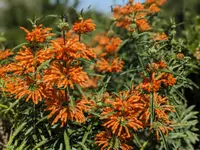
Lion's tail, Leonotis leonurus, is a fast-growing, shrubby perennial from South Africa, often grown as a warm-climate garden or large-container plant. It belongs to the mint family and forms upright, woody stems with narrow, textured leaves. Distinctive whorls of tubular, usually orange flowers ring the stems in tiers, giving strong vertical structure and attracting hummingbirds and pollinators.
This plant prefers full sun, well-drained soil, and relatively dry conditions once established, which makes it suitable for low-water gardens in mild climates. For those learning how to care for Lion's Tail, its main needs are bright light, room to grow, and protection from hard frost.

Care Difficulty
Easy Care

Light Preference
Full Sun

Water Requirements
Low Water

Temperature Preference
Tropical / Frost Sensitive

Hardiness Zone
9–11

Soil Texture
Sandy, Loamy, Organic-rich

Soil pH
Slightly acidic (6.5–7.0), Neutral (7.0)

Soil Drainage
Well-drained

Fertilization
Minimal (feed rarely)
Scan your plant to receive care tips personalized for your specific plant
Available on iOS and Android
This sun-loving shrub flowers best with strong, consistent light exposure.
This drought-tolerant shrub prefers deep, infrequent watering rather than constant moisture.
This warm-climate perennial grows best in mild to hot, frost-free conditions.
This species is comfortable in relatively dry household air and does not need extra humidity.
This plant prefers lean, well-drained, slightly sandy soil that does not stay wet.
This species adapts well to container growing outdoors when given enough root space and drainage.
This nutrient-efficient South African shrub benefits from modest feeding in containers or poor soils.
Thoughtful pruning keeps Leonotis leonurus compact, long-lived, and floriferous.
This shrub is more often grown in the ground, but container plants and young specimens may need occasional transplanting.
Leonotis leonurus is commonly propagated by seeds or softwood cuttings.
This warm-climate shrub is tender to frost and benefits from specific winter management in cooler regions.

Plant Health Check
Not sure what's wrong with your plant? Check your plant's health inside the app.
In its native South African range, the tubular orange flowers are an important nectar source for sunbirds, which have curved beaks well adapted to reach the nectar deep inside the corolla.
In fynbos and other fire-prone habitats, mature plants can be killed by intense burns, but the species persists through seeds that germinate in the open, nutrient-enriched soil after fire.
The plant produces its bright orange blooms in stacked whorls along upright stems, a characteristic verticillaster inflorescence pattern typical of the mint family Lamiaceae.

Leonotis leonurus was traditionally grown in South African homestead gardens not only as an ornamental but also as a culturally significant plant often associated with heritage gardening and local biodiversity, which later contributed to its spread into botanical gardens and collections worldwide.
Poor flowering often comes from too little light, excess nitrogen fertilizer, or heavy pruning at the wrong time. Focus on growing Lion's Tail in a bright, open spot and avoid cutting young stems before they set buds.
Keep your plants happy and healthy with plant identification, disease detection, and easy care guidance.

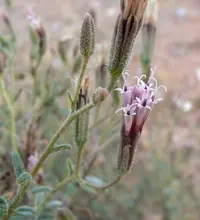
rosy palafox
Palafoxia rosea

poreleaf dogweed
Adenophyllum porophyllum

Burning bush
Euonymus alatus
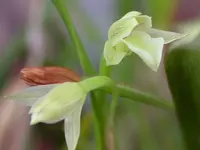
Scaphyglottis prolifera
Scaphyglottis prolifera

Rocky Mountain Juniper
Juniperus scopulorum
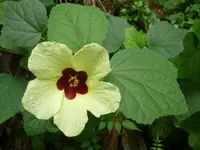
lemonyellow rosemallow
Hibiscus calyphyllus
slenderleaf monkshood
Aconitum barbatum
dwarf purple rhododendron
Rhododendron impeditum