Bower vine Care (Pandorea jasminoides)

Also known as: Bower vine

About Bower vine

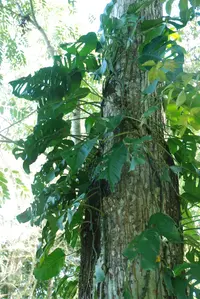
Bower vine, Pandorea jasminoides, is a twining evergreen climber grown for its showy, funnel-shaped flowers and glossy green foliage. It is often trained on trellises, fences, or pergolas, forming a dense, flowering screen in mild climates.

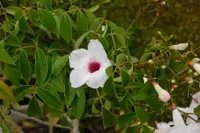
This species comes from eastern Australia, where it climbs through warm, sheltered forests. Flowers are usually white to pale pink with a deeper pink throat, produced in flushes during warmer months.

Pandorea jasminoides is moderately easy to grow when given bright light, support to climb, and well-drained soil with steady moisture. Beginners who learn how to care for Bower vine often find it a reliable, long-lived flowering vine in suitable climates.

Main Plant Requirements

Care Difficulty

Moderate Care

Light Preference

Partial Sun

Water Requirements

Moderate Water

Temperature Preference

Tropical / Frost Sensitive

Hardiness Zone

9–11

Soil Texture

Sandy, Loamy, Organic-rich

Soil pH

Acidic (5.5–6.5), Slightly acidic (6.5–7.0)

Soil Drainage

Moist but well-drained

Fertilization

Light (every 4–6 weeks)

Get Personalized Care Plan

Scan your plant to receive care tips personalized for your specific plant

Personalized Care in the App

Available on iOS and Android

How to Care for the Bower vine

This vine needs bright light to flower well without scorching the foliage.

  • Provide 4–6 hours of direct morning sun with afternoon shade, or bright filtered light all day, especially in hotter climates.
  • Allow light to reach all sides of Bower vine by training it on an open trellis or fence so lower leaves do not sit in deep shade.
  • Watch foliage color and flowering: sparse blooms, long weak shoots, or pale leaves indicate too little sun, while crisping or bronzing suggests excess midday sun.

This plant prefers evenly moist but never waterlogged soil, especially during active growth.

  • Water when the top 3–5 cm of soil feels dry, soaking the root zone deeply, then let excess drain away before the next watering.
  • In hot, dry weather increase checks for soil moisture, while in cool seasons or during slower growth, extend intervals as the soil dries more slowly.
  • For Pandorea jasminoides, watch leaves: yellowing, soft, or dropping leaves often signal overwatering, while wilting, dry, or crispy edges usually indicate underwatering.

Consistent mild warmth supports strong growth and flowering for this vine.

  • Aim for 65–80°F (18–27°C) during the main growing season for best shoot and flower development.
  • Protect the plant from cold; growth slows below 55°F (13°C) and stems can be damaged if exposed to frost or temperatures near 32°F (0°C).
  • In hot regions, it tolerates short spikes up to about 95°F (35°C) if roots stay mulched and moist, but flowering may decrease in prolonged extreme heat.

This species prefers moderate humidity but adapts to many home and garden conditions.

  • Aim for 40–60% humidity, as very dry heated rooms can slow growth and reduce flowering.
  • It tolerates brief dry air but prolonged levels below 30% may cause leaf edge browning and flower bud drop in Bower vine.
  • Increase humidity by grouping plants, placing a tray with water and pebbles nearby, or lightly misting foliage during hot, dry spells.

Pandorea jasminoides needs moisture-retentive but free-draining soil to support fast, climbing growth.

  • Use a loose loam-based mix with 40–50% organic matter such as compost plus 20–30% perlite or coarse sand for drainage.
  • Aim for slightly acidic to neutral pH, around 6.0–7.0, which supports nutrient uptake and reduces micronutrient lockout.
  • Improve aeration by avoiding heavy clay; if planting in ground, blend in coarse sand or fine bark to reduce compaction.
  • Avoid waterlogged, sticky, or very compacted soil, which promotes root rot and weak, yellowing foliage.

This vine grows well in containers when given adequate root space and firm support.

  • Choose a heavy or wide-based container to prevent tipping as the vine climbs or when a trellis is attached.
  • Select a pot at least 30–40 cm deep so vigorous roots can spread without circling tightly near the surface.
  • Line the pot bottom with a thin layer of coarse material above drainage holes to prevent mix loss without slowing water outflow.

Pandorea jasminoides responds well to modest, consistent feeding during its active growing season.

  • Apply a balanced liquid fertilizer (for example 10-10-10) at half strength every 4–6 weeks in spring and summer.
  • Use a slow-release granular product or a thin layer of compost at the start of spring for steady nutrients.
  • Skip or greatly reduce feeding in fall and winter when growth slows, especially for container plants.
  • Water before and after feeding to avoid root burn and help distribute nutrients evenly around the root zone.

Pandorea jasminoides benefits from periodic pruning to control size and encourage heavy flowering.

  • Schedule main pruning right after the main flowering flush, avoiding removal of developing buds.
  • Cut out dead, damaged, or crossing stems first, then thin congested growth to improve air flow and light penetration.
  • Shorten long or wayward shoots to maintain the vine within its support and to promote bushier side growth.
  • Use clean, sharp bypass pruners and make cuts just above a leaf node to encourage healthy new shoots.

Pandorea jasminoides grown in containers or moved in the landscape needs thoughtful handling to limit transplant shock.

  • Look for roots circling the pot, water running straight through, or noticeably slowed growth as signals to move up 1 pot size.
  • Plan repotting or transplanting for early spring, every 2–3 years in containers or when in-ground plants outgrow their space.
  • Loosen circling roots gently, set the plant at the same soil level in fresh, well-drained mix or soil, and water thoroughly.
  • Provide shade, steady moisture, and reduced wind for 1–2 weeks after moving to help roots re-establish and lower stress.

Pandorea jasminoides is commonly propagated from semi-ripe cuttings and seeds under warm, humid conditions.

  • Take 8–12 cm semi-ripe stem cuttings in late spring or summer, removing lower leaves and any flower buds.
  • Insert cuttings into a free-draining mix, optionally using rooting hormone, and keep at 70–75°F with high humidity and bright shade.
  • Sow fresh seeds in spring in a light seed mix, just covered, and maintain steady moisture and warmth for germination.
  • Ventilate propagating containers gradually as roots develop, then pot on rooted plants individually once new growth is evident.

This vine is frost-tender and needs protection in regions with cold winters, especially when grown in containers.

  • In climates colder than about 25–30°F, grow in pots so plants can be moved indoors or into a bright, frost-free space.
  • Mulch the root zone with 5–8 cm of organic material in late fall to buffer temperature swings and conserve moisture.
  • In marginal climates, wrap exposed stems with frost cloth during cold snaps and avoid pruning hard until spring growth resumes.

Care Tips

Train Young Vines

Install a sturdy trellis, wire, or mesh before planting and loosely tie new shoots with soft ties so the vine learns its support and develops an even, well-spaced framework for long-term flowering.

Encourage Flower Spurs

After the main flush of blooms, lightly tip-prune the ends of vigorous non-flowering shoots to stimulate short, lateral branches that carry more flower buds the following season.

Protect From Wind Rock

In windy sites, secure the base of the plant with a low stake or guy wires and keep soil firm around the root zone to prevent wind rock, which can damage new roots and slow establishment.

Mulch The Root Run

Apply a 5–8 cm layer of organic mulch over the root zone, keeping it a few cm away from the stems, to keep roots cool, reduce water stress, and maintain more consistent growth during hot spells.

Plan For Structural Load

Use supports fixed into masonry or heavy posts and space fixings 30–60 cm apart, since mature stems become woody and heavy and need secure anchoring when growing Bower vine over walls, pergolas, or fences.

Common Pests and Diseases

Aphids

This pest clusters on soft new growth and flower buds, sucking sap and causing curling leaves, distorted shoots, and sticky honeydew that can lead to sooty mold.

Solution

Prune heavily infested tips, then wash remaining shoots with a firm stream of water and insecticidal soap, repeating weekly until controlled; encourage natural predators outdoors and avoid high nitrogen fertilizer that pushes very soft, aphid-prone growth.

Spider mites

These insects thrive on Bower vine foliage in hot, dry conditions, causing fine webbing, stippled leaves, and a dull, dusty appearance that can lead to premature leaf drop.

Solution

Increase humidity around the plant, hose down both sides of the leaves regularly, and use insecticidal soap or a horticultural oil spray on all leaf surfaces, repeating every 7–10 days until no new damage appears.

Scale insects

This pest appears as small, waxy or shell-like bumps on stems and leaf midribs, weakening the vine over time and excreting honeydew that may support sooty mold growth.

Solution

Gently scrape or wipe off individual scales with a cotton swab dipped in alcohol, then treat the plant with horticultural oil to smother remaining juveniles, inspecting stems closely and repeating treatment after 2–3 weeks if needed.

Sooty mold

This disease is a black, powdery fungal coating that grows on the honeydew excreted by sap-sucking insects such as aphids, scale, or mealybugs, making leaves look dirty and reducing light for photosynthesis.

Solution

Control the underlying insect infestation first, then wipe or hose leaves to remove the black film, improving air circulation and light exposure to help new clean foliage develop; persistent cases may require a mild fungicidal soap wash.

Leaf spot

Symptoms include tan to dark brown spots on leaves, sometimes with yellow halos, which can coalesce and cause early leaf drop during warm, humid weather or in crowded, poorly ventilated plantings.

Solution

Remove and discard affected leaves, avoid overhead watering, and thin or prune the vine to improve airflow; in repeated or severe cases, apply a labeled copper- or chlorothalonil-based fungicide as part of broader Pandorea jasminoides plant care, following package directions carefully.

Interesting Facts

Australian rainforest climber

This species is native to the subtropical and warm-temperate rainforests of eastern Australia, where it naturally scrambles through trees along forest edges and riverbanks, using its twining stems to reach better light.

Trumpet flowers for moths

Its fragrant, tubular flowers are adapted for pollination by nocturnal moths, with pale corolla color and strong evening scent helping guide pollinators to nectar deep inside the tube.

Distinctive woody capsules

After flowering, it forms hard, oval woody capsules that split open along two seams to release flat, papery-winged seeds that are easily dispersed by wind from the parent vine.

Botan icon

Did you know?

The horticultural forms with pink or white, dark-throated blooms seen in gardens are selections from naturally occurring variation within wild populations, so many popular cultivars remain very close genetically to their original Australian rainforest ancestors.

FAQs about Bower vine

Lack of flowers usually comes from insufficient light, heavy nitrogen fertilization, or pruning at the wrong time that removes flower buds. Older, congested plants may also bloom less and benefit from occasional renewal pruning and balanced nutrition.

Grow Healthy Plants with Botan Care

Keep your plants happy and healthy with plant identification, disease detection, and easy care guidance.

Botan plant care app — identify plants on mobile

Explore More Plants