


Maximize Cool Rest
In late autumn and winter, place the plant in the coolest bright spot available, such as a protected porch or bright garage window, to provide the 45–55°F night chill that strongly promotes bud formation.

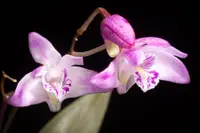
Pink rock orchid, Dendrobium kingianum, is a compact epiphytic or lithophytic orchid that often clings to rocks or tree trunks in its native habitat. It forms tight clumps of upright canes topped with narrow, leathery leaves. In late winter or spring it produces short arching stems with many small, fragrant flowers in shades of pink to white. This species is native to eastern Australia, especially rocky outcrops and exposed slopes, which explains its tolerance of bright light and cool conditions. It is considered one of the easier Dendrobium species, making it suitable for beginners who want to learn how to care for Pink Rock Orchid without demanding greenhouse conditions.

Care Difficulty
Moderate Care

Light Preference
Partial Sun

Water Requirements
Moderate Water

Temperature Preference
Warm Climate

Hardiness Zone
9–11

Soil Texture
Rocky, Sandy, Organic-rich

Soil pH
Acidic (5.5–6.5), Slightly acidic (6.5–7.0)

Soil Drainage
Well-drained

Fertilization
Light (every 4–6 weeks)
Scan your plant to receive care tips personalized for your specific plant
Available on iOS and Android
This orchid prefers bright, seasonally varying light to flower well without leaf scorch.
Watering should alternate between thorough soaking and partial drying to mimic this orchid’s natural cycle.
This species benefits from warm days with a marked drop in temperature at night, especially before blooming.
This orchid prefers moderate humidity but adapts to typical home conditions if extremes are avoided.
Use a very airy, fast-draining orchid medium rather than regular potting soil.
This species is well suited to container growing and often flowers better when slightly pot-bound.
This species benefits from light, consistent feeding rather than heavy fertilization, especially for Pink Rock Orchid indoor care.
Pruning for Dendrobium kingianum is minimal and mainly focused on hygiene and shaping the clump.
Repotting is infrequent, as this orchid prefers a tight pot and slightly crowded roots.
This orchid is commonly propagated by division and keikis, which are small plantlets forming on canes.
Winter care focuses on providing a cool, drier rest while avoiding hard freezes that can damage canes and roots.

Plant Health Check
Not sure what's wrong with your plant? Check your plant's health inside the app.
This orchid naturally grows on exposed rock outcrops and cliff faces in eastern Australia, anchoring its roots in crevices with minimal organic matter and coping with large day–night temperature swings.
Flowering is strongly promoted by a distinct cool period, with many plants needing several weeks of cooler nights at the end of winter to set their dense clusters of pink to white flowers.
The flowers often produce a sweet fragrance that helps attract native bees, which act as the main pollinators by transferring pollen masses between blooms.

In its native range this species can form large, long-lived clumps on the same rock ledge for many decades, slowly expanding into mats that can cover broad sections of a cliff face or boulder.
Lack of flowers usually comes from insufficient light, no cool, drier winter rest, or too much nitrogen fertilizer. This species needs a distinct cooler period to set buds, so avoid repotting or heavy feeding late in the season.
Keep your plants happy and healthy with plant identification, disease detection, and easy care guidance.

Pelargonium pseudoglutinosum
Pelargonium pseudoglutinosum
garden geranium
Pelargonium × hybridum
Natal orange
Strychnos spinosa
Fernleaf Lavender
Lavandula pinnata
Splendid Paphiopedilum
Paphiopedilum insigne
 POPULAR
Crinkle leaf
Adromischus cristatus
heartleaf rosemallow
Hibiscus martianus
Florida Keys Indian mallow
Abutilon hirtum