Mounting orientation
Position the shield fronds facing upward on a mount so they can form a bowl that traps leaf litter and moisture, which supports long-term nutrient storage and root stability.


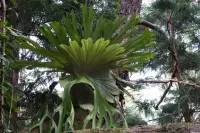
Staghorn fern (Platycerium superbum) is an epiphytic fern that usually grows attached to trees rather than in regular soil. It forms a rounded basal shield and large, antler-like fronds that give it a sculptural, dramatic look.
In nature, it occurs in warm, humid forests of eastern Australia, where it collects moisture and nutrients from rain, leaf litter, and the air. Its growth habit and need for mounting make it a bit different from common houseplants, but it is manageable once its basic needs are understood.
Bright, filtered light, steady moisture, and good air movement support healthy growth and make it easier to care for Staghorn Fern indoors or in protected outdoor spaces.

Care Difficulty
Moderate Care

Light Preference
Bright Indirect Light

Water Requirements
Moderate Water

Temperature Preference
Tropical / Frost Sensitive

Hardiness Zone
10–11

Soil Texture
Organic-rich, Peaty, Loamy

Soil pH
Acidic (5.5–6.5), Slightly acidic (6.5–7.0)

Soil Drainage
Moist but well-drained

Fertilization
Light (every 4–6 weeks)
Scan your plant to receive care tips personalized for your specific plant
Available on iOS and Android
Sometimes growers look for a more readily propagated species like the Elkhorn Fern. Platycerium superbum prefers bright, indirect light that mimics filtered forest canopy.
Like for the Elkhorn Fern, watering for Platycerium superbum should mimic periodic tropical rain rather than constant moisture.
This species grows best in consistently warm, frost-free conditions.
This epiphytic fern prefers consistently moist air and reacts quickly to very dry conditions.
Platycerium superbum grows best mounted or in a very loose, airy, organic-rich medium rather than dense potting soil.
This species can be grown in containers or mounted baskets if its epiphytic growth habit is respected. The similarly large Platycerium coronarium also needs a sturdy mount or open basket.
Platycerium superbum benefits from light, consistent feeding during the warm growing season.
Platycerium superbum needs minimal pruning, focused on cleanliness rather than reshaping the plant.
This fern is usually grown mounted, so care centers on remounting or adjusting its support rather than traditional repotting.
Platycerium superbum is slow and challenging to multiply, so propagation is not commonly done at home.
This species is frost sensitive and needs deliberate winter management in most temperate climates.

Plant Health Check
Not sure what's wrong with your plant? Check your plant's health inside the app.
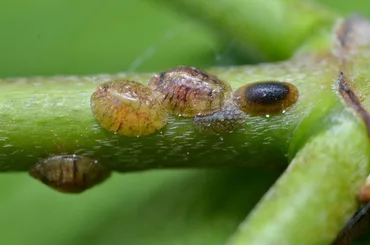
This pest feeds on the fronds and shield fronds, appearing as small brown or tan bumps that cause yellowing and a sticky residue.
Symptoms include slowed growth and weak, patchy fronds.
Solution
Physically remove scales with a cotton swab dipped in isopropyl alcohol, taking care not to scrape the fronds.
Rinse the plant thoroughly with lukewarm water, improve air movement, and apply a horticultural oil labeled safe for ferns, repeating at 7–10 day intervals.
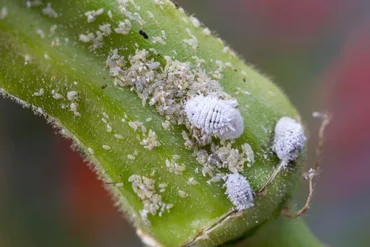
These insects hide in the layered shield fronds and among basal fibers, producing white, cottony clusters and honeydew that can encourage sooty mold.
Symptoms include distorted new fronds and general decline.
Solution
Isolate the plant, then spot-treat visible mealybugs with a cotton swab dipped in isopropyl alcohol, avoiding saturation of the growing eye.
Follow with a gentle shower to flush pests from crevices and use a low-strength insecticidal soap suitable for ferns, applied in cool conditions.
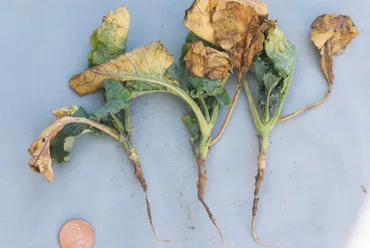
This disease causes brown, sunken lesions on fertile fronds and may lead to collapse of young growth in warm, humid, poorly ventilated conditions.
Symptoms include spreading patches of tan to dark brown dead tissue along frond segments.
Solution
Remove and discard all affected fronds and reduce overhead misting to keep frond surfaces drier.
Increase airflow around the plant, avoid crowding, and, if the spread continues, use a fungicide applied according to label directions.
This species builds extremely large, layered sterile fronds that form a basket-like shield, trapping leaf litter and rainwater to create its own nutrient-rich compost on tree trunks or rocks.
Unlike many other staghorn ferns, it normally produces only one large, dominant cluster of fertile fronds, focusing its reproductive effort into a single crown rather than several separate heads.
It is naturally restricted to warm, humid rainforests of northeastern Australia, especially coastal and upland areas of Queensland, where it often grows high in the canopy on large rainforest trees.

In ideal wild conditions, an old specimen can form a basal shield more than 1 m across, making it one of the largest epiphytic ferns in Australian rainforests and allowing it to host its own mini ecosystem of mosses, small ferns, and invertebrates.
Brown tips or edges usually come from low humidity, underwatering, or excess direct sun. Some browning on the shield fronds is natural aging. Check humidity, watering consistency, and light exposure before making any major changes.
Keep your plants happy and healthy with plant identification, disease detection, and easy care guidance.