


Basket-style mounting
Grow this orchid in a slatted basket or shallow net pot with coarse bark so roots can dry quickly and wander, which closely mimics its natural epiphytic habit and usually results in better flowering consistency.

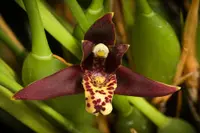
The coconut orchid, Maxillaria tenuifolia, is a compact epiphytic orchid known for its strong coconut-like fragrance. It typically forms clumps of slender, grassy leaves with small red-brown flowers. In nature, it grows on trees in warm, humid forests of Central America and Mexico, where air movement and rapid drainage prevent the roots from staying wet for long. This background makes it moderately easy to grow if its need for bright filtered light and airy, fast-drying media is respected. Beginners often find it more approachable once they understand how to care for Coconut orchid.

Care Difficulty
Moderate Care

Light Preference
Bright Indirect Light

Water Requirements
Keep Soil Moist

Temperature Preference
Tropical / Frost Sensitive

Hardiness Zone
11–12

Soil Texture
Organic-rich, Peaty, Loamy

Soil pH
Acidic (5.5–6.5), Slightly acidic (6.5–7.0)

Soil Drainage
Moist but well-drained

Fertilization
Light (every 4–6 weeks)
Scan your plant to receive care tips personalized for your specific plant
Available on iOS and Android
Maxillaria tenuifolia prefers bright, filtered light that mimics dappled forest conditions.
This species prefers evenly moist conditions during active growth but dislikes staying saturated.
This orchid thrives in intermediate temperatures with mild day–night variation.
This orchid prefers moderately high humidity to mimic its tropical habitat.
This epiphytic orchid needs a very airy, fast-draining medium rather than regular potting soil.
This species grows very well in containers when drainage and root environment are carefully managed.
This orchid benefits from light, consistent feeding during active growth for balanced Maxillaria tenuifolia plant care.
Maxillaria tenuifolia needs only light pruning to stay healthy and tidy.
This orchid prefers snug conditions but benefits from occasional repotting to refresh its mix and manage crowding.
Division is the standard method for increasing Maxillaria tenuifolia plants at home.
This tropical orchid is frost-sensitive and needs mild, protected winter conditions.

Plant Health Check
Not sure what's wrong with your plant? Check your plant's health inside the app.
The flowers emit a strong coconut-like scent created by a mix of volatile organic compounds, which helps attract specific pollinators in its native habitats in Central America and Mexico.
This species usually grows as an epiphyte, anchoring on tree bark with its roots and using its swollen pseudobulbs to store water and nutrients for dry periods in seasonally dry forests.
In nature, it often occurs at elevations where nights are cooler and days are warm but not extreme, which explains its preference in cultivation for moderate temperatures and good air movement.

Coconut orchid indoor care gained popularity after growers realized that this species can flower reliably in small pots on windowsills, producing many coconut-scented blooms from compact clumps of pseudobulbs rather than needing greenhouse conditions.
Lack of blooms usually comes from insufficient light, too-warm nights, or skipping a slight winter cool-down and drier rest. Crowded roots and no recent repotting can also reduce flowering. Consistent Maxillaria tenuifolia care encourages regular blooming.
Keep your plants happy and healthy with plant identification, disease detection, and easy care guidance.

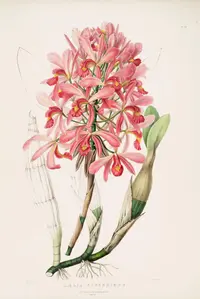
Laelia superbiens
Laelia superbiens

Philodendron 'Orange Marmalade'
Philodendron 'Orange Marmalade'
Domingoa purpurea
Domingoa purpurea
monkeybush
Abutilon indicum
Dragon Wing Begonia
Begonia Dragon Wing Pink
Easter Lily
Lilium longiflorum
Arrowhead Vine
Syngonium podophyllum 'Berry Allusion'
southern globethistle
Echinops ritro