Bird's nest ferns Care (Asplenium nidus)

Also known as: Bird's Nest Fern, Paku Sarang Burung

About Bird's nest ferns

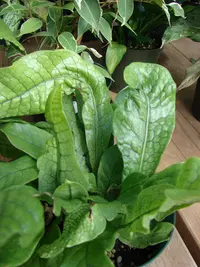
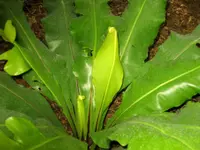
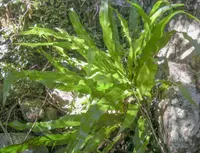
Bird's nest fern, Asplenium nidus, is an evergreen epiphytic fern that naturally grows on trees in warm, humid forests of Southeast Asia and the Pacific. It forms a funnel-shaped rosette of broad, glossy, apple-green fronds with a dark central midrib.

The leaves emerge from a central crown that resembles a nest, which catches falling debris in nature. Indoors, it is valued for its clean, architectural shape and ability to add lush greenery to shaded spaces.

This fern prefers consistent moisture, high humidity, and indirect light, which makes it moderately easy to manage once its environment is stable. Understanding these conditions is key to how to care for Bird's nest ferns in homes and offices.

Main Plant Requirements

Care Difficulty

Moderate Care

Light Preference

Bright Indirect Light

Water Requirements

Keep Soil Moist

Temperature Preference

Tropical / Frost Sensitive

Hardiness Zone

10–11

Soil Texture

Loamy, Peaty, Organic-rich

Soil pH

Acidic (5.5–6.5), Slightly acidic (6.5–7.0)

Soil Drainage

Moist but well-drained

Fertilization

Light (every 4–6 weeks)

Get Personalized Care Plan

Scan your plant to receive care tips personalized for your specific plant

Personalized Care in the App

Available on iOS and Android

How to Care for the Bird's nest ferns

This fern prefers soft, filtered light similar to a shaded forest floor.

  • Provide bright, indirect light with 6–8 hours of filtered daylight, such as near an east window or under light tree canopy outdoors.
  • In partial shade (2–4 hours gentle morning sun), shield the fronds from harsh midday and afternoon sun to prevent scorch and bleaching of Bird's nest ferns.
  • If light is too low, fronds grow thin and sparse; move the plant closer to a bright window in winter when days are shorter.

Watering should keep the root zone consistently moist but never waterlogged.

  • Allow the top 2–3 cm of soil to dry slightly before watering, then moisten evenly without soaking the central rosette where new fronds emerge.
  • In warm growing seasons, expect to water more often as the top layer dries faster; reduce frequency in cooler months while avoiding complete soil dryness.
  • Yellowing, limp fronds with soggy soil suggest overwatering and poor drainage, while crisp browning edges and very light soil indicate the Asplenium nidus is too dry.

This fern grows best in stable, warm, frost-free conditions.

  • Aim for 65–80°F (18–27°C) for steady growth, avoiding sudden swings of more than 10°F (6°C) within a day.
  • Short drops to 55°F (13°C) are tolerated, but prolonged exposure below 50°F (10°C) damages fronds and any frost can kill growing tips.
  • In hot periods above 85°F (29°C), increase humidity and shade to prevent frond scorch, and keep the plant away from heater vents or cold drafts in winter.

This fern prefers consistently moist air and reacts quickly to dry indoor conditions.

  • Aim for 60–80% humidity; it tolerates brief dips to 40–50% but growth slows.
  • Crisping frond edges, brown tips, and stalled new fronds indicate humidity stress rather than underwatering.
  • To raise humidity, group plants, run a nearby humidifier, or place the pot on a pebble tray above, not in, water.

This species grows best in a loose, organic-rich mix that stays evenly moist but never waterlogged.

  • Use a peat- or coco-based mix with plenty of leaf mold or compost plus fine orchid bark for a soft, fibrous structure.
  • Ensure fast drainage by adding perlite or pumice so water drains within seconds yet the mix still feels slightly springy.
  • Aim for slightly acidic to neutral pH around 5.5–7.0, similar to many standard houseplant mixes.
  • Avoid dense garden soil, heavy clay, or mixes that form clods, which reduce aeration around Asplenium nidus roots.

This fern is very suitable for container growing due to its shallow, fibrous root system.

  • Choose a wide, shallow pot so the rosette can spread without the crown sitting below the rim where water can pool.
  • Select a pot material that matches your watering habits; porous terracotta dries faster than plastic and helps prevent soggy roots.
  • Place the container in a stable position, as the expanding fronds can make the plant top-heavy and prone to tipping.

Asplenium nidus benefits from light, consistent feeding during active growth in spring and summer.

  • Use a balanced liquid fertilizer (such as 10-10-10 or 20-20-20) diluted to 1/4–1/2 strength to avoid root and frond burn.
  • Apply every 4–6 weeks in the growing season on already moist soil, never onto dry potting mix.
  • Skip or reduce feeding to 1 light application in late fall and none in midwinter when growth slows.
  • Organic options like dilute fish emulsion or fine compost extract suit Bird's nest ferns sensitive roots.

Pruning needs for Asplenium nidus are minimal and focus on cleanliness rather than reshaping the plant.

  • Best time is during active growth in spring or summer, when the plant recovers faster from any leaf removal.
  • Remove only dead, yellow, torn, or diseased fronds, cutting them at the base without injuring the central crown.
  • Avoid cutting healthy fronds, since this fern does not branch and pruning will only reduce its natural rosette shape.
  • Use clean, sharp scissors or pruning shears disinfected with alcohol to reduce the risk of fungal and bacterial infection.

This fern grows slowly and prefers slightly snug containers, so repotting is infrequent but still important.

  • Plan to repot every 2–3 years in spring when roots circle the pot, growth slows, or water drains too quickly.
  • Choose a container 2–5 cm wider with good drainage and use a loose, peat- or coir-based mix with added perlite or bark.
  • Gently loosen outer roots, keep the root ball largely intact, and set the crown at the same height to limit stress.
  • Water thoroughly after repotting, then keep in bright, indirect light with stable warmth and humidity for 1–2 weeks.

Practical home propagation of Asplenium nidus is limited, as this fern rarely offsets and is usually grown from spores under controlled conditions.

This tropical fern is frost-tender and requires sheltered conditions in regions with cool or cold winters.

  • Keep indoor temperatures around 60–80°F and avoid drafts, cold windowsills, or heating vents that dry the fronds.
  • In mild climates, move container plants indoors or into a greenhouse before temperatures drop below 50°F.
  • Maintain higher humidity of 50–60% with trays of water or a humidifier, and reduce watering slightly while keeping the root zone just moist.

Care Tips

Rotate For Symmetry

Turn the pot 90° every 2–3 weeks so new fronds develop evenly and the rosette stays centered rather than leaning toward one side.

Protect Frond Centers

Avoid getting water, dust, or fertilizer granules directly into the central crown, as this funnel can trap moisture and debris that often leads to rot and bacterial spotting.

Gentle Dust Removal

Clean fronds every 4–6 weeks with a soft brush or microfiber cloth instead of wiping hard, which can bruise the thin leaf tissue and leave permanent marks.

Support Heavy Fronds

If older fronds start to flop, lightly tie them to a discreet ring stake around the pot rim to prevent breakage at the base while still allowing natural arching.

Quarantine And Inspect

When bringing in new houseplants, keep them at least 2–3 weeks away from existing ferns and inspect the undersides of fronds regularly, which reduces the risk of scale and mealybug problems when caring for Bird's nest ferns.

Common Pests and Diseases

Scale insects

This pest feeds on frond tissue and midribs, causing yellow spotting, sticky honeydew, and sooty mold on the glossy fronds.

Solution

Isolate the plant, then wipe fronds and midribs with a cotton pad dipped in insecticidal soap or a dilute isopropyl alcohol solution, avoiding runoff into the crown; repeat weekly until no new scale appears and improve air movement and light to support recovery.

Mealybugs

These insects appear as white, cottony clusters in leaf bases and along the frond midrib, leading to stunting, yellowing, and deformed new fronds.

Solution

Remove visible colonies with a cotton swab dipped in alcohol, then treat all frond surfaces and crevices with insecticidal soap or a labeled systemic product safe for ferns, repeating every 7–10 days until the infestation is gone.

Fern aphids

This pest clusters on tender new fronds and unfurling fiddleheads, sucking sap and causing distortion, curling, and sticky residue on the foliage.

Solution

Rinse the plant gently with lukewarm water to dislodge insects, then apply insecticidal soap or a horticultural oil labeled for ferns to all frond surfaces, repeating as needed and avoiding application in direct sun to prevent leaf burn while growing Bird's nest ferns.

Rhizoctonia leaf spot

This disease produces irregular brown or tan lesions along frond margins or between veins, often with a slightly darker border and a dry, papery texture as spots enlarge.

Solution

Remove affected frond sections with sterile scissors, reduce overhead watering, improve air circulation, and keep fronds dry; if spread continues, use a fungicide labeled for ornamental ferns and space plants so fronds are not touching.

Pythium root and crown rot

Symptoms include wilting despite moist soil, blackened, mushy roots, and a soft, decaying center where fronds emerge, often triggered by chronically wet, poorly drained media.

Solution

Discard severely affected plants; for mild cases, unpot and trim all black or mushy roots, repot into fresh, well-draining mix, keep watering conservative until new growth appears, and avoid letting water sit in the center crown or in the saucer under the pot.

Interesting Facts

Nest-like rosette growth

This species forms a funnel-shaped rosette that traps falling leaf litter and dust, which gradually decomposes and supplies extra nutrients to the plant in its native forest habitats.

Epiphytic tree-dweller

In the wild, it often grows as an epiphyte on tree trunks and branches rather than in soil, anchoring to bark while taking moisture and nutrients from rain, debris, and humid air.

Frond-based spore lines

Its spores develop in distinct, dark, linear sori on the underside of mature fronds, a pattern that helps botanists distinguish it from many other ferns with round or clustered sori.

Botan icon

Did you know?

In some tropical forests, large bird’s nest fern rosettes can act like miniature ecosystems, providing shelter and moist microhabitats for insects, small amphibians, and other organisms high in the tree canopy.

FAQs about Bird's nest ferns

This species is a true fern and does not produce flowers or blooms. Instead, it reproduces by spores that may form as brownish patches on the undersides of mature fronds, which is completely normal.

Grow Healthy Plants with Botan Care

Keep your plants happy and healthy with plant identification, disease detection, and easy care guidance.

Botan plant care app — identify plants on mobile

Explore More Plants