


Rhizome positioning
Set the rhizome just above the substrate or rock surface and secure it lightly with fishing line or soft wire so the roots can attach while the rhizome stays exposed and does not rot.

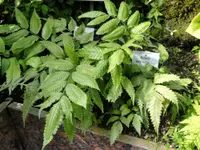
Bolbitis heteroclita is a semi-aquatic fern often grown in aquariums, paludariums, and very humid terrariums. It forms delicate, finely divided fronds on creeping rhizomes. In nature, it occurs along shaded stream banks and on wet rocks in parts of Southeast Asia, where water movement and constant moisture are high. The plant tends to grow slowly and can be sensitive to sudden changes in water quality or humidity. These traits make it a bit more demanding than common houseplants, but manageable once conditions are stable. Understanding how to care for Bolbitis heteroclita starts with providing soft light, high humidity, and consistently moist, well-oxygenated conditions.

Care Difficulty
Moderate Care

Light Preference
Partial Shade

Water Requirements
Aquatic

Temperature Preference
Tropical / Frost Sensitive

Hardiness Zone
10–11

Soil Texture
Loamy, Peaty, Organic-rich

Soil pH
Acidic (5.5–6.5)

Soil Drainage
Waterlogged tolerant

Fertilization
Light (every 4–6 weeks)
Scan your plant to receive care tips personalized for your specific plant
Available on iOS and Android
This fern prefers soft, filtered light that mimics a shaded stream bank.
This species needs constant moisture around its roots and rhizomes without stagnation.
This fern thrives in warm, stable conditions typical of a humid tropical understory.
This fern needs consistently high humidity to keep fronds lush and prevent tip damage.
This species prefers a loose, moisture-retentive but fast-draining, organic-rich substrate rather than dense potting soil.
This fern adapts well to container growing when moisture and drainage are carefully balanced.
This fern benefits from light feeding but is sensitive to heavy fertilizer applications.
Pruning focuses on hygiene and maintaining a tidy clump rather than reshaping the fern.
This fern prefers stable conditions and only needs repotting or transplanting when clearly rootbound or declining.
Propagation is most reliable by dividing the rhizome rather than by spores for home growers.
This tropical fern is not frost hardy and needs protection in regions with cold winters.

Plant Health Check
Not sure what's wrong with your plant? Check your plant's health inside the app.
This species can grow both submerged in shallow, slow-moving water and emersed along stream margins, adjusting frond texture and size to moisture and flow conditions.
Its fronds are often irregularly pinnate with deeply forked, sometimes crested tips, giving a more intricate outline than the smoother, more uniform fronds of many related Bolbitis species.
It anchors itself with a creeping rhizome that naturally grips rocks, driftwood, or tree roots in river edges, an adaptation that helps it resist being washed away in seasonal currents.

In the wild, this fern often forms dense, layered mats along waterfalls and stream margins, creating microhabitats that shelter small aquatic invertebrates and juvenile fish by slowing water flow and increasing local structural complexity.
This fern grows slowly to moderately. Expect new fronds over months rather than weeks. Growth rate improves with consistently moist substrate, high humidity, stable warmth, and low to moderate light. Sudden temperature drops or drying out will noticeably slow development.
Keep your plants happy and healthy with plant identification, disease detection, and easy care guidance.

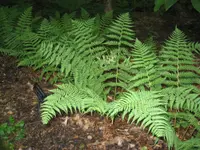
marginal woodfern
Dryopteris marginalis
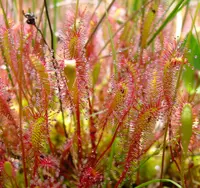
Great Sundew
Drosera anglica
 POPULAR
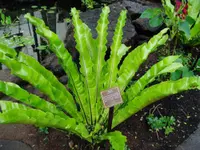
Japanese bird's-nest fern
Asplenium antiquum
drooping filmy fern
Hymenophyllum demissum
pink sundew
Drosera capillaris
Brazilian pennywort
Hydrocotyle leucocephala
Autumn Fern
Dryopteris erythrosora 'Brilliance'

Agardh's red weed
Agardhiella subulata